IRONMAN Puts Draft Zones to the Test With Race Ranger and Aero Expert Marc Graveline

Post on PROTRINEWS:

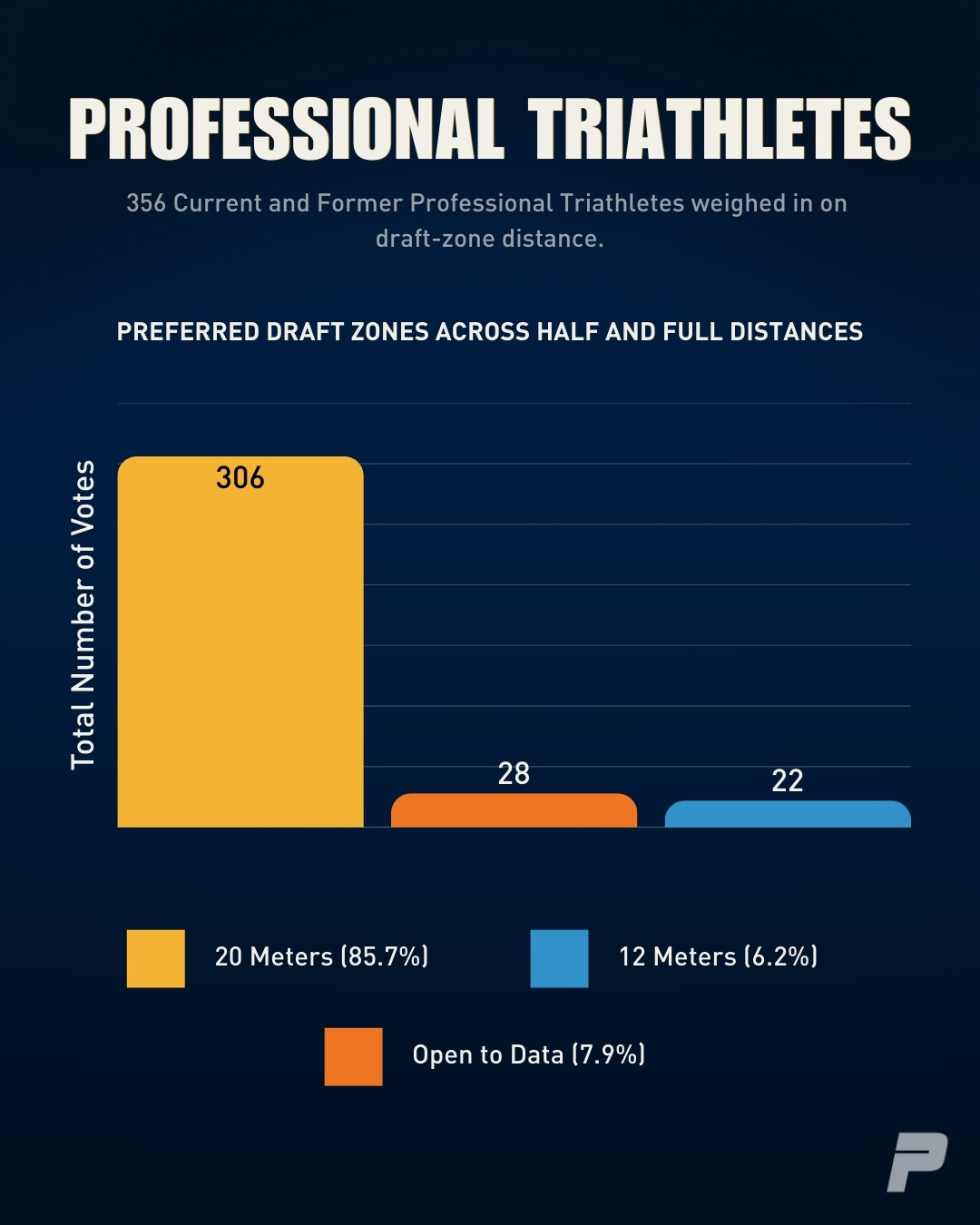
Over the last few weeks, we surveyed current and former professional triathletes to ask a simple question.

What draft-zone distance do you actually want to race at?

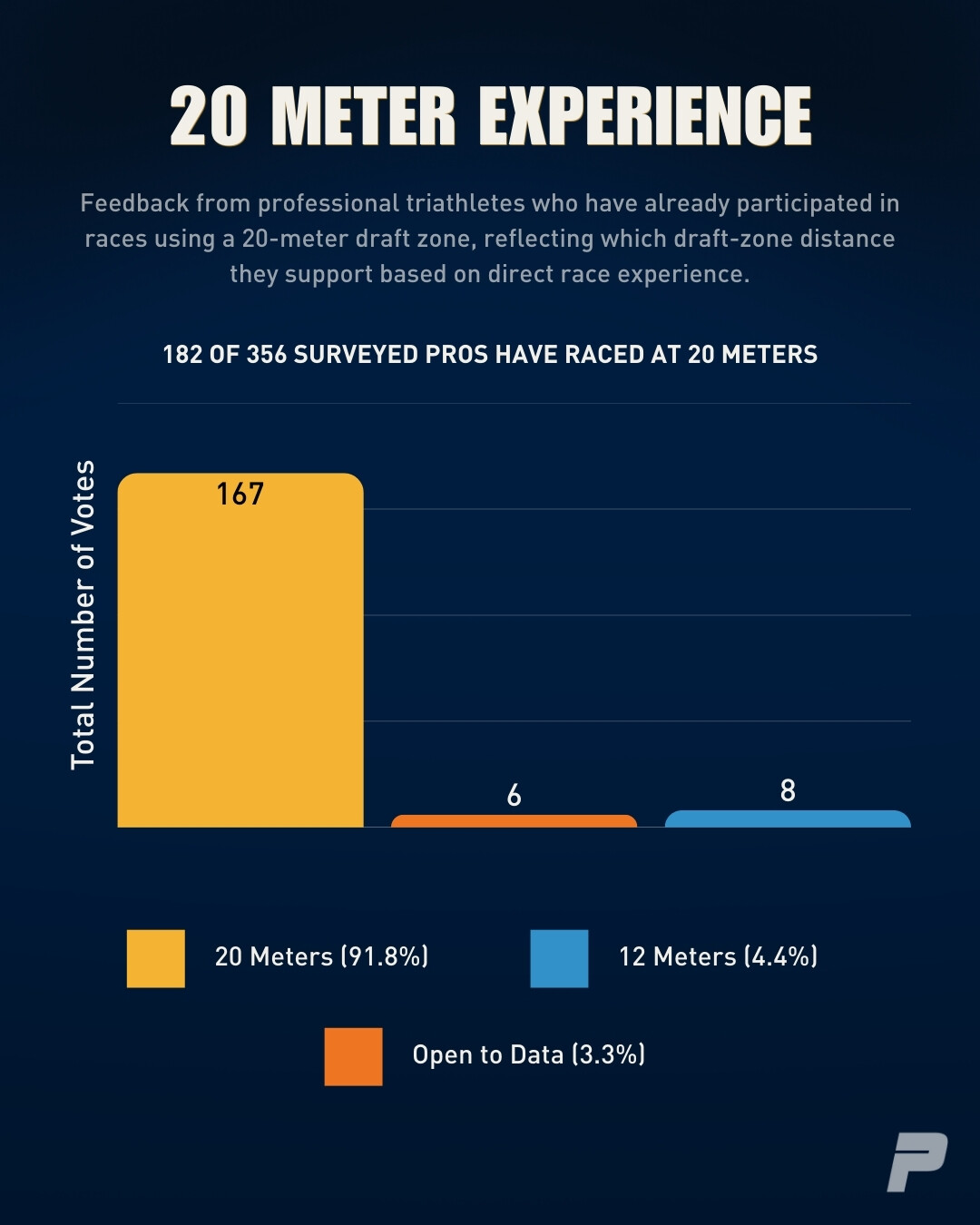
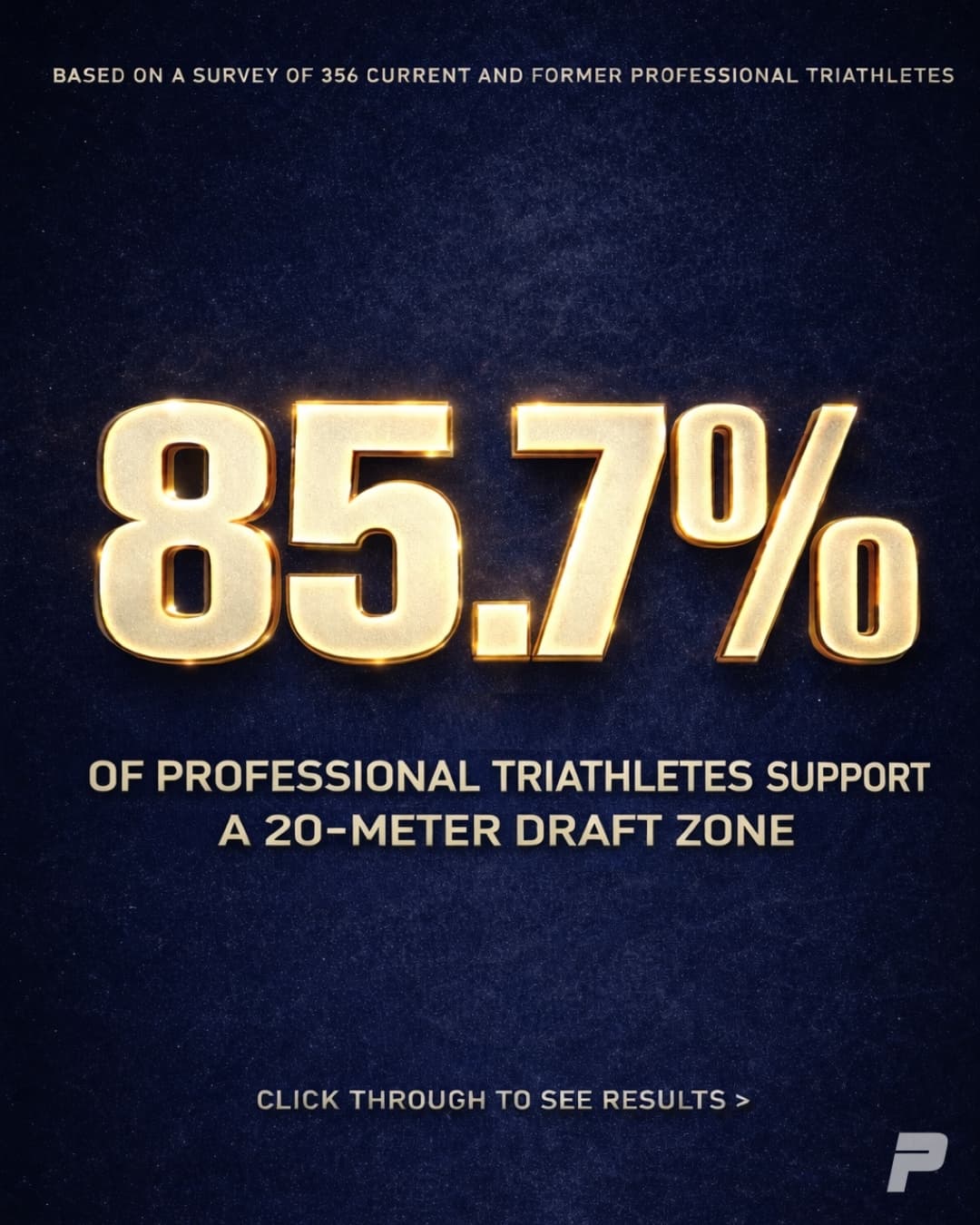
85.7% of professional triathletes support moving to a 20-meter draft zone. That number jumps even higher among athletes who have already raced at 20 meters, with 91.8% saying they prefer it based on direct race experience.

For years, this conversation has been dominated by media takes, operational concerns, and executive interviews. CEOs have been asked. Officials have been asked. Podcasts have debated logistics and hypotheticals. The one group that’s largely been missing from the conversation? The athletes whose careers, results, and livelihoods are directly affected by this rule.
So we decided to ask them.

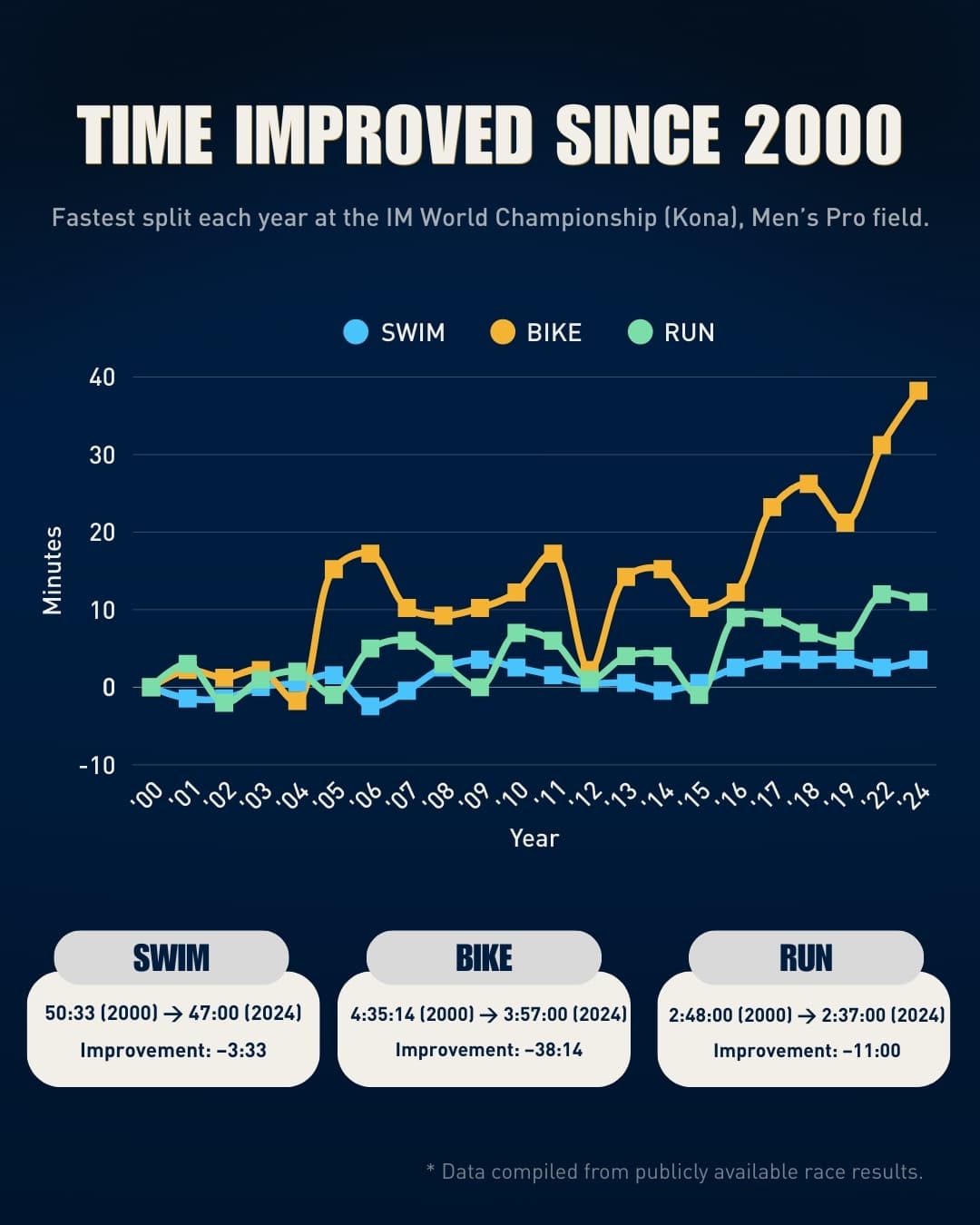
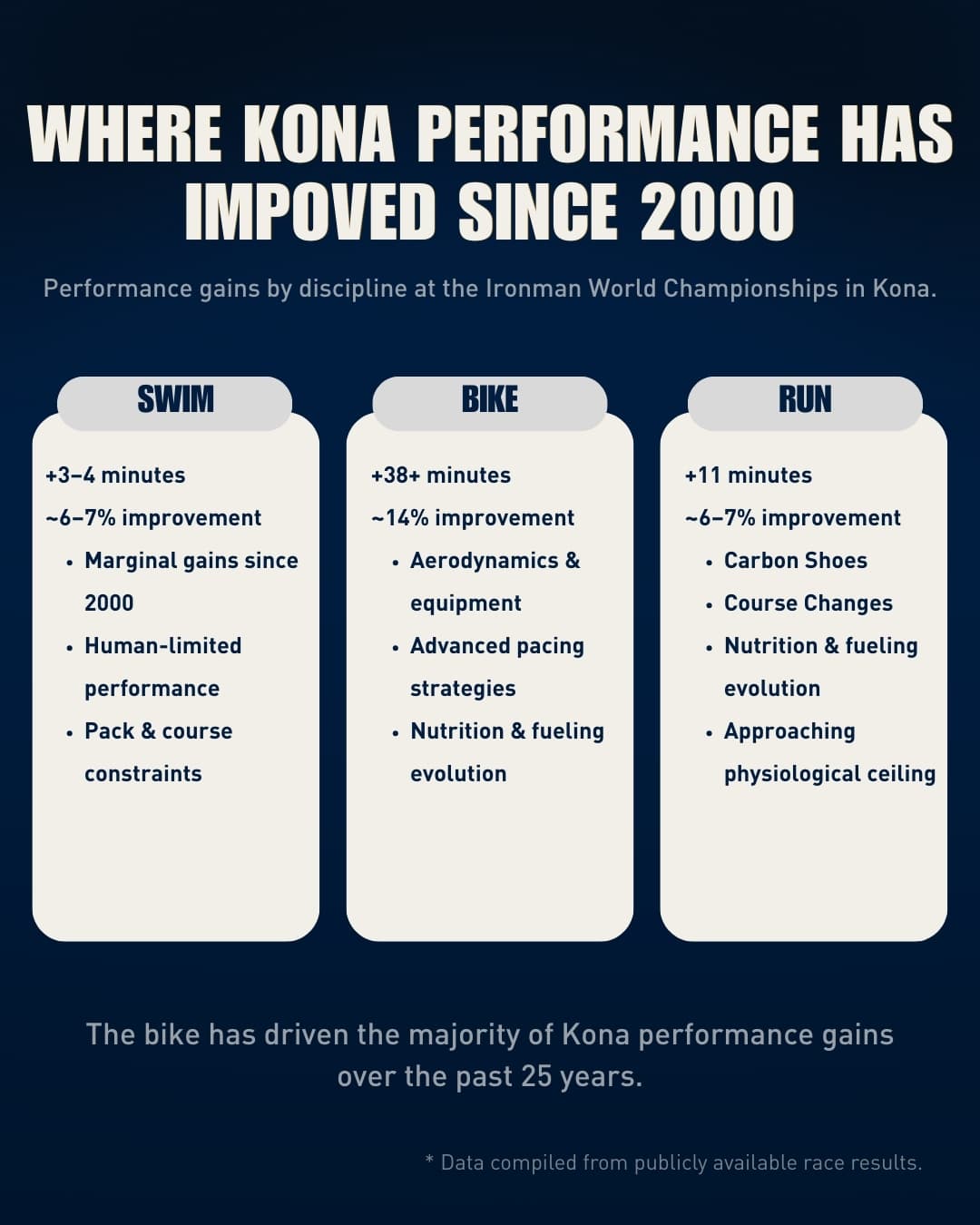
Context matters here. Sport evolves. It always has. Other sports regularly adjust rules as performance, technology, and strategy advance and triathlon is no different. When you look at the data, especially at Kona, the biggest gains over the last 25 years haven’t come from the swim or the run. They’ve come on the bike. Aerodynamics, equipment, pacing strategies, and group dynamics have fundamentally changed how fast athletes move through that section of the race.

The speeds today and the aerodynamic benefits that come with them are not the same as they were in the early 2000s. That’s not opinion. That’s measurable.

And yet, the draft-zone rule has stayed the same.

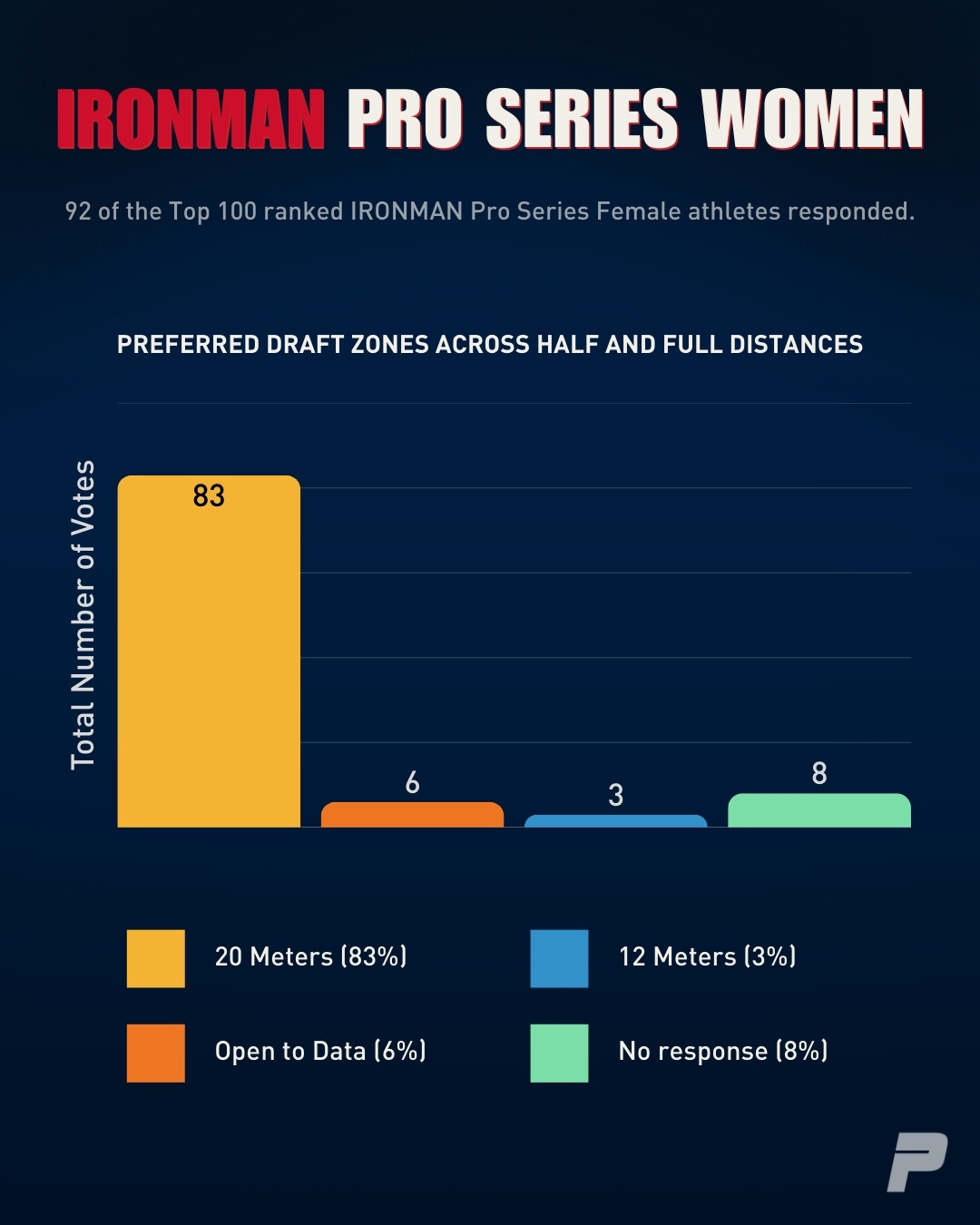
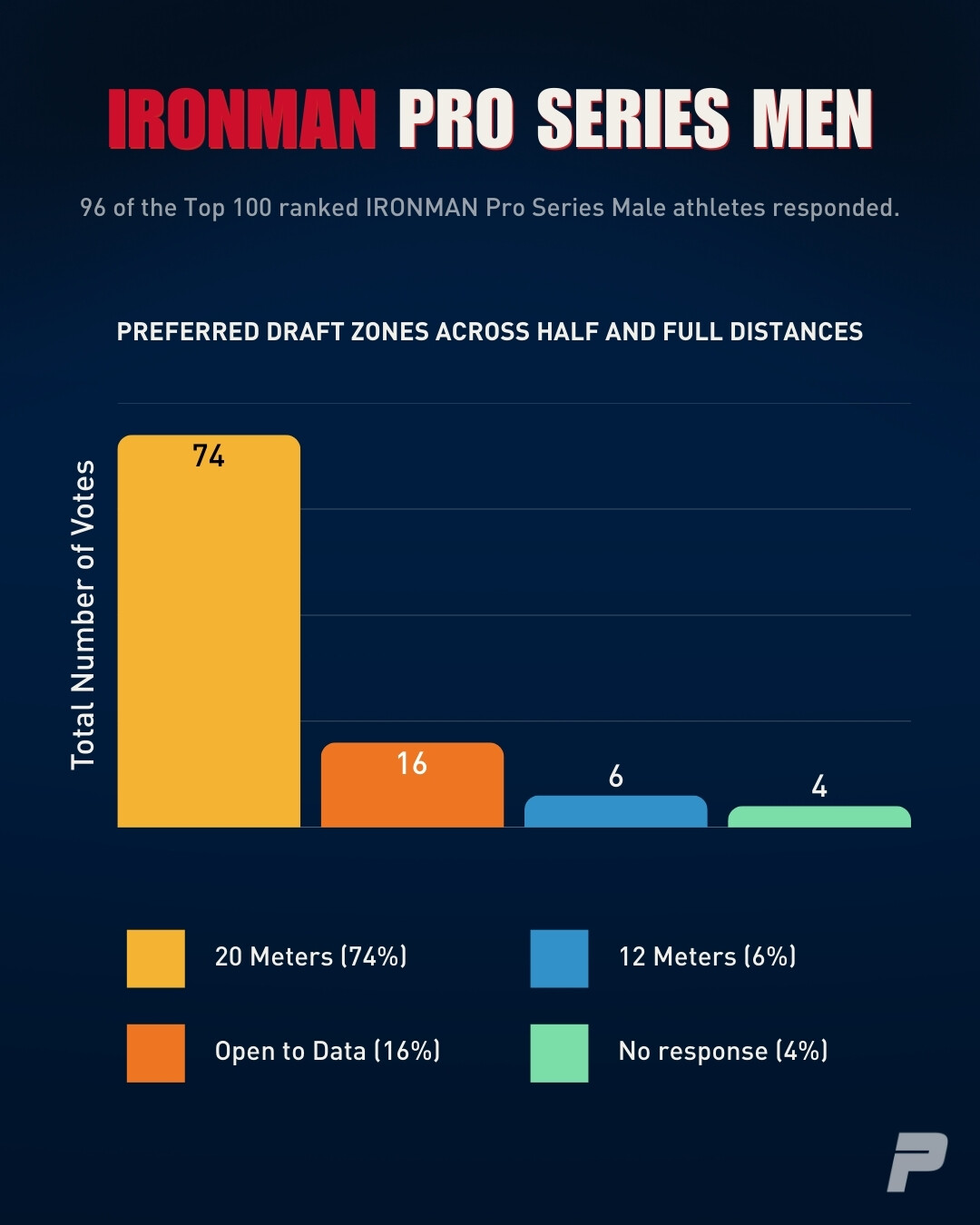
This isn’t a close call or a 50/50 debate. Across genders, across distances, across rankings including a significant percentage of the IRONMAN Pro Series top 100 the message from athletes is consistent. They believe a 20-meter draft zone better reflects the modern version of the sport they’re racing.

You can swipe through the full breakdown in this post

Reasonable people can disagree on implementation. But the data is clear on one thing: the athletes have an opinion, and it’s time that opinion is part of the conversation.

Sport evolves. The athletes know it. And now, the data shows it.
See original post here. https://www.instagram.com/p/DTLSL0-kREX/?img_index=1

2 Likes

Props for doing the work of polling the pros. What percent wants closed course? What percent of pros support higher prize packages by any chance? How many skip swim practice? :grinning_face_with_smiling_eyes: What current athletes want and do is only so relevant.
What I’d like to see discussed is the following:

How would 70.3 Worlds Marbella turn out with 20m (male and female)?

How would IMC turned out with a 20m (Kona and Nice)?

Would the races have been more dynamic and competitive at 20m?

Every group race in every sport faces this balance of sticking with the pack and breaking/falling away. We even see it in the marathon all the time. Part of the group falls off and then someone surges and manages to ā€œbringā€ that group up with them again. Someone goes off the front and then gets reeled back in by the group. Or someone goes off the front and holds it to the win. You might say the aero gains in cycling are so much different in the pack, and while true, I am certain the pros bleeding to run 4:40 miles for 26 miles absolutely depend on those to tiny margins at various times in the race. We’ve heard pro runners talk about how disappointed they are a group they thought they dropped gets pulled up to the front again etc.

Now triathlon is different because the packs are dynamic based on a ton of factors.

The point is, every group race has dynamics that can feel frustrating. Tactical running on the track happens. Sometimes a race is a battle, a time trial, and sometimes it’s a mix of all that and some tactics plus luck.

I’m not seeing how suddenly the running, swimming, or cycling races get EVEN better if we make everyone ride with an even longer imaginary ruler sticking out of their backside. Sometimes I imagine the draft measuring complainers are like the sunday school teacher telling you to dance with a bible distance between your partner….

Finally, to address your main point, about the importance of the current group of long distance endurance racers wanting this, I’d like to point out that this is a bit of survivor bias. Of course the group of athletes who love to put out steady power and focus on their own race, who live a pretty isolated and self-described often self serving life want people to stay away from them as much as possible. The more I pay attention to other sports, the more I see similar complaints and suggestions in principle about the rules.

It’s human nature. It’s the sporting variation of, ā€œthere should be a law to stop thisā€¦ā€

All that said, those same arguments can be used against 12m vs non draft or let’s say 8m. I’m not sure that 8m racing would be less exciting than 12m, other than maybe it means some really fast run bikers run out of room which does occaisonally yield epic results.

In specific at this moment in time, I think the previous biggest beneficiaries from 20m have been wiped out by the short course guys coming in. Now those slower swimmers are even more out of touch and the bike/run speed of many of those faster swimmers is now as good or better than our uber bikers.

It’s not at all uncommon for a voting constituency to screw things up with their choices. I see no reason why the pros are better suited to make that call than the designated leader of a racing organization. Indeed, ask Steve Jobs what he thought of focus groups.

If 20m is enough of a superior format, we’ll see those races that offer it succeed or be more exciting. That’s all the proof we need. So far neither is happening.

2 Likes

I’ll just point out that the swim was shortened by 200 meters in 2016 and that most of the old time run records included a transition in their times. Suppose that makes the bike changes even bigger in comparison to the other two sports..

2 Likes

Great set of slides @talbotcox

This - and just about the only useful phrase.
No this was bang on, in a wider context :wink:

Let’s also not forget Mark Allen’s 2:40 Marathon in 1989, which included his T2. The Chart starts with Peter Reid’s 2:48 in 2000.

I was not aware of the shorter swim, thanks for that Info

Truth be told, I thought the visual of the imaginary ruler out the backside or the Bible-distance apart dancers was the real highlight.

1 Like

@talbotcox promised this on the ā€˜one and only’ thread. Dig in!

Great work on this. I found it really insightful and on balance, I think it does swing me personally in favour of 20m.

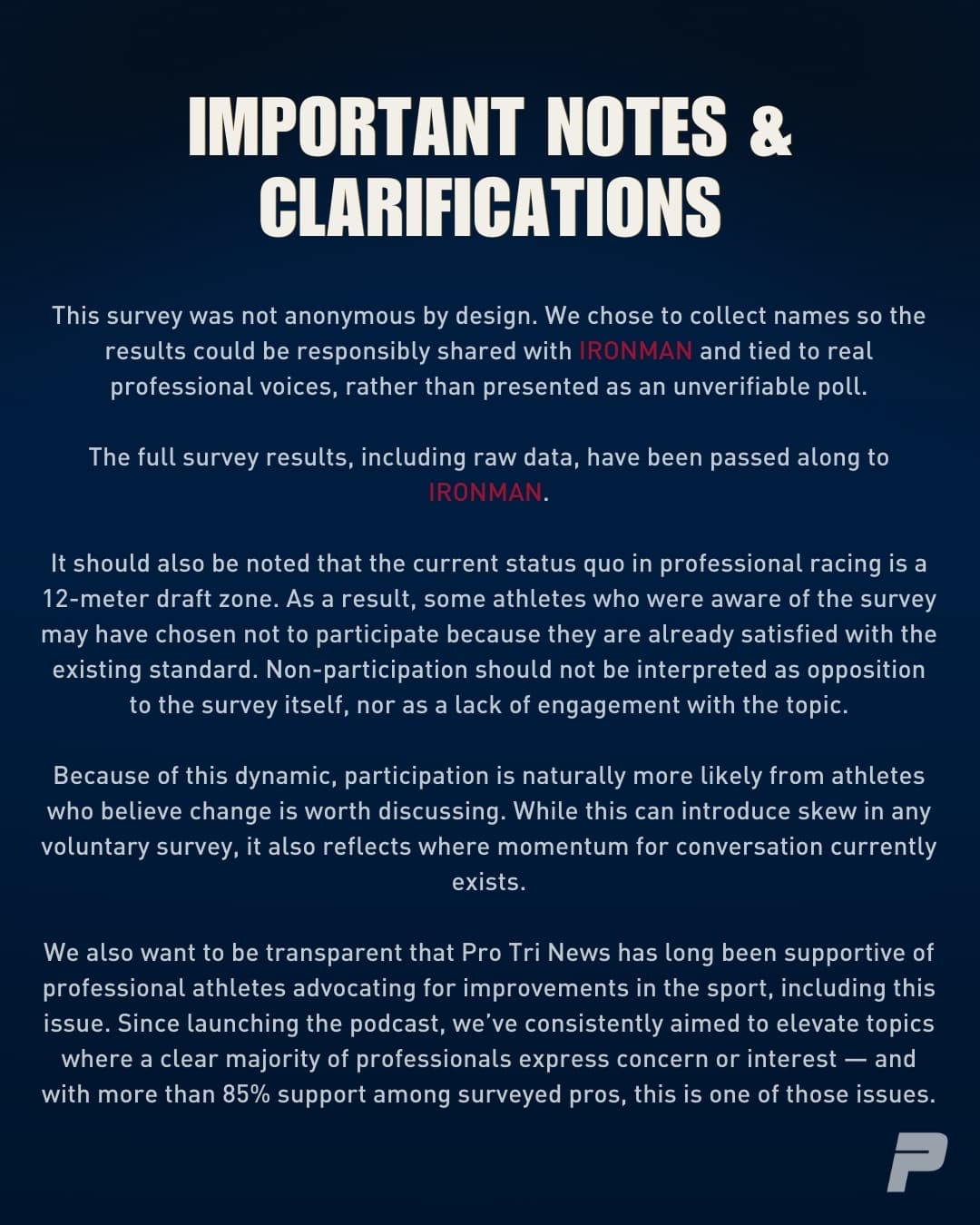
I also think that the above comment (which is repeated on the Instagram post) is a little misleading. It should read ā€œ85.7% of professional triathletes who responded to this survey supportā€¦ā€ That’s a very important distinction and as you say, context matters here. It’s fair to assume that supporters of the status quo may have been less likely to take part.

1 Like

are you suggesting that given females now ride at similar speed than the guys in the early 2000s, they can stay 12 meter ?

More accurate and a fair caveat, but the subsequent findings of the survey offer considerable context for the quality (ranking) of the athletes responding, for example:

  • 92 of the top 100 IMPS ranked women are in the ā€˜who responded’ cohort
  • likewise 96 of the top 100 ranked men
  • Of those responders who’d raced with a 20m draft rule in operation (T100, Wanaka, Roth and some other Challenge races, WTLDWC), 92% preferred it.

Don’t all three of these bullet points further strengthen the need to provide context? Higher ranking pros (and those likely to have taken part in T100 races) being more likely to support 20m than lower ranking pros?

Honest question - Of the athletes selecting 20m, why are they selecting 20m?

Is it…

  • A belief that there should be as little draft benefit as feasible?
  • A belief that they would do better at 20m? (this obviously can’t be true for everyone)
  • A belief that this creates a ā€˜fairer’ race? (whatever this means)
  • A belief that this creases safer racing?
  • A belief that this creates a more entertaining race for spectators/viewers?

The reason I ask is that, yes, athletes are an important stakeholder group - but critically they aren’t the only ones. And if Ironman is paying them for a specific reason (entertainment, brand association, etc.), this reason may be at odds with the reason why athletes are selecting 20m zones. Ironman creates a pro category and pays athletes who place highly for a reason, and that reason is to create entertainment value which then feeds into brand recognition, and ultimately more age group participation.

As an example, lets say that athletes select 20m zones because they want to pure race with as little draft benefit as feasible. Meanwhile, if they try it and it creates snoozefests as far as racing dynamic goes, then it doesn’t really matter what the athletes feel they want - Ironman pays them to put on a show and 20m might not cut it from that regard. (they have a ways to go for the broadcast as well, but that’s a separate issue).

My point is that outside maybe the safety angle (which I don’t think exists), it may not matter what they feel. Ironman may well see that there is a draft benefit and may not care, even if the athletes are overwhelmingly in favour of 20m. Again, its a bit like NHL vs IIHF rink sizes. Athletes may have their preference, but if the NHL is in the business of selling seats then it may not matter.

I’ll be honest, my bias is that I prefer watching 12m races vs 20m races. IMO there hasn’t been a snoozefest IMWC or 70.3WC for either gender since maybe the peak Ryf years. And the Pro series usually produces awesome racing. T100 often has start lists way ahead of a lot of the pro series races, and IMO it isn’t nearly as engaging (the course venue bears some burden here). I don’t believe that 12m racing is broken, and so why do we need to go about fixing it?

6 Likes

Yeah I am opining the same thought in the Lionel thread.

1 Like

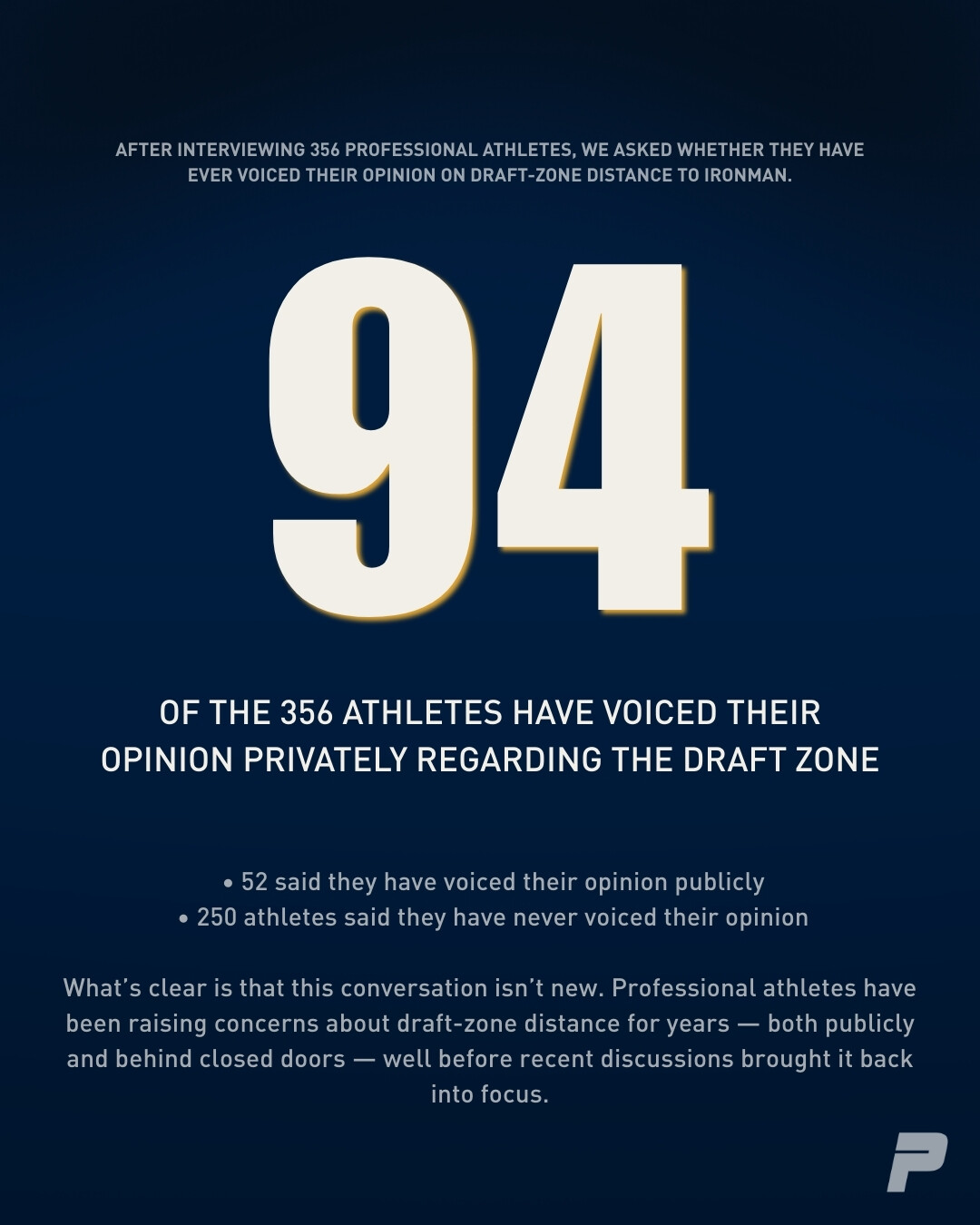
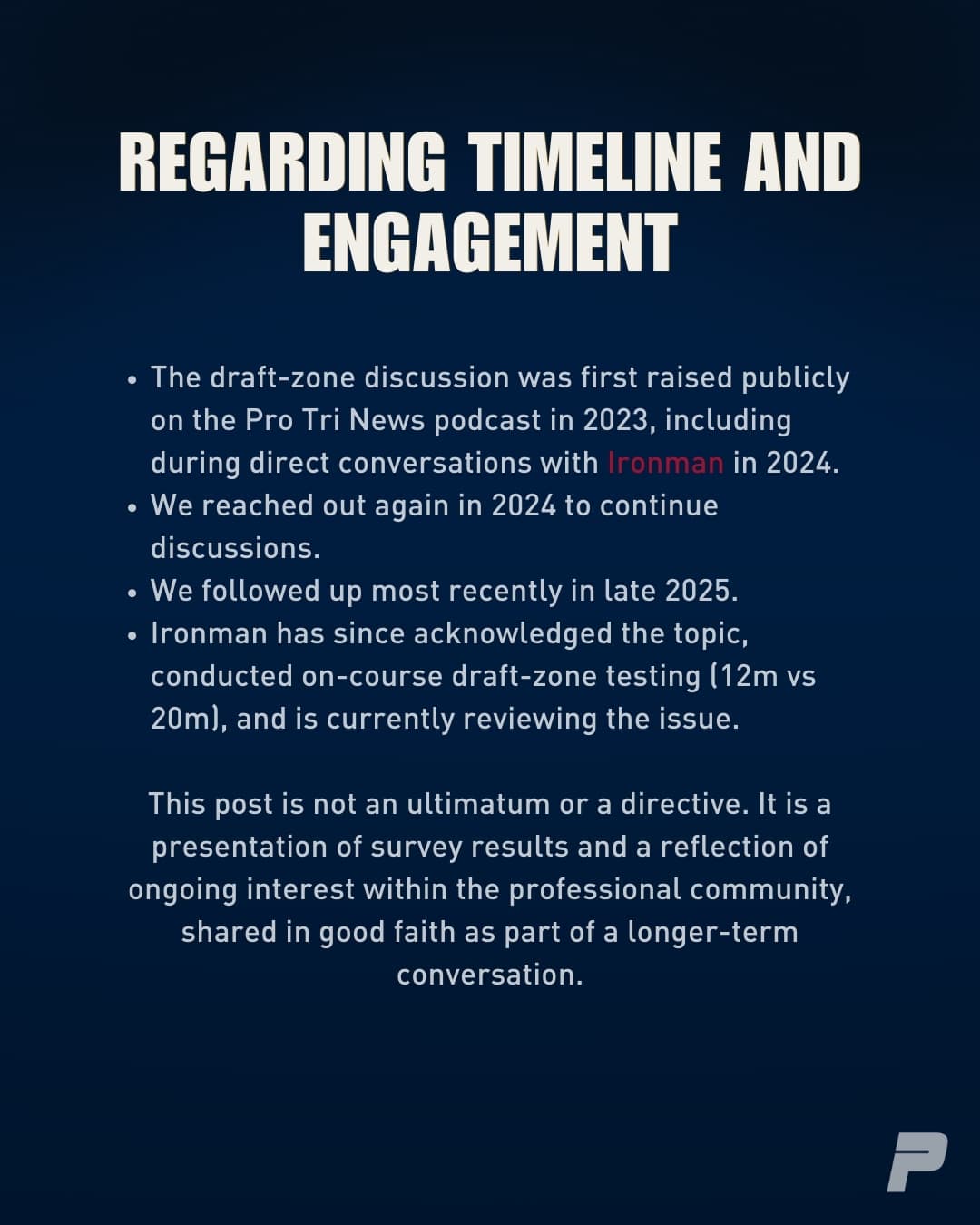
On the original Instagram post, if you scroll all the way to the end, we included some additional text slides that add context and explanation. Unfortunately, Slowtwitch only allows up to 10 images per post, so those final slides didn’t make it into the thread here.

You can see the full version on the ProTriNews Instagram, but I’ll also attach the last two slides here so everything is in one place. Hopefully that helps address what you mentioned above.

https://www.instagram.com/p/DTLSL0-kREX/?img_index=1

2 Likes

Wait? This is our fault?

Squarely @talbotcox 's ā€œfaultā€. He really ought to understand that on ST, caveats are as or more important than the message and should have curated his slides with more insight. :wink:

1 Like

No, I would say my fault. I was replying to that guy saying that I was limited to 10 images. I should not have been lazy and copied the text and posted it. IMO, I am not sure you would want someone to have the option to post more than 10 images, haha. I think that’s a good number!

Taylor Knibb, Sam Long, and Magnus Ditlev Speak on 12m vs 20m

In this episode, Sam Long, Taylor Knibb, and Magnus Ditlev join Pro Tri News for an athlete-led conversation on draft distance, race dynamics, and how professional Ironman racing has evolved. No debate, no finger-pointing just the athletes explaining how they see it, why it matters, and what they hope the future looks like.

Thanks for making me famous, Talbot (even though I’m not sure I fully agree with your characterization of me as just an amateur triathlete which I haven’t been for a long time LOL).

This said, I think the better question would have been to ask them: If this week Ironman decides to stick to 12m, will that have an effect on your racing calendar decisions or not? My guess from their responses to the ā€˜vote with your feet’ question is that no, nothing wouldn’t. Which kind of goes to my original point I guess.

1 Like

But your original point was not really a serious one. You expect triathletes to ā€œvoteā€ with their feet, when the alternative is nothing. You live in some magical world where everyone does the right thing at the right time, and always. The professional golfers who make 10’s of millions, some 100’s, and they could not resist the temptation to jump ship and leave their long standing association and series for what many call blood money. How are triathletes that barley put food on the table supposed to just give up their livelihoods because of 8 meters of road?? You can call it a serious point, but everyone else knows that scratching out a living is the real serious equation they all have to contemplate..

1 Like