13 dead so far. This is awful. I have to believe the death toll will go way up.
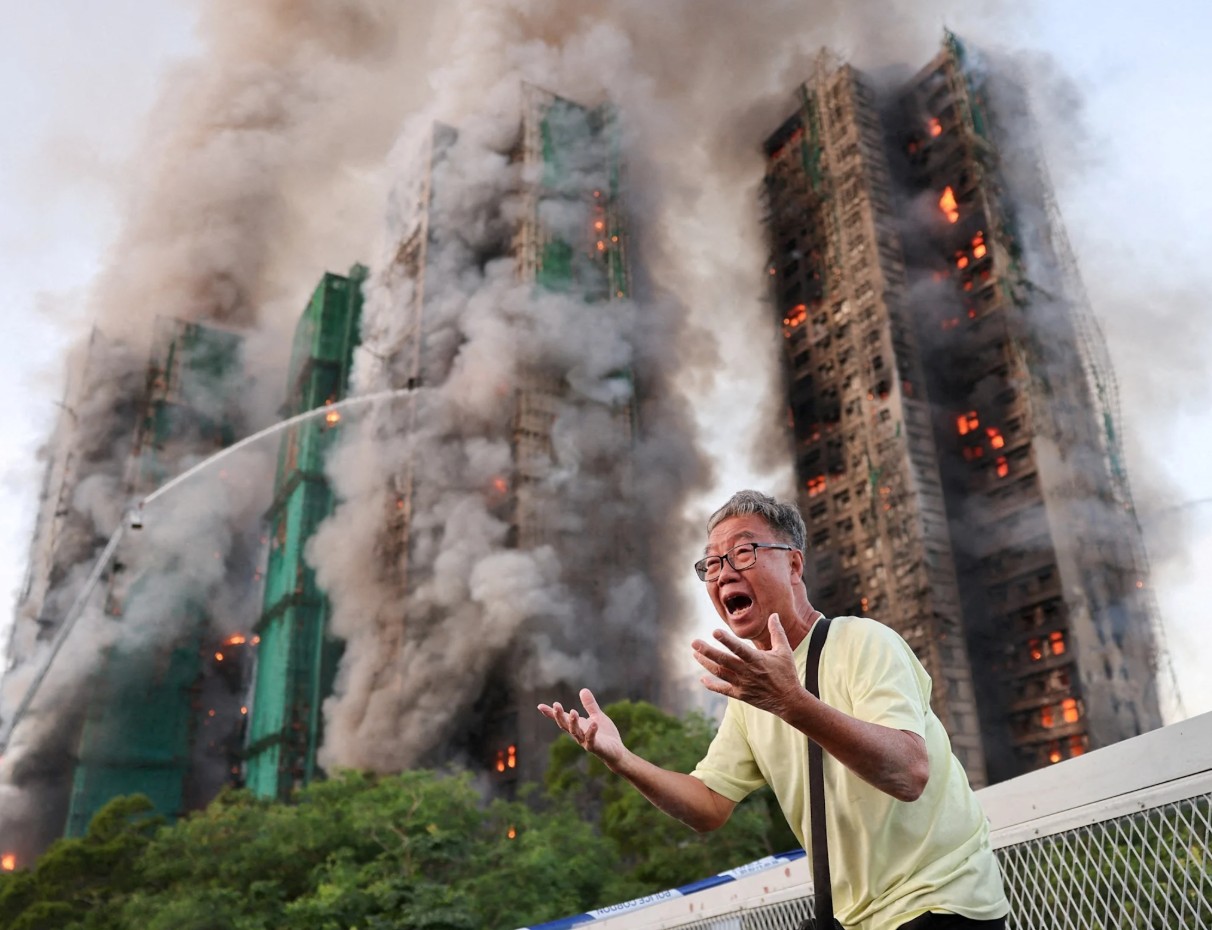
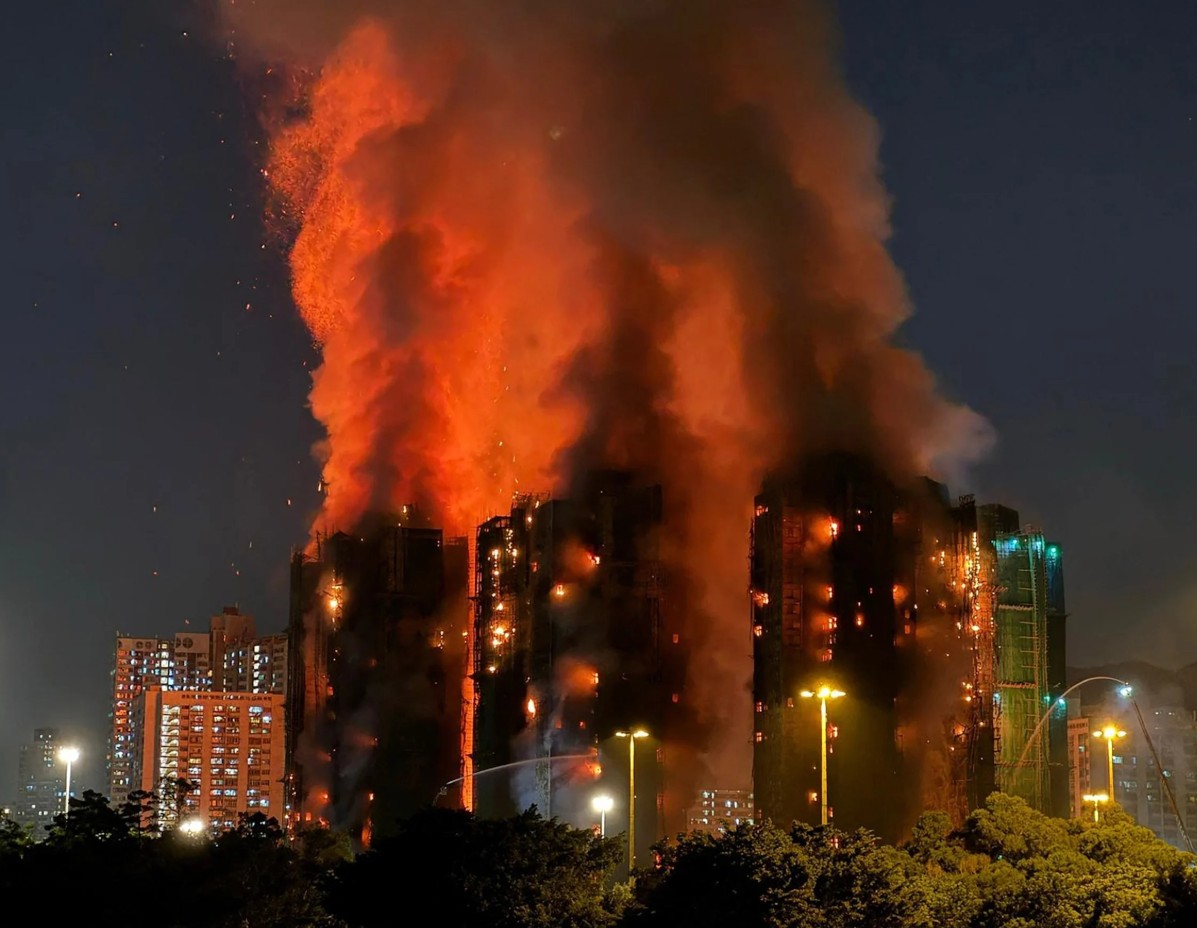
that is horrific
when this happened in London the exterior cladding was a major accelerator of the spread
i wonder if they’ll find something similar
1 Like
Modern highrises should not be able to burn like that.
Those pictures are insane. I would imagine the death toll will be a lot higher.
How would they all be burning simultaneously? Arson?
It appears that they are separate buildings from the photos, but maybe they share a common lower floor(s)?
That was my first thought. At the risk of armchair QB’ing, I wonder if the buildings are very different from what would pass fire codes here.
So sorry for the horrible loss and suffering. It seems possible that they may never know an exact death toll with that much damage.
1 Like
The BBC reporting is that the buildings were under renovation and had bamboo scaffolding which led to rapid spread.
That’s fucked up. That falls right in to my fear of heights. From the article:
The push towards using metal instead of bamboo came after a spate of scaffolding related deaths in Hong Kong.
There’s no fucking way you’d get me on a bamboo scaffold.
1 Like
That makes a lot more sense. I was wondering that as the pictures showed one building with a green side that looked like the netting that drapes on the outside of scaffolding to keep debris from falling on the street. Probably also highly flammable. That would also explain why the fire spread so quickly and the emergency level was upgraded every 30 minutes or so. That would be nearly impossible if the fire was internal.
Re scaffolding. I remember being in Bangkok and seeing bamboo scaffolding multiple storeys high. Not only that, but the guys putting it up were in flip flops or bare feet!! I couldn’t believe it.
Here scaffolding is highly regulated. You need bottom, middle and top guards, it has to be tied in to the building every couple of storeys, there are proper stairs between levels etc. It is very safe.
There, I would see these massive spans with a dinky 2x6 across them and some poor bastard carrying a bucket of mortar that probably weighed more than he did across it. That plank was at or near max deflection when he was standing in the middle of it. The whole thing looked like a precariously erected jungle gym of death.
damn. i have so many distant family members in HK. i hope none of them live there. better give my mom a call.
it’s insane how much housing costs there. i’ve visited where a family of 6 is living in a space about the size of a NYC apartment, and that’s like, a good amount of space.
i once visited my moms cousins and they had a 4 bedroom apartment, which was considered massive. i think they slept like 10-12 people there.
1 Like
Didn’t read the articles yet, but if the buildings were being renovated hopefully it was mostly empty of residents.
The anguish on that guy’s face says volumes.
1 Like
Fire moves between buildings fairly easily. Embers catch in the wind/breeze and land on nearby buildings and spread the fire. It’s part of why the Southern Calfornia fires spread so widely. Bamboo is highly flammable, so if they were caught on fire, it’s not hard to see those sparks and embers flying all over the place to close nearby highrises.
I lived there for 7 years. Generally the renovations on residential towers that require scaffolding are for building envelope rehab and replacement - which takes a very long time so residents continue living there while renos occur.
Wow, that gives me the willies just reading that. Thanks, I’ve never seen bamboo scaffolding. Jungle gym of death indeed.
Highrises are not typically clad in flammable materials like houses and low rises are. It’s usually a mixture of glass, aluminum, fibrous cement panels, etc.
I’m not sure if all those towers had scaffolding around them or just one or two, but given how close those buildings are, I wouldn’t be surprised if the heat from the first fire started breaking glass on adjacent buildings and created an entry point that way. I wouldn’t imagine embers landing on a building envelope alone would cause that type of rapid spread.
BBC video shows them all internally engulfed. Also about 300 people are missing
Well that didn’t work but the picture shows all five builds looking like roman candles
The picture worked for me if I clicked the link. Holy hell. Disaster waiting to happen. It’s like 7 skyscrapers wrapped in kindling.
Just saw the buildings were built in 83. I’m guessing many of the fire protections modern buildings have are not in place here.
Inwas trying to save people from having to click
Thirty-six confirmed dead now, hundreds still missing. Add to the reasons why I’d never live in a high rise.