Massive apartment fire in Hong Kong

Eyeroll emoji

I’ve been in a high rise with a fire

CFD has much more manpower and equipment than where I live. There was a truck and ambulance within 60 seconds in the city and a rescue truck, two ladders, and at least one engine plus two ambulances (and the dive team) within three minutes

To get that much equipment in the suburbs would take easily 10 to 15 minutes…they’d have a truck and ambulance within 5 minutes plus a ladder and engine probably in 10 and would need to activate assistance for more equipment

Modern highrises are much safer than SFHs in terms of fire separations and such. Just need to make sure your building isn’t encased in a tomb of several tons of kindling FFS.

But, if the catastrophic were to happen, escaping from a SFH is much easier.

A+ writing

1 Like

Fires in SFH are fought to keep the fire from spreading throughout the neighborhood. Fires in hi rises are fought to put out the fire.

SFH only have to be Type V-B under IBC. EVERYTHING is combustible.

Residential high rises over 85’ have to be 3 hour rated, sprinklered mass timber, or Type I. And combustible building products are not allowed in Type I buildings. So if you live in the penthouse, you’ve got 2 to 3 hours to get out even if the FD never shows up.

1 Like

I assume that’s for new/modern construction? Are old high rise apartments brought to current codes and safety standards? I know old houses are not.

In Chicago they are…I lived in a high rise fron the 20s and it had sprinklers

Depends on the city and state. To get rental permits you’ve usually got to do something like add sprinklers. But you can’t go back in time and make a 1890 Chicago style building 3 hour rated without gutting it to the structure.

They’re made of brick…

The only Chicago School brick skyscraper is the Monadnock building. It’s the tallest load-bearing brick building in the world, which is why the first floor walls are like 12’ thick.

All the other Chicago School skyscrapers are steel frame with a brick, stone, or terra cotta facade. A standard 4” nominal clay brick is 2 hour rated.

1 Like

Brick burns?

Covering the windows with Styrofoam probably didn’t help

Hi Folks - and, greetings from Hong Kong. Specifically, from around 5-6 miles southeast of these buildings. I bike past them all the time. They’re basic gov’t housing high-rise buildings, of which there are tons out here. And generally speaking, gov’t housing here is nice - a bit cramped, but that’s true of most HK housing. But around 30% of HKers live in some form of gov’t or gov’t assisted housing.

Also worth noting that while the cage housing here gets a lot of attention (and rightly so, it’s insane), the vast majority of HKers live in 3-bedroom apartments. Building after building, entirely of 3-bedroom apartments. If you’re a family of 2 or 3, these are spacious places; if you’ve got 8-10 people over 3-4 generations, as I suspect a lot of these apartments do, it’s a lot of people in not a lot of space.

They’re basically just big blocks of concrete. I didn’t think they’d just go up in flames like this. And since I got here 10+ years ago, nothing remotely like this had happened.

Like others have said, yes, there was bamboo scaffolding. There’s bamboo scaffolding all over HK (from our apartment we can see another group of public housing buildings, also wrapped in bamboo scaffolding, with some sort of sheeting covering it up). Apparently there was also a lot of styrofoam in these buildings, though I haven’t seen how that was used.

It’s also been quite dry here lately. I don’t know how much that matters. Obviously it wouldn’t’ve happened during the rain, but I don’t know if relative dryness was a factor or not. We get warnings about the likelihood of hill fires and those warnings have been high lately.

As for building codes, I’ve no idea. There’s no sprinklers in our apartment or the elevator lobby. There’s an alarm, which they test from time to time. (Our building is private, and while it doesn’t feel well made they do seem to spend a lot of maintenance and upkeep). We’ve got 2 staircases down, right next to each other. There are old folks who live above us, no idea if they could make it down all the stairs or not.

I don’t know anyone who lived there and AFAIK I don’t know anyone who knows anyone. But it’s more just knowing that we pretty much all live in some form of high-rise apartment building and I definitely feel more vulnerable here than I did 2 days ago.

10 Likes

Thanks for posting this. It is very interesting to hear from someone nearby.

1 Like

It and it’s mortar crumbles and fails, and whatever is behind it will then burn. The fire rating tells you how long the material will last when exposed to fire at a certain temperature range. Steel fails too even though it is non combustible.

Older brick buildings also lack detailed fire separations. Any pipe, vent, wire etc that goes through a wall or floor is a potential opening for fire to travel through. Older buildings have a lot of these issues. In modern buildings, filling these voids with a fire stop material is a heavily regulated and inspected part of the construction process and is a large reason these fires don’t spread. The fire is contained to the area it is in, lack of oxygen and fuel help slow the spread, fires extinguish them pretty damn quickly (but cause horrendous damage - it’s a ton of pressurized water in that system).

1 Like

Bamboo scaffolding properly done is very strong. The other thing that lead to rapid spread was the netting on the scaffolding and garbage caught in netting not being removed and workers smoking on the job likely started the fire.

Yet still flammable

Bamboo is an incredible material. Light, strong, grows like a weed very rapidly etc. you can band it together and make a bridge a vehicle could drive over.

None of that feels very reassuring if I’m going to be multiple storeys up on it.

So, Bamboo scaffolding is nothing new here - it’s not some new eco-friendly technique being rolled out. It’s an established tradition going back i’ve no idea how long. I imagine the guys going up on the bamboo scaffolding have been doing it their whole lives. It’s all over HK, in any case.

Like others have said, it does seem like people are pointing more at the fabric (?) surrounding the scaffolding.

As for which is safer and better if done well, I’ve no idea. I see stories out of NYC about things falling from buildings under construction, too. But I’ve never tried to do any sort of systematic comparison. I can say, at any given time there are an enormous amount of people in HK who are working either in building new high rises or “renovating” (often just maintenance/cleaning) old ones. It’s a lot of bamboo scaffolding. If you’d asked me 3 days ago if I felt like it had a good safety record overall, I’d’ve said yes. Obviously, right now I’m questioning a bunch of my priors.

1 Like

Modern highrises are much safer than SFHs in terms of fire separations and such.

Certainly true, in general; but , depends on where you are building, and what the building codes are…

We are about to break ground on a new SFH in Sedona, AZ. Our lot is near National Forest land, which Sedona code deems to be in the “Wildland/Urban Interface” (WUI). The city has adopted many of the enhanced fire code regulations coming out of the lessons learned in California.

Pretty much all the exterior materials need to be fire-rated. That includes exterior building surfaces, roofs, windows, doors, etc. Our place will be mostly stucco exterior, but with some siding surfaces (which either have to be rated themselves, or have a rated backing behind them). Fiberglass doors, and specific fire requirements on window frames and glass. We’ll be going with all metal roofing, fascia, etc. On top of that, we are required to have a whole-house fire suppression (sprinklers) system. There are other materials that also have fire-rating requirements that I’m not remembering off the top of my head. There are also “Fire-wise” requirements and recommendations for landscaping.

Has a significant impact on new construction cost; however, if you want to live near national forest, in a place with great views, that’s just part of the bargain…

1 Like

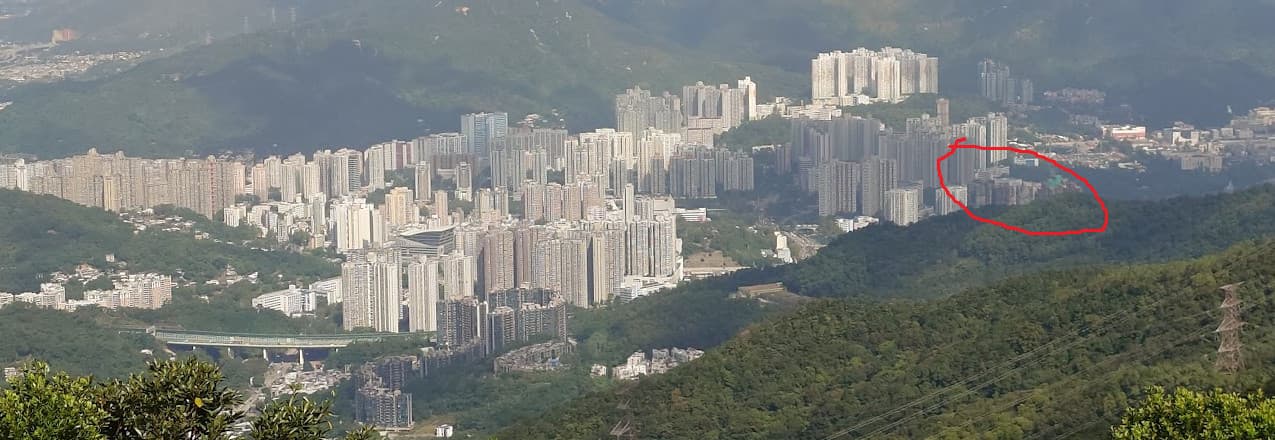
A few photos from farther away, to give some scope…
The first is from a waterfront path that a lot of folks use. (Cycling options aren’t great in HK, but they exist, this is one of them.) The second is a view of Tai Po from up in the hills, just to give a sense of what HK living is like. That one’s not a great view of the towers that burned, obviously, but it gives a sense of why so many people in HK are thinking, ‘that could be our building.’

Someone who actually knows London can correct me if I’m wrong about this, but I don’t think most Londoners live in Grenfell-like buildings. Not the case in HK.

3 Likes