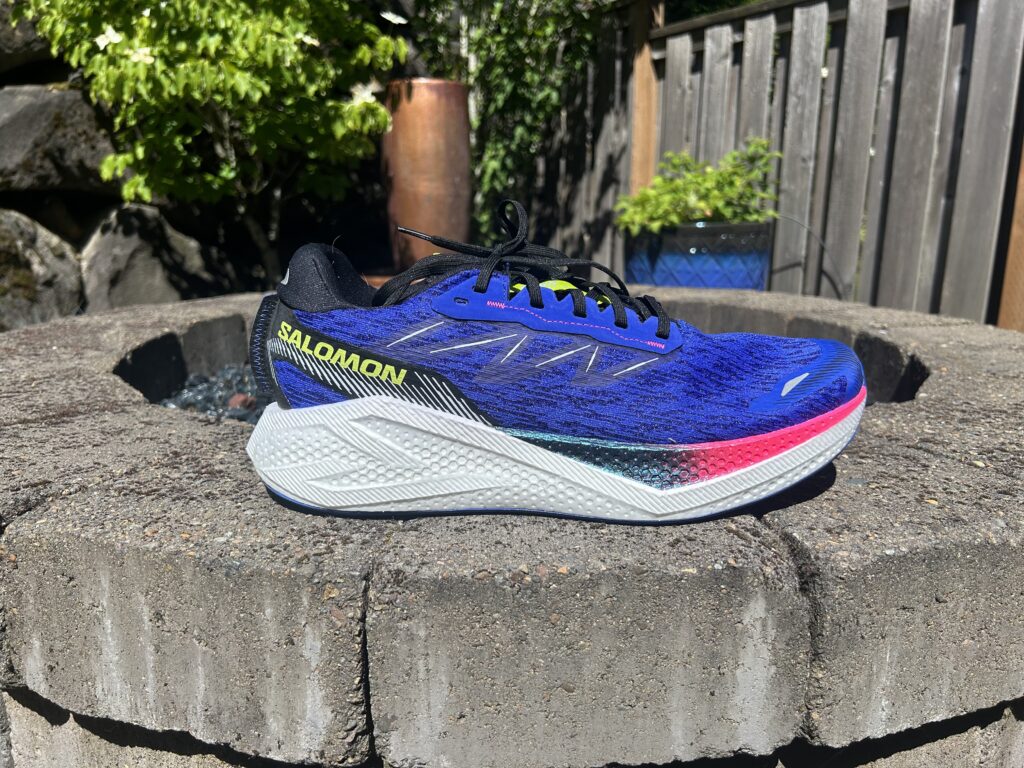
Any follow-up to a product that I dubbed my sleeper shoe of the year last year is going to have some mighty big…errr…shoes to fill. (I promise, I’m not going to fill this thing with nothing but bad puns and Dad jokes.) That’s the exact dilemma that Salomon and the Aero Glide 4 are presented with; how do you alter a shoe that was so good in the first place? And especially where the Aero Glide 3 represented such a huge departure from the one that came before it?
Well, the answer is: something has to change. Otherwise, there’s not much of a reason to buy the new model. It’s just always a matter of whether those changes improve or detract from a shoe.
I suppose that’s where my own dilemma is: this shoe is both better and worse than the one that came before it. And I’m undecided as to whether those balance each other out, or whether this shoe is, in the sum of its part, a better finished product than the Aero Glide 3.
The Tech Stuff
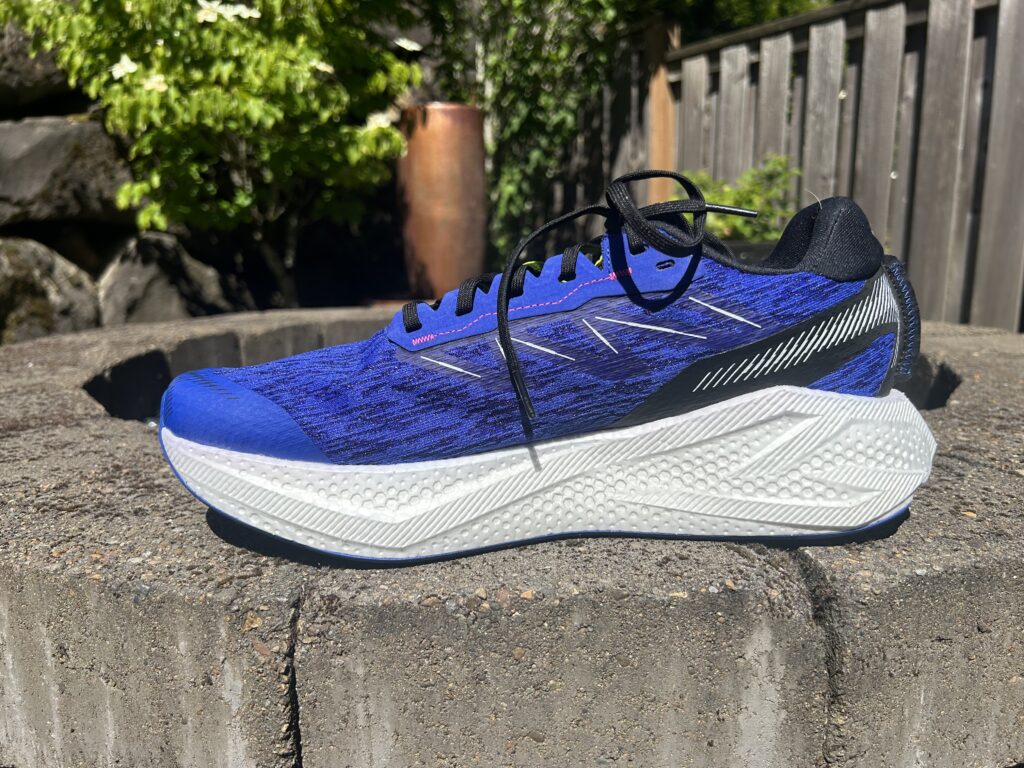
Let’s start off with what hasn’t changed, because the list is somewhat extensive. The Aero Glide 4 is Salomon’s flagship max-cushioning trainer. It competes in the same category as the Nike Vomero, Brooks Glycerin, ASICS Gel Nimbus, Saucony Triumph, and so on and so forth. There’s two critical differentiating factors for Salomon against that competitive set. First, the Salomon is by far the lightest of that group, coming in at 8.8 ounces in a men’s sample size. (My size 13 boats are still quite light). For comparison, that’s about 1.5 ounces lighter than most of the competition.
The other key differentiator is in the foam. Salomon opts for their supercritical midsole formulation for the Glide, which is dubbed optiFOAM2. Salomon claims that this midsole “provides superior shock absorption and resilient rebound, ensuring both comfort and responsiveness mile after mile.” It pairs up with a reverse camber geometry, which Salomon says comes from their ski technology, to smooth out the ride.
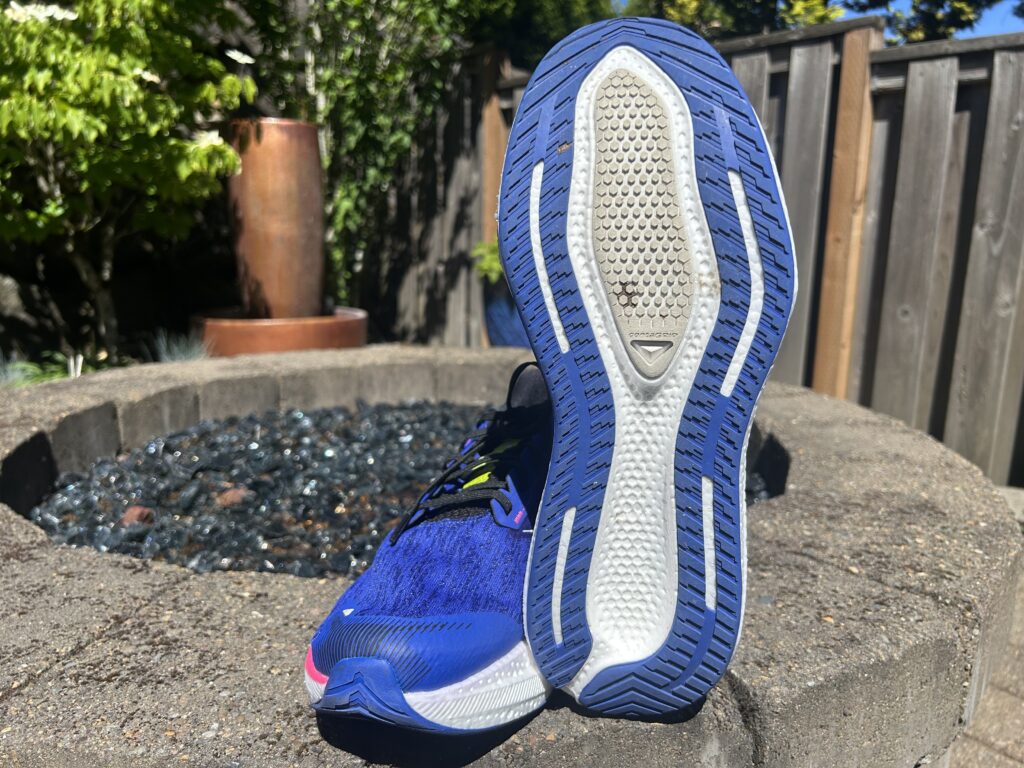
The published stack height for the Glide 4 comes in at 41 millimeters. That, theoretically, disqualifies it from racing in the shoe, as it’s exactly one millimeter above the maximum stack height allowed by World Athletics. That being said, if you’ve run in the shoe for, say, a little bit, it’s likely you’d be seeing that stack height *ahem* compress a little bit. Seeing as there’s no carbon plate, I don’t think anybody would bat an eye to you wearing this shoe at an IRONMAN or running event.
Perhaps the big innovation for Salomon is in the upper. They say that their upper features inside-out construction. In practicality, that means that they add reinforcement points directly to the engineered mesh, rather than trying to stitch any of these pieces together. It also means any of those reinforcement points are on the exterior of the shoe, rather than the interior, limiting any potential friction points.
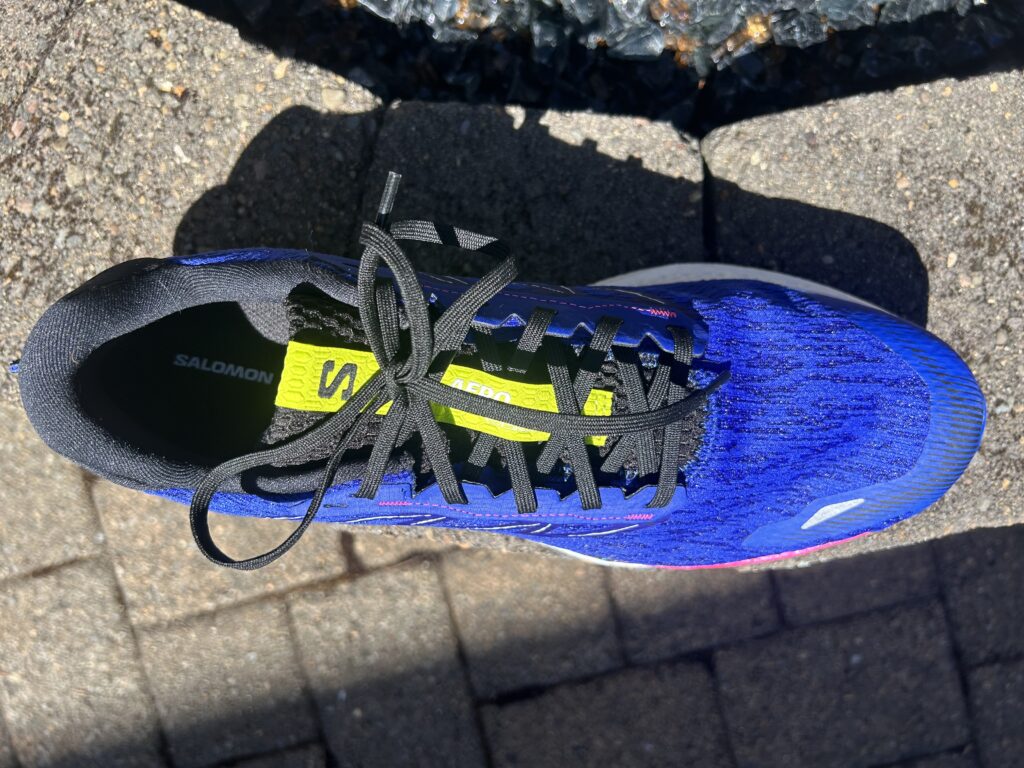
If all of this sounds familiar, it should; most of these innovations were found in the Glide 3.
So, What Changed?
Let’s start with just how the shoe itself fits. The feedback from many runners was that the Glide 3 was extremely forgiving in its fit; as in, if you wanted to go down a size in the shoe, you pretty comfortably could. The fit on the Glide 4 is far more tailored and sculpted. Let me put it this way: if you had opted to size down in the Glide 3, you’re going back to your “normal” size in the Glide 4.
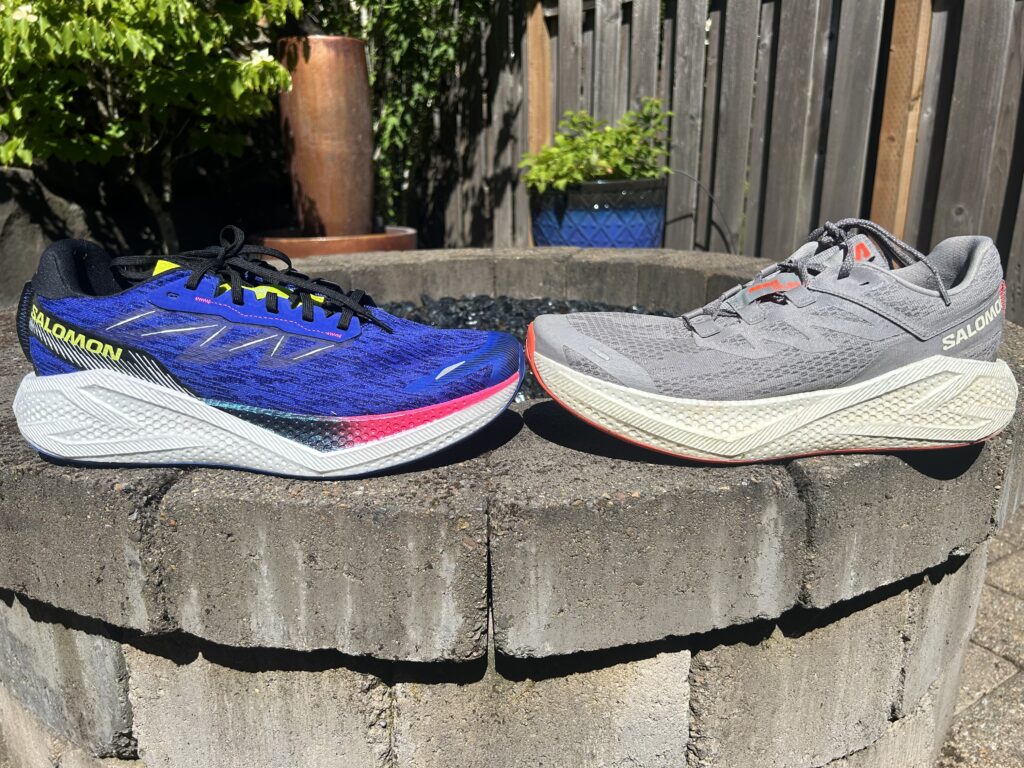 New Glide 4 to the left, prior generation Glide 3 to the right.
This is also a shoe that sits far lower on the foot than the Glide 3 did. It reminds me a lot of early 2010s Saucony fit; if you have a high instep, you’re probably going to be looking elsewhere. It’s funny to me that Salomon brings up its skiing background in the press materials for the Glide 4, as the fit is precisely the opposite of what you would find in their current generation ski boots. Ultimately, it’s a shoe that fits me pretty well, and it will definitely fit some folks that the prior generation would have felt far too boxy in, but it will also wind up alienating some prior wearers.
This is also a shoe that is more challenging in terms of its try-on feel. Whereas some of the other shoes in the max-cushioning category will feel very plush and welcoming when you step into them, the Glide 4 is harsher. The arch feels higher, and more obtrusive, than before. It’s frankly a challenging first couple of steps in it, kind of like trying your first IPA; yeah, it’s beer, but it’s definitely different and you’ll either love it or hate it.
But the advantage of the Glide 4? All of that goes away when you run in it.
After about half a block, everything that I mentioned above went away. By half a mile in I was enjoying every stride. And by the first mile I forgot what shoe I was wearing. It’s an extremely light shoe that gives you some high quality bounce and all the plushness you could ask for. I just couldn’t understand how a shoe that felt so downright strange during the initial try-on could feel that good while running in it. It’s flexible, it’s soft, it’s stable, and it just eats up miles and asks you, “thank you sir may I have some more?”
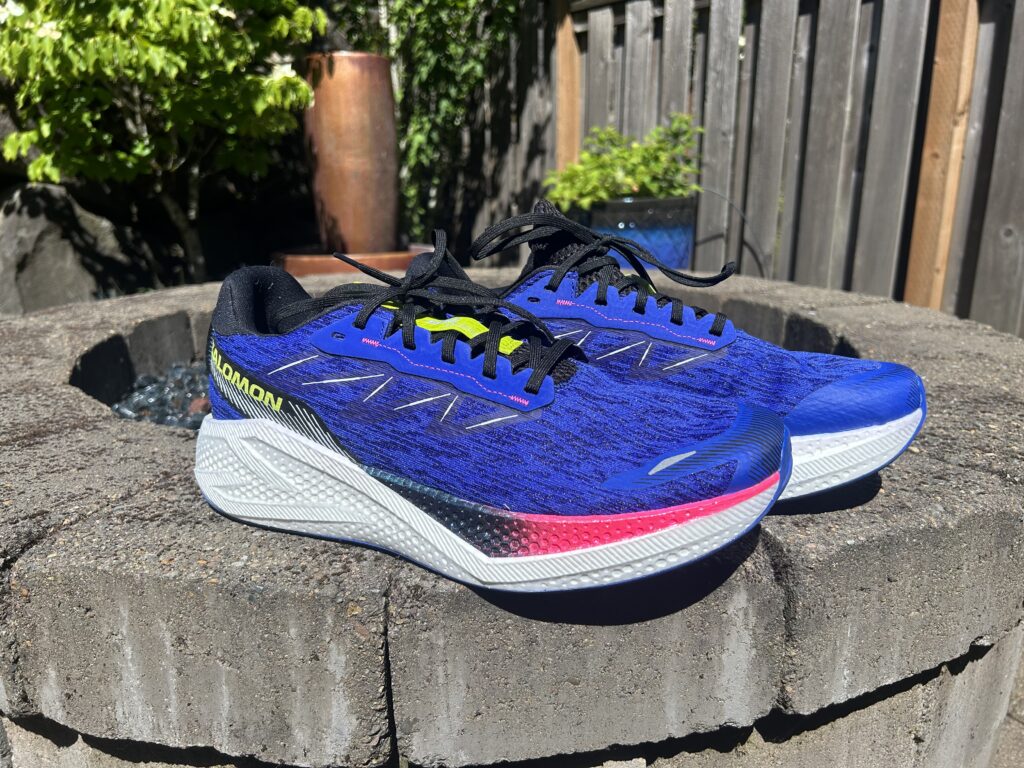
Going back to the original question in the article: there is no doubt in my mind that the Glide 4 is a better shoe to run in than its predecessor. And that predecessor was a damn good shoe. Perhaps the biggest problem for Salomon was that the Glide 3 might have been better at that initial feel, along with a very good running experience. That might mean the Glide 3 was an easier shoe to sell — and ultimately, that’s the measuring stick all shoes are held to.