Originally published at: When Did “Bike for Show, Run for Dough” Stop Being True? - Slowtwitch News
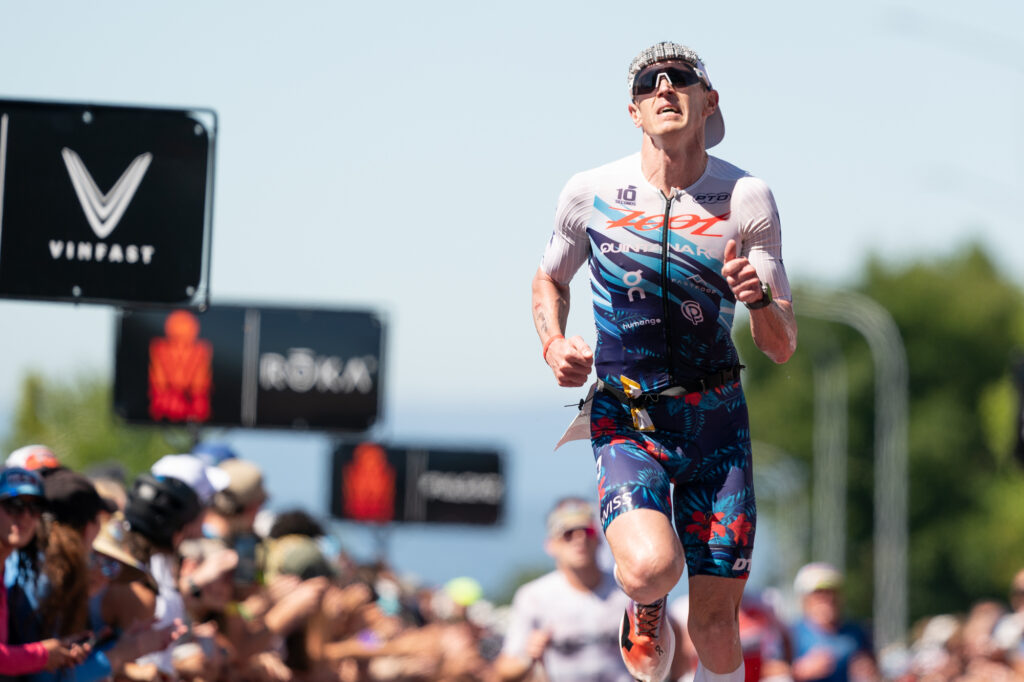
Top runners can make headlines with quick marathon times in IRONMAN racing, but they don’t always get the best overall results. Photo: Kevin Mackinnon
Compared to many other sports, triathlon is pretty young. It incorporates sports that have long been contested around the world, but combining all three sports is a relatively new idea. Because of this, up until quite recently, elite triathlon was dominated by athletes who excelled at cycling or running and could simply hold their own in the other two sports.
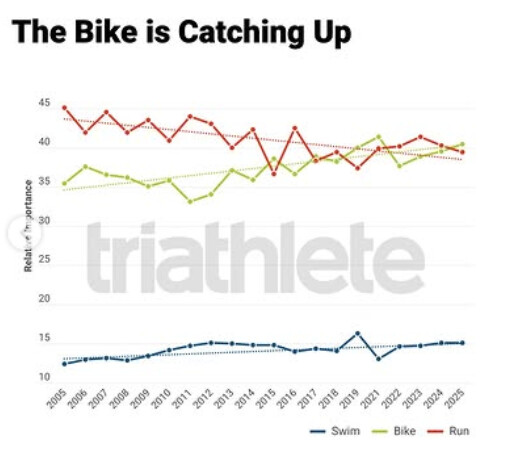
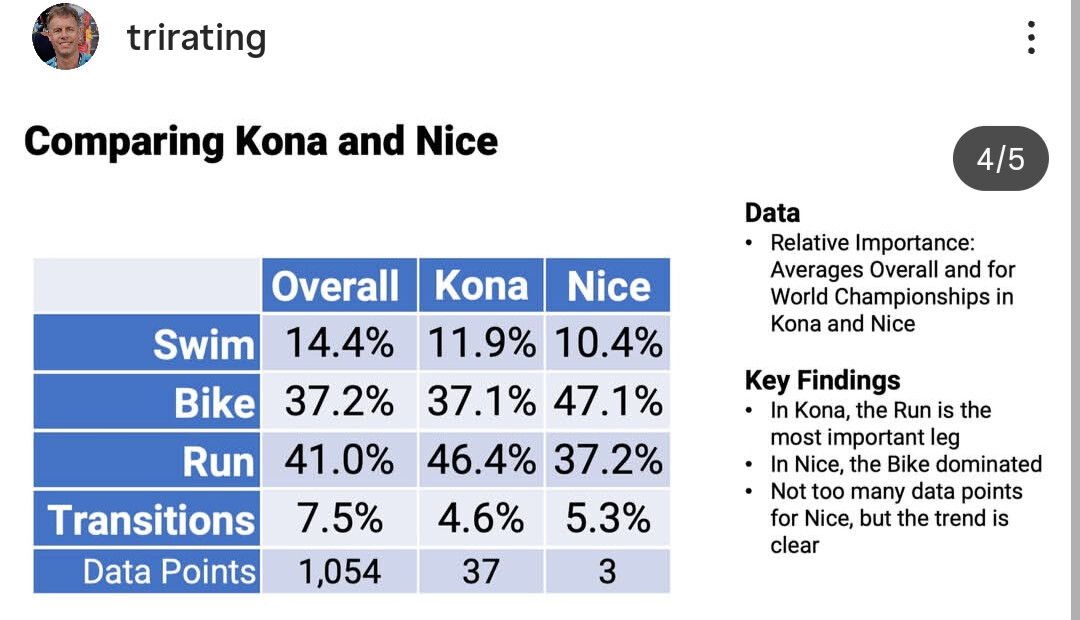
There are still plenty of professionals who fit this description, and every athlete will, of course, have a preference for one sport over the others, but as triathlon has matured, more and more people are entering the sport as triathletes first – not just swimmers, cyclists or runners who decided to take a stab at the multi-sport event. This change occurred much quicker in the draft-legal space before reaching long-course racing. Today, though, even half- and full-distance super-runners have to face a harsh truth: they can not — in the pro ranks, at least — steal the win with a stellar run after an average, or sub-par, bike.
A strong, solid run is of course needed to win any race, but there is a balance that must be struck between the bike-run split for optimal results. The most consistent athletes on the pro tour have that balance dialled in, pushing hard enough on the bike to stay at or near the front of the race heading into T2, all while saving their legs enough to hold on for the win or podium on the run. (And also giving themselves enough of a buffer over the strongest runners so they won’t be caught before the line).
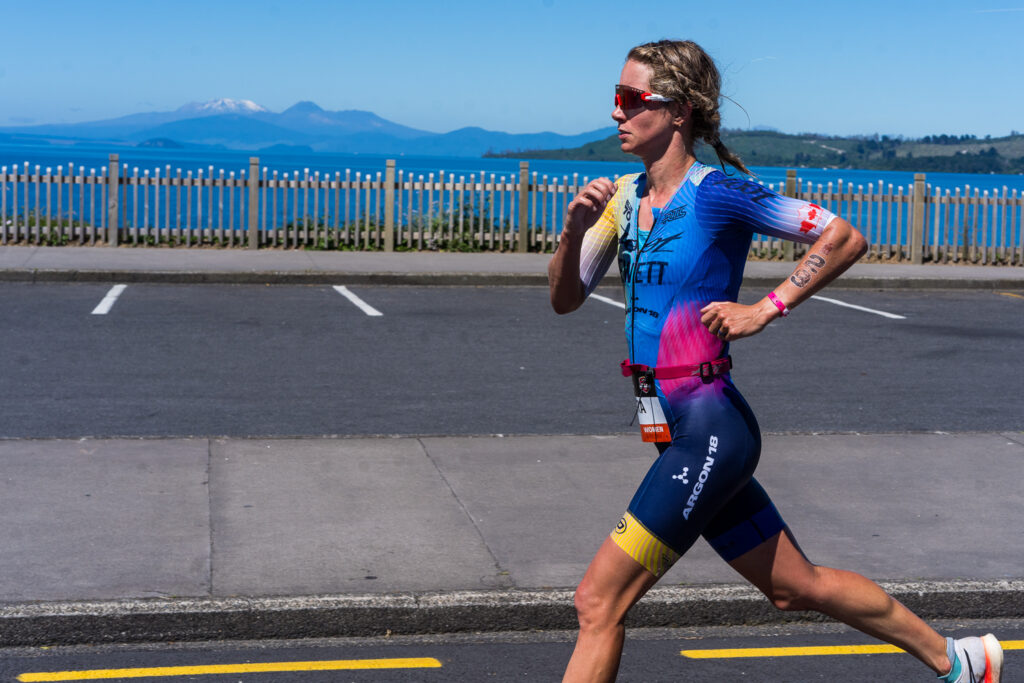
Tamara Jewett routinely posts the fastest run split when she races. Photo: Kevin Mackinnon
We want to find out where the line is in this balance. How much time can an athlete give up on the bike before the gap to the front is too big? What is the minimum that long-distance triathlon’s super-runners have to do between T1 and T2 in order to give themselves a legitimate chance at a come-from-behind win on the run?
Comeback Runners
Three-time IRONMAN world champion Mirinda Carfrae was a super-runner just before the scales tipped in long-distance racing. In 2010, when she won her first IRONMAN world title, she was 11 and a half minutes behind the leader after the bike, but a 2:53 marathon lifted her to the top of the podium. When she won for the second time in Kona, in 2013, she was seven and a half minutes back as she entered T2. A 2:50:38 marathon (13 minutes faster than second place’s run split) carried her to the win.
It was the next year, however, when Carfrae laid down one of the most incredible comebacks in triathlon history. After a one-hour swim and a 5:05 bike, she was fourteen and a half minutes behind Daniela Ryf. Even for a runner like Carfrae, this deficit seemed insurmountable. But she ran yet another 2:50 marathon on Hawaii’s Big Island to catch Ryf and win by two minutes.
A few years later, in 2017, once again in Kona, the men’s race saw a phenomenal comeback on the run. Lionel Sanders out-biked the rest of the top contenders, posting a 4:14:19 split, and he set out on the marathon course looking like he had finally cracked the code in Kona. He ended up running well, recording the fourth-best marathon of the day with a 2:51:53, but Patrick Lange ran 2:39:59 to come from nine minutes down to win the race.
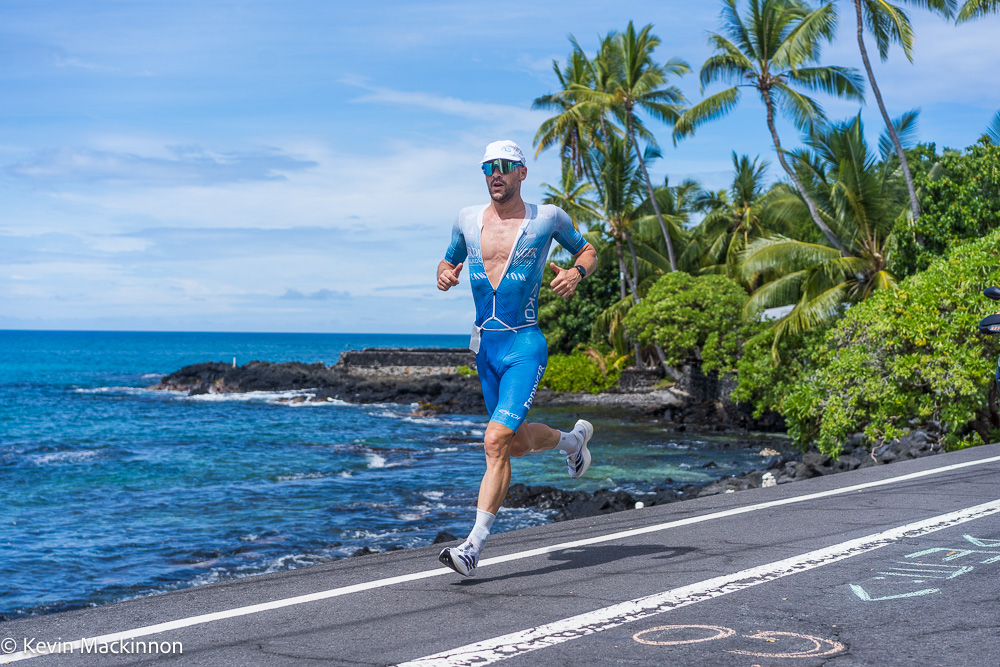
Patrick Lange has used speedy runs to win his three IRONMAN world titles. Photo: Kevin Mackinnon
Comebacks on the run will of course always be an occurrence in triathlon, and from time to time a super-runner will lay down a remarkable result like Carfrae or Lange to steal the win. But instances like those in 2014 and 2017 in Kona are happening less and less — especially at the biggest races on the pro circuit.
Just A Little Short
At IRONMAN Brasil in June, Manoel Messias entered the first full-distance race of his career. An Olympian and three-time Pan Am Games medallist, Messias is a strong runner, and he made this clear while racing on home soil for his IRONMAN debut, when he ran an incredible 2:26:50 marathon to finish his day. His run split was 11 minutes faster than the next-best marathon of the day, and his bike was strong, too, as he posted the fourth-fastest time of the race. He still lost.
Argentina’s Luciano Taccone won the race after riding the 112-mile course in 4:00:09 and following that up with a 2:37 marathon. Messias’s run was unrivalled, but he didn’t even come close to the win, crossing the line more than five minutes behind Taccone.
In July, Canada’s Tamara Jewett ran a 2:40:05 marathon at IRONMAN Lake Placid. Her split was six minutes ahead of the second-fastest that day and a whopping 15 better than third-best. Her run helped her pick off multiple women before the finish, but she couldn’t make it to the podium, finishing in fourth, two minutes behind third place.
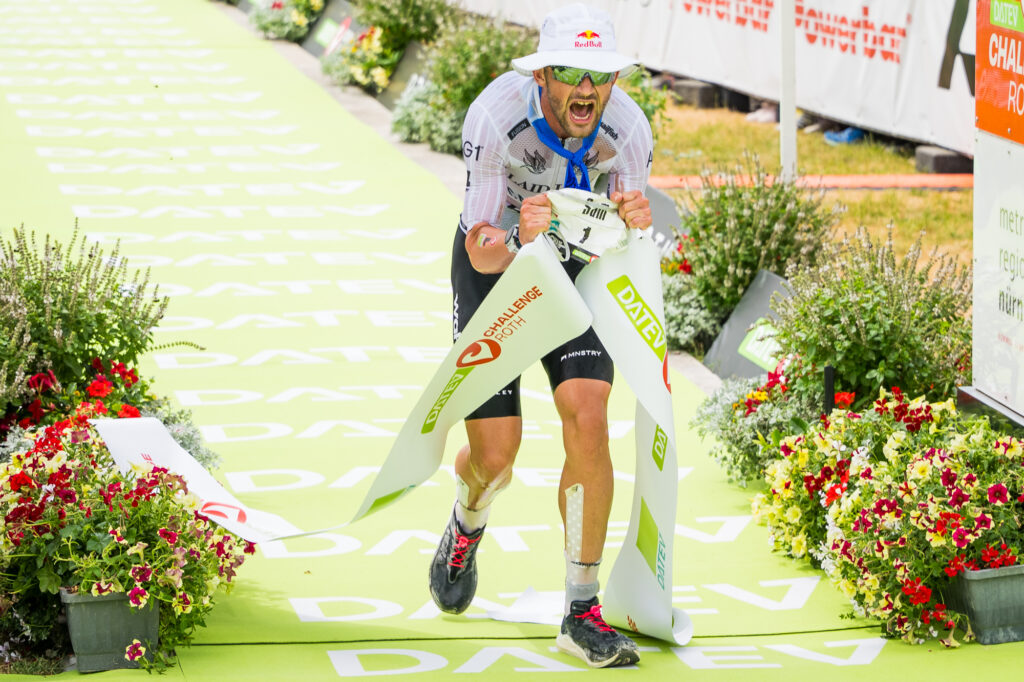
Sam Laidlow is consistently able to back up his top-tier riding with solid run splits. Photo: Kevin Mackinnon
Twice in 2025, American Matt Hanson has run nine minutes faster than the next-best runner in the men’s field, but on both occasions, he finished well behind the podium. The first instance came at IRONMAN Cairns in June, when he ran a 2:30:21 marathon. This run lifted him to fifth overall, but his bike split was close to 17 minutes slower than fellow American Matthew Marquardt’s, who won that day and recorded the second-fastest marathon with a 2:39:47. Less than a month later, at Challenge Roth, Hanson ran a staggering 2:28:03 marathon, but he finished ninth overall. France’s Sam Laidlow won in Roth, out-biking Hanson by 18 minutes and still managing to run a 2:37:19 marathon.
What do these results all have in common? The super-runners were not just bested on the ride by a significant amount. If that had been the case — if it were a matter of super-bikers versus super-runners — then they would have had a shot at overcoming those deficits and potentially winning. It’s more than just falling behind on the bike, because in each of these cases, the winners of the races all had solid runs. The runs were minutes slower than those of Hanson, Messias or Jewett, but they were still strong performances that kept their leads safe. The athletes winning big races don’t get to the run after a top-five bike split and simply hope they can hold on for the run — they know they have the legs to hold off any charging runners coming up behind them.
Where’s the Line?
The limit for how far behind a pro athlete can be as they leave T2 in a full-distance triathlon will, of course, vary from race to race. If Hanson or Jewett show up to an obscure race with no top professionals, they could come off the bike 20 minutes back and blow by everyone on the run course. (Of course, if the field was that weak, it’s unlikely they would be so far back off the bike to begin with.) But at the biggest races on the pro circuit — the continental championships, the worlds, iconic events like Roth — the fields are always going to be stacked. There is no room for a weakness at at these races.
Looking at the run splits from at major full-distance events in the past decade, the limit for a comeback on the marathon seems to be around 10 minutes. In Kona in 2022, Gustav Iden was down six minutes to Laidlow after the bike, but his 2:36 marathon lifted him past Laidlow, who still ran a solid 2:44. Iden won by two minutes. The next year in Kona, Lucy Charles-Barclay won her first IRONMAN world title, holding off a charging Anne Haug on the run. Charles-Barclay had a lead of about 12 minutes going into the marathon, and although Haug ran a race-best 2:48 split, the Brit was able to hang on with a 2:57 run to win by three minutes.
At IRONMAN Frankfurt in 2021, Denmark’s Kristian Høgenhaug was up eight and a half minutes going into the run, but Patrik Nillson of Sweden used a 2:39:39 to come from behind and win by a minute. In 2023 at IRONMAN Texas, Kat Matthews was nine minutes off the lead as she exited T2, but the fastest marathon of the day shot her up the rankings to the top of the podium.
Once again, this is not a hard rule for racing. There will likely be another day when someone pulls a “Mirinda Carfrae” and comes from 14 minutes down to win a big race on the run. But if pros want to have a shot at winning the most competitive races time after time, they need to consistently get off the bike at least within 10 minutes of the leaders. Otherwise, those super-runners may find themselves running amazing times and managing to go from 12th to fourth, or maybe even making it onto the podium, but more often than not, they will run out of room and rarely be able to complete their late-race comebacks to take the win.