Vittoria Corsa Pro vs Corsa Speed

This whole conversation is interesting. I am the first to have put a lot of focus on Crr for tire selection

According to Xaviers’s data the new Corsa will get a 70kg rider at 5h IM pace less than 2 watts of saving on RR

No consideration of aero (2 watt is easy to find)
No discussion of proper tire pressure (2 watts trivial to find)
No discussion of width which impacts the above 2

Then we needed to quantify flat resistance

For me, selecting the two tires based on CRR is like ordering a double big Mac, supersizing the fries but feeling good because you ordered a diet coke :slight_smile:

Maybe there needs to be an article on optimizing the whole wheel. As a wheel supplier, maybe Xavier’s up to it :slight_smile:

A anecdotal note here re:puncture resistance. The word is that Ineos used the GP5TT’s for the whole TdF and didn’t suffer a single flat. Based on past experience with the Vittoria Speeds, I’m not sure they’d be up to that. I know the construction method has changed a fair bit, so I may be speaking out of turn. Also UAE was using the TT almost exclusively as well.

Spent over a week testing on roads like this with the GP5K and 5kTT. Pressure from 50 to 90PSI, riders from 60 to 75kg, 25,28 and 30s. Over and over, not one flat

https://youtu.be/I3R7iNxmCZ4?si=DnvA7pHynXO7W6J6

Nice! I’m also wondering if the Conti’s roll a bit faster in testing due to them being a bit oversized on their measurements? They’re not nearly like they were. Essentially the old GP4000 in a 23 is the same at the new GP5000 25. Looking at the BRR charts the GP5000’s are about 1mm wider in a 28 v Corsa Pro 28.

Spent over a week testing on roads like this with the GP5K and 5kTT. Pressure from 50 to 90PSI, riders from 60 to 75kg, 25,28 and 30s. Over and over, not one flat

question for you: did you test these tubeless or with innertubes?

Spent over a week testing on roads like this with the GP5K and 5kTT. Pressure from 50 to 90PSI, riders from 60 to 75kg, 25,28 and 30s. Over and over, not one flat

question for you: did you test these tubeless or with innertubes?

All tubeless

Spent over a week testing on roads like this with the GP5K and 5kTT. Pressure from 50 to 90PSI, riders from 60 to 75kg, 25,28 and 30s. Over and over, not one flat

question for you: did you test these tubeless or with innertubes?

All tubeless

that doesn’t surprise me. it is purely a guess on my part but i think just moving to tubeless - just that change even if it’s the same tire - reduces the incidence of flats by half to two-thirds. there’s no more pinch flat, no more pinched tube during install, no more rim tape moving to expose a spoke hole, no more flats that reoccur because you changed the tube but you somehow missed the underlying problem causing the flat, and of course there’s sealant to seal a flat and with the move to larger volume tires you lose less pressure when the sealant deploys. i just think the paradigm of tubeless takes an otherwise dicey tire choice and brings it up to a more confident choice. it’s like you could take BRR’s flat resistance score and add 10 or 15 points to it just by moving from tubed to tubeless.

This whole conversation is interesting. I am the first to have put a lot of focus on Crr for tire selection

According to Xaviers’s data the new Corsa will get a 70kg rider at 5h IM pace less than 2 watts of saving on RR

No consideration of aero (2 watt is easy to find)
No discussion of proper tire pressure (2 watts trivial to find)
No discussion of width which impacts the above 2

Then we needed to quantify flat resistance

For me, selecting the two tires based on CRR is like ordering a double big Mac, supersizing the fries but feeling good because you ordered a diet coke :slight_smile:

Maybe there needs to be an article on optimizing the whole wheel. As a wheel supplier, maybe Xavier’s up to it :slight_smile:

A anecdotal note here re:puncture resistance. The word is that Ineos used the GP5TT’s for the whole TdF and didn’t suffer a single flat. Based on past experience with the Vittoria Speeds, I’m not sure they’d be up to that. I know the construction method has changed a fair bit, so I may be speaking out of turn. Also UAE was using the TT almost exclusively as well.

Spent over a week testing on roads like this with the GP5K and 5kTT. Pressure from 50 to 90PSI, riders from 60 to 75kg, 25,28 and 30s. Over and over, not one flat

https://youtu.be/I3R7iNxmCZ4?si=DnvA7pHynXO7W6J6

Anything you can share from your results? My guess is that smooth roads can handle more pressure than hookless rims generally allow for. And on tough roads we’re probably running too much pressure.

This whole conversation is interesting. I am the first to have put a lot of focus on Crr for tire selection

According to Xaviers’s data the new Corsa will get a 70kg rider at 5h IM pace less than 2 watts of saving on RR

No consideration of aero (2 watt is easy to find)
No discussion of proper tire pressure (2 watts trivial to find)
No discussion of width which impacts the above 2

Then we needed to quantify flat resistance

For me, selecting the two tires based on CRR is like ordering a double big Mac, supersizing the fries but feeling good because you ordered a diet coke :slight_smile:

Maybe there needs to be an article on optimizing the whole wheel. As a wheel supplier, maybe Xavier’s up to it :slight_smile:

A anecdotal note here re:puncture resistance. The word is that Ineos used the GP5TT’s for the whole TdF and didn’t suffer a single flat. Based on past experience with the Vittoria Speeds, I’m not sure they’d be up to that. I know the construction method has changed a fair bit, so I may be speaking out of turn. Also UAE was using the TT almost exclusively as well.

Spent over a week testing on roads like this with the GP5K and 5kTT. Pressure from 50 to 90PSI, riders from 60 to 75kg, 25,28 and 30s. Over and over, not one flat

https://youtu.be/I3R7iNxmCZ4?si=DnvA7pHynXO7W6J6

Anything you can share from your results? My guess is that smooth roads can handle more pressure than hookless rims generally allow for. And on tough roads we’re probably running too much pressure.

Wow, you’re good !!

Here’s a summary of what we did

  • tests performed in Girona
  • 4 pro riders, at least 2 are doing the TDF this summer, they are all doing the Belgian races in a few weeks
  • purpose was to confirm the pressure numbers they were using were correct
  • we were supposed to do 3 road types. We only did 2. Pretty good (not perfect) and pretty bad. Pretty good is what I would say most IM races I have done have been. I have done about 24 IM branded events. Example Syracuse was probably the worst, Haines was not very good. China was perfect, Tremblant good. None of these roads were even close to the “bad” we tested. E3 in a few weeks may be :slight_smile:
  • riders were 60, 68, 74, 75kg
  • tires were 25,28 and 30
  • 2 wheel types, one with wider inner diameter

Part of this started debating pressure and pressure calculators. My argument was “if Silca calculator is right, your pressures are too low. If you are right, Silca is too high”

We ran each test at 50,60,70,80 and 90PSI
We used instrumentation to measure performance. Doing X km in Y time using Z power. All environmental conditions measured (wind for example) and logging vibration data

Optimal tire pressures were much higher than expected on “good” surfaces.
The bad surfaces, were really bad and lower pressures prevailed. Lower than expected.
Hookless wheels would not have been useable to achieve many of the optimal situations. Maybe the 60kg rider. The wheels were not hookless, although they did have a max 5 bar sticker on them that I had to ask permission to bypass. I was assured they had been tested.
We did some improvements on the instrumentation and can do a quick protocol to get optimial pressure on race day.
We asked the rider “what pressure did you think was fastest”. They always got it wrong.
Tables that say the 28mm has a lower rr than the 30 are a little misleading. You would have to compare the 28 at one pressure to the 30 at the other pressure.
I would say, “if you can’t test, go with the Silca calculator”.
It’s pretty easy to be 4w off. In some cases more.
Lots of ideas on how to make the test process/optimization even better.
The riders now hate me
Wow, you’re good !!

Here’s a summary of what we did

  • tests performed in Girona
  • 4 pro riders, at least 2 are doing the TDF this summer, they are all doing the Belgian races in a few weeks
  • purpose was to confirm the pressure numbers they were using were correct
  • we were supposed to do 3 road types. We only did 2. Pretty good (not perfect) and pretty bad. Pretty good is what I would say most IM races I have done have been. I have done about 24 IM branded events. Example Syracuse was probably the worst, Haines was not very good. China was perfect, Tremblant good. None of these roads were even close to the “bad” we tested. E3 in a few weeks may be :slight_smile:
  • riders were 60, 68, 74, 75kg
  • tires were 25,28 and 30
  • 2 wheel types, one with wider inner diameter

Part of this started debating pressure and pressure calculators. My argument was “if Silca calculator is right, your pressures are too low. If you are right, Silca is too high”

We ran each test at 50,60,70,80 and 90PSI
We used instrumentation to measure performance. Doing X km in Y time using Z power. All environmental conditions measured (wind for example) and logging vibration data

Optimal tire pressures were much higher than expected on “good” surfaces.
The bad surfaces, were really bad and lower pressures prevailed. Lower than expected.
Hookless wheels would not have been useable to achieve many of the optimal situations. Maybe the 60kg rider. The wheels were not hookless, although they did have a max 5 bar sticker on them that I had to ask permission to bypass. I was assured they had been tested.
We did some improvements on the instrumentation and can do a quick protocol to get optimial pressure on race day.
We asked the rider “what pressure did you think was fastest”. They always got it wrong.
Tables that say the 28mm has a lower rr than the 30 are a little misleading. You would have to compare the 28 at one pressure to the 30 at the other pressure.
I would say, “if you can’t test, go with the Silca calculator”.
It’s pretty easy to be 4w off. In some cases more.
Lots of ideas on how to make the test process/optimization even better.
The riders now hate me

Anything you can share on smooth road testing based on tire size? I’ve not tested it (yet) but I’d wager on smooth roads, if you have the correct pressure in for the tire size, you can mix the widths and optimize for aero without a loss due to Crr. The rougher the roads the more it tends to add up. There’s also the weird issue of, at least with Conti, the 28’s are measured using an ERTO of 19 vs 21 for the 30. So the 28’s and 30’s on the same internal width rims end up within .5-1mm of each other.

Most of my racing is on pretty smooth roads, so hopefully I can maximize the aero/Crr equation by running 25/28 combo or a 28/28 or 28/30 for rougher stuff and wet crits.

Many wheels are now saying they’re “optimizing” around 28mm tires, but what I’m seeing is 28mm at the brake track and a 28mm tire that overhangs the edge. The deeper the wheel the less this is an issue, also if the wheel is toroidal it seems to let the air reattach pretty well. There are a lot of “U” or modified “V” shaped (UV?) rims that don’t extend past the brake track. I know you can feel the wheel stall when this get’s too far out side the operating window of the rim/tire system.

Also the riders should love you!

Many wheels are now saying they’re “optimizing” around 28mm tires, but what I’m seeing is 28mm at the brake track and a 28mm tire that overhangs the edge.

certain wheels don’t make sense to me. like the zipp 404 and 808. those are made as you say. the 353, 454, 858 i don’t think follow that line. they really are made to be ridden with 28mm or larger. a 28mm tire on my 353 NSW looks positively tiny. so far, for the road, zipp NSW wheels and cadex wheels are the ones that i feel best accommodate 28mm and fatter, with external rim diameters of 30mm and 31mm.

I’ve got a set of light bicycle wheels that just arrived last week with a max width of 32mm. Looking forward to getting tires mounted up on those and seeing how they match, sounds similar to what you’re saying with the 353.

I’d also think the latest roval rapide wheels fall into that category as well.

Many wheels are now saying they’re “optimizing” around 28mm tires, but what I’m seeing is 28mm at the brake track and a 28mm tire that overhangs the edge.

certain wheels don’t make sense to me. like the zipp 404 and 808. those are made as you say. the 353, 454, 858 i don’t think follow that line. they really are made to be ridden with 28mm or larger. a 28mm tire on my 353 NSW looks positively tiny. so far, for the road, zipp NSW wheels and cadex wheels are the ones that i feel best accommodate 28mm and fatter, with external rim diameters of 30mm and 31mm.

Ah, I had no idea the shapes were different besides the sawtooth/whale hump profiles v standard. TBH I’ve stopped even looking at Zipp now that they’re hookless. The same applies to ENVE as well. Cadex has never been on my radar, as the only wheel I’d probably ride from them is A. Insanely expensive B. Also Hookless.

FWIW, a 30mm external and 23mm internal will contain a 28mm tire inside it’s profile. But just barely. ERTO standards say you shouldn’t run anything on a 25mm hookless rim narrower than 29mm. I think there is just too much being given up there (illustrated by the data Marc found) just so the manufacturer can save a couple of dimes per rim.

Anything you can share on smooth road testing based on tire size? I’ve not tested it (yet) but I’d wager on smooth roads, if you have the correct pressure in for the tire size, you can mix the widths and optimize for aero without a loss due to Crr. The rougher the roads the more it tends to add up. There’s also the weird issue of, at least with Conti, the 28’s are measured using an ERTO of 19 vs 21 for the 30. So the 28’s and 30’s on the same internal width rims end up within .5-1mm of each other.

Most of my racing is on pretty smooth roads, so hopefully I can maximize the aero/Crr equation by running 25/28 combo or a 28/28 or 28/30 for rougher stuff and wet crits.

Many wheels are now saying they’re “optimizing” around 28mm tires, but what I’m seeing is 28mm at the brake track and a 28mm tire that overhangs the edge. The deeper the wheel the less this is an issue, also if the wheel is toroidal it seems to let the air reattach pretty well. There are a lot of “U” or modified “V” shaped (UV?) rims that don’t extend past the brake track. I know you can feel the wheel stall when this get’s too far out side the operating window of the rim/tire system.

Also the riders should love you!

Let me take a closer look, there are 1000 ways to look at this data. I do have tests of same riders, same wheel, different tire widths. I will compare.

I do have data for a tire a little too big for the rim vs optimal. I don’t have data for a tire too small.

FWIW, a 30mm external and 23mm internal will contain a 28mm tire inside it’s profile. But just barely. ERTO standards say you shouldn’t run anything on a 25mm hookless rim narrower than 29mm. I think there is just too much being given up there (illustrated by the data Marc found) just so the manufacturer can save a couple of dimes per rim.

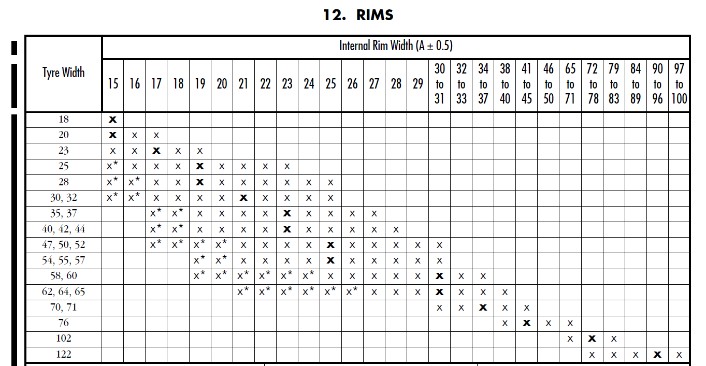
is this no longer current?

because this shows a 28mm tire going on a 25mm internal. me, i always run 5mm to 7mm delta between nominal tire size and internal bead width. that’s to me the sweet spot. 28mm on 23mm internal width, 30 an 32mm tires on 25mm width. but you can certainly run a 28mm tire on (say) a zipp 353 NSW by this chart, tho this chart is from 2022 and something might’ve changed to which i’m naive.

as to your view of hookless, all my favorite road wheels are hookless. maybe it’s a fluke. maybe it’s a coincidence. but this debate feels a lot like road disc brake. “we don’t need it.” “you’re pushing something on us we didn’t ask for.” but the difference this time is that everybody has plenty of hooked beads to buy and i expect that to remain the case for a long time.

FWIW i put my wife on shimano wheels, in some part because of hooked beads. i don’t trust her to always use the pressure gauge i have her when she inflates her wheels. one very real - and in my view the only - drawback to hookless are those who just don’t understand the pressure restrictions and aren’t likely to focus on them in the course of their riding.

etrto_chart.png

FWIW, a 30mm external and 23mm internal will contain a 28mm tire inside it’s profile. But just barely. ERTO standards say you shouldn’t run anything on a 25mm hookless rim narrower than 29mm. I think there is just too much being given up there (illustrated by the data Marc found) just so the manufacturer can save a couple of dimes per rim.

is this no longer current?

FWIW i put my wife on shimano wheels, in some part because of hooked beads. i don’t trust her to always use the pressure gauge i have her when she inflates her wheels. one very real - and in my view the only - drawback to hookless are those who just don’t understand the pressure restrictions and aren’t likely to focus on them in the course of their riding.

It is not current… I can’t find the current chart, but this info has been in the public domain for a while now.

https://www.cyclingweekly.com/products/is-the-bike-industry-divided-over-new-tyre-and-wheel-rim-size-regulations

Your last point highlights the issue with hookless. We’re relying on people to understand tire pressure and know that they have hookless rims. I’d wager a great deal that more than 95% have no clue if they have hookless or hooked rims. It’s a slog to get people to actually lower the pressure in their tires, as most think the MAX pressure is the recommendation. I’m sure the first time someone puts 100PSI in their tire on a hookless rim and coats themselves and living room with sealant, the’ll probably get it, maybe. But only after coming into the shop and complaining their wheels are defective.

As Marc mentioned, if you’re going for max efficiency and Crr on relatively smooth roads, that is generally outside of the operating window of hookless for everyone save many women and a few small men. <60kg. Do they work for you? Sure, and that’s perfectly fine. But being near 82kg, I’m not willing give up those watts just yet.

Anything you can share on smooth road testing based on tire size? I’ve not tested it (yet) but I’d wager on smooth roads, if you have the correct pressure in for the tire size, you can mix the widths and optimize for aero without a loss due to Crr. The rougher the roads the more it tends to add up. There’s also the weird issue of, at least with Conti, the 28’s are measured using an ERTO of 19 vs 21 for the 30. So the 28’s and 30’s on the same internal width rims end up within .5-1mm of each other.

Most of my racing is on pretty smooth roads, so hopefully I can maximize the aero/Crr equation by running 25/28 combo or a 28/28 or 28/30 for rougher stuff and wet crits.

Many wheels are now saying they’re “optimizing” around 28mm tires, but what I’m seeing is 28mm at the brake track and a 28mm tire that overhangs the edge. The deeper the wheel the less this is an issue, also if the wheel is toroidal it seems to let the air reattach pretty well. There are a lot of “U” or modified “V” shaped (UV?) rims that don’t extend past the brake track. I know you can feel the wheel stall when this get’s too far out side the operating window of the rim/tire system.

Also the riders should love you!

Let me take a closer look, there are 1000 ways to look at this data. I do have tests of same riders, same wheel, different tire widths. I will compare.

I do have data for a tire a little too big for the rim vs optimal. I don’t have data for a tire too small.

Generally, there’s not a big penalty for a tire that’s too small, it’s usually an aero “win”. The back is somewhat agnostic to tire size. The biggest issue with a tire that inside that, quickly fading105 rule, is that you lose some protection of the rim itself. I’ve definitely knicked the edge of the rim due to a tire sitting inside the rim profile.

As Marc mentioned, if you’re going for max efficiency and Crr on relatively smooth roads, that is generally outside of the operating window of hookless for everyone save many women and a few small men. <60kg. Do they work for you? Sure, and that’s perfectly fine. But being near 82kg, I’m not willing give up those watts just yet.

I also mentioned we asked the riders what “felt fastest” and they always got it wrong, always picking pressures below optimal. So if you go by what “feels faster” than what “is faster”, you have a better chance of getting in the allowed hookless ranges. Good news is all the wheels we used were hooked.

You don’t have to be 82kg to be sub optimal. The 150+ lbs riders were out of range.

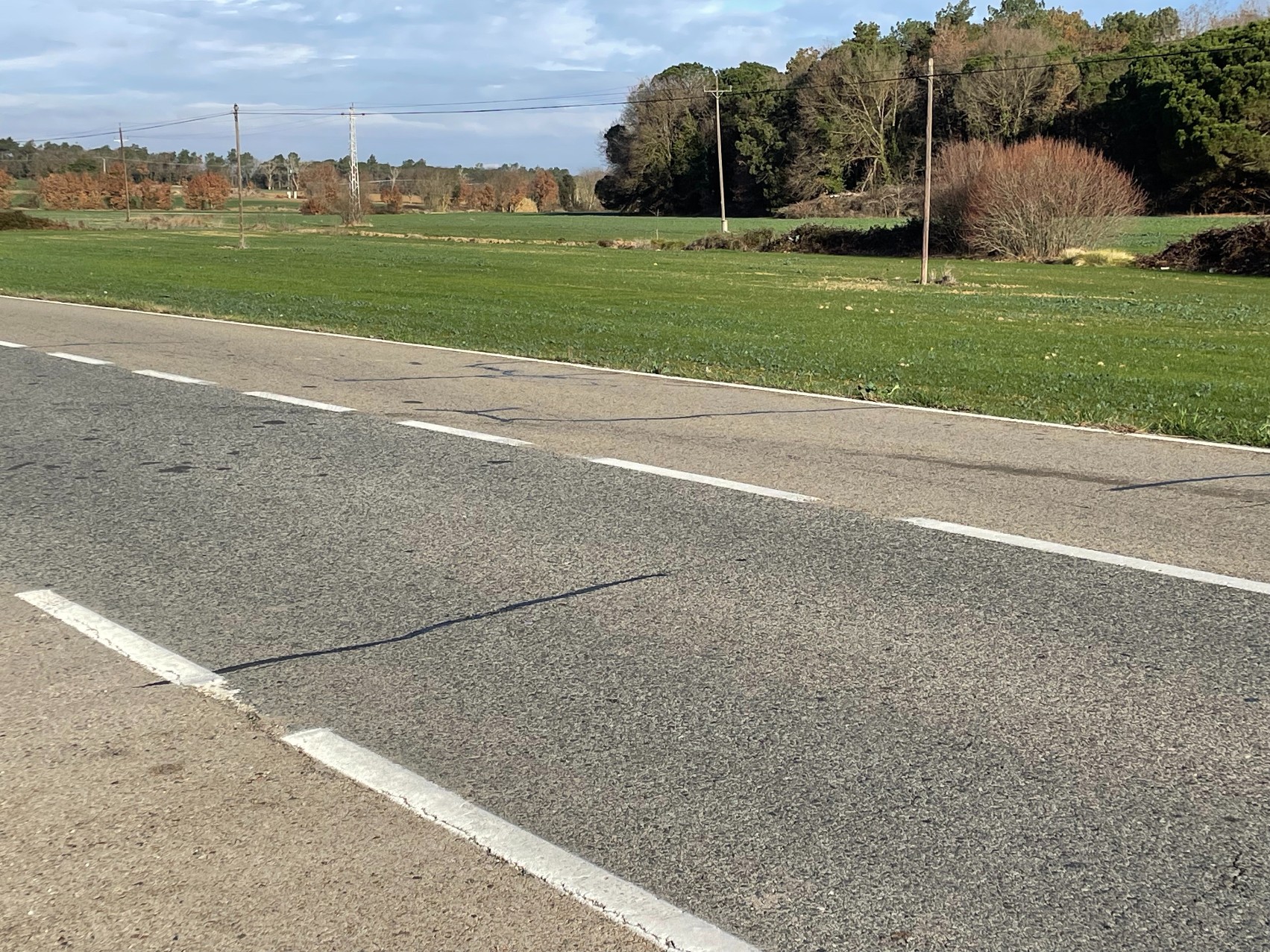
Also, here is a pic of the “smooth” road. Filled cracks like this maybe every 20m. Better than Quebec roads but not a track either.

IMG_1721.jpg

FWIW, a 30mm external and 23mm internal will contain a 28mm tire inside it’s profile. But just barely. ERTO standards say you shouldn’t run anything on a 25mm hookless rim narrower than 29mm. I think there is just too much being given up there (illustrated by the data Marc found) just so the manufacturer can save a couple of dimes per rim.

is this no longer current?

FWIW i put my wife on shimano wheels, in some part because of hooked beads. i don’t trust her to always use the pressure gauge i have her when she inflates her wheels. one very real - and in my view the only - drawback to hookless are those who just don’t understand the pressure restrictions and aren’t likely to focus on them in the course of their riding.

It is not current… I can’t find the current chart, but this info has been in the public domain for a while now.

https://www.cyclingweekly.com/products/is-the-bike-industry-divided-over-new-tyre-and-wheel-rim-size-regulations

Your last point highlights the issue with hookless. We’re relying on people to understand tire pressure and know that they have hookless rims. I’d wager a great deal that more than 95% have no clue if they have hookless or hooked rims. It’s a slog to get people to actually lower the pressure in their tires, as most think the MAX pressure is the recommendation. I’m sure the first time someone puts 100PSI in their tire on a hookless rim and coats themselves and living room with sealant, the’ll probably get it, maybe. But only after coming into the shop and complaining their wheels are defective.

As Marc mentioned, if you’re going for max efficiency and Crr on relatively smooth roads, that is generally outside of the operating window of hookless for everyone save many women and a few small men. <60kg. Do they work for you? Sure, and that’s perfectly fine. But being near 82kg, I’m not willing give up those watts just yet.

thanks for the update. i hadn’t been paying attention. i’ll need to put a note on our hookless wheel/tire compatibility database. i’ll need to check with zipp and enve on how they see it should be worded because it appears there’s a disagreement there and i need to look on zipp’s page to see what they’re recommending on their compatibility chart.

none of it matters to me because i’m all in on the 5mm delta. my absolute favorite road wheels to ride in all conditions are zipp 353 NSW and cadex allroad. but i ride them both with 32mm tires.

as to your 95 percent characterization, are hookless placed on OE purchases today? almost nobody buys a zipp 858 NSW and remains naive to the pressure restrictions. as to my own riding which starts at 28mm, in my own field testing, which is just for my private riding, there is no case where more than 65psi is ever in my tires because beyond that pressure the system begins to slow down. i weigh 77kg.

i would be really sorry to see the hookless rim go away. but i’m not at all sorry that hooked rims remains.

as to your 95 percent characterization, are hookless placed on OE purchases today?

I can’t be 100% for sure there. But I know a lot of people buy ENVE wheels to put on their Colnagos because that’s what Pogacar has on his. Zipp wheels are OE on the new Van Rysl bikes equipped with SRAM. I can guess that Giant puts hookless Cadex wheels on their bikes?

I just do fits, aero testing and coaching, and I’m not a retailer, per se. I do try my best to keep up with all the technology coming out though so I can at least be a bit clued in. I’m still competing on the road, track and occasionally gravel (slow road racing), often with people who could easily be my children. I’m just here looking for every advantage possible to try to defeat the hands of time. :slight_smile:

Wonderful full tire geekery one this thread.

Question that I have that I haven’t been able to find data on is what effect does tire width to rim width have in aero drag.

For example, on a 26.5mm external 19mm internal rim with a depth of 60mm, how much aerodynamic drag is added by using a 28mm tire vs 25mm tire.

I know there is a lot of variables with rim shape and fork/bike interaction, but with all of the testing aerocoach has done, is it possible to compile an average amongst different wheels with similar specs to get a general guide?

We talk about optimal sizing often, but not a lot of specifics on what the actual numerical penalty/advantage there is. I think it would in determining the question people have when trying decide between sizes for tradeoff on comfort vs speed.

i have a lot of miles on that tire, and it’s a great, great tire. i would not hesitate to race that tire in a 70.3 or longer because i hate flats, and that tire doesn’t flat. it’s kind of like the corso pro in that it’s unlikely to flat and pretty fast for a no-flat tire.

n=1, but I have never had more sidewall cuts than in my Pro One era. Doesn’t justify the slightly sub-par Crr for me given the poor puncture resistance.

i think this is a large part of why we get conflicting reports on puncture resistance. i’ve not use the pro one but comparing the corsa pro and gp5k its clear that the difference is in the sidewall - gp5k has tougher sidewalls so more protection there but also why it is often said to have bad “feel”. tread protection on the corsa pro is as good if not better than the gp5k so the practical experience will depend on what sort of hazards your roads contain - smaller stuff that primarily hits the tread or bigger things that stick up into the sidewall.

Yeah slowman’s experience doesn’t seem to match the general trend at all. On the WW forum, many early adopters gave up on Corsa Pro because of the number of flats they’re getting relative to equivalent tires. It’s a great overall tire but a bit behind on puncture resistance.

And pretty much no one should be recommending the Pro One for anything. It’s slow in its category and rides no smoother than the GP5k (like a garden hose). What do you get in return? Not grip or additional puncture resistance. It’s a tire that lags slightly in every way. It’s good enough to wear out before upgrading, if your new bike came with it. But not good enough to spend your own money on it as a replacement.

I’ve got a set of light bicycle wheels that just arrived last week with a max width of 32mm. Looking forward to getting tires mounted up on those and seeing how they match, sounds similar to what you’re saying with the 353.

I’d also think the latest roval rapide wheels fall into that category as well.

Same here–just got a Light Falcon Pro C21 Disc last week. I’ll be setting it up tubeless with the 28’s of Conti G5000TT…should do just fine for races…it’ll be my first tubeless “set up attempt” so can’t wait to make a complete mess in the garage.