Vittoria Corsa Pro vs Corsa Speed

I’ve got a set of rim brake wheels from them that I really like, big fan of their products.

I’ve found with tubeless, the key is to not rush. If you’re needing to tape the rims first, inflate the tires with tubes in them and let them set for a day or so to really get the tape pressed against the rim bed. Doesn’t pay to rush that step. I’ve got an air shot canister, and that’s been huge. Having something like that, or a compresser, typically makes the process go smoothly. Get the tire mounted up and make sure it holds air reasonably well before putting sealant in. There are a lot of steps, but once you know what you’re doing, you can set up tubeless tires almost as fast as putting tubes in, so good luck!

I won’t link it, but if you’re interested there’s a good article up on EC now about mismatching tires sizes and ISO/ERTO standards.

Wonderful full tire geekery one this thread.

Question that I have that I haven’t been able to find data on is what effect does tire width to rim width have in aero drag.

For example, on a 26.5mm external 19mm internal rim with a depth of 60mm, how much aerodynamic drag is added by using a 28mm tire vs 25mm tire.

I know there is a lot of variables with rim shape and fork/bike interaction, but with all of the testing aerocoach has done, is it possible to compile an average amongst different wheels with similar specs to get a general guide?

We talk about optimal sizing often, but not a lot of specifics on what the actual numerical penalty/advantage there is. I think it would in determining the question people have when trying decide between sizes for tradeoff on comfort vs speed.

That’s a super deep rabbit hole. I would suggest digging around and finding any wheel manufacturers who have pretty robust white papers. Then you have to kind of use that to SWAG other wheelsets. A pretty current one with different depth and width wheels is done by Parcours wheels. There’s just way too much variability in rim shapes and philosophies to really put together any kind of definitive list.

Wonderful full tire geekery one this thread.

Question that I have that I haven’t been able to find data on is what effect does tire width to rim width have in aero drag.

For example, on a 26.5mm external 19mm internal rim with a depth of 60mm, how much aerodynamic drag is added by using a 28mm tire vs 25mm tire.

I know there is a lot of variables with rim shape and fork/bike interaction, but with all of the testing aerocoach has done, is it possible to compile an average amongst different wheels with similar specs to get a general guide?

We talk about optimal sizing often, but not a lot of specifics on what the actual numerical penalty/advantage there is. I think it would in determining the question people have when trying decide between sizes for tradeoff on comfort vs speed.

That’s a super deep rabbit hole. I would suggest digging around and finding any wheel manufacturers who have pretty robust white papers. Then you have to kind of use that to SWAG other wheelsets. A pretty current one with different depth and width wheels is done by Parcours wheels. There’s just way too much variability in rim shapes and philosophies to really put together any kind of definitive list.

I’m sure it is! That’s kind of why I was wondering if there is any general data sets. I know there is the 105 rule but I’m struggling to find actually data supporting it with a lot of the more recent wheel designs and trends towards wider everything.

I’ll check that wheel out and see if they have any data. On their website?

I went road tubeless a few months ago. Compared to my early days of MTB tubeless in 2012 which was an endless failure of getting tyres to seat, but once on then no issues at all ever, my road tubeless has been challenging.

And I’ve worked out that the issue is that if you do get a puncture, then with tubed it was easy to swap the tube, check nothing left in tyre, and then you were back to ‘new’. Very occasionally a drop of superglue in a large slash maybe.

With Tubeless I’ve found that where I’ve had a puncture that’s too significant for just the sealant then that’s turned into a bit of an ongoing puncture, plug, lose plug, puncture, plug rinse repeat. But, I’ve found that the vittoria rubino tubeless felt a lot slower than the tubed versions (like for like 28mm). And perhaps it’s the roads where I ride, but the GP5000s TR have been very fragile, with more punctures that required a plug than punctures that deflated a tube. By more I mean 2 tubed punctures total last year road and tri-bike, 4 punctures requiring a plug since december tubeless.

So it’s cost me a lot of $ in tyres already. I’ve not actually had any issues with getting the tyres to mount, even just by a normal track pump.

I mean, the Vittoria rubino is a slow tire regardless, so if that one feels slower it’s kinda a wash IMO.

What plugs are you using? Dynaplug was huge for preventing plugs from pulling out for me. How much sealant are you putting in as well? If you’re just training especially than load that tire up, even if it rolls slightly slower. Even for a race, adding more sealant is slower, but only marginally if I remember right. Also, what sealant do you use? What tire pressure do you run?

I understand ymmv but tubeless has saved me from many many flats over the last few years. If you’re running tires narrower than 28mm measured it definitely doesn’t work as well, but other than that it’s awesome.

Dynaplugs and with plenty of sealant - initially mucoff (all I could get), then Stans (non race) and now I’m using Stans for the initial install and then adding 40ml of stans into that.

Will say that save one ride where the dynaplug came out, my punctures have occured when we’ve had lots of punctures in the group. I think 7 total for a ride that started with 5 then after 15km became 4… January is always bad for the dicky tourists throwing glass beer bottles out the car window into the shoulder. Just seems especially bad this year, possibly due to minimal rain to wash it off.

Re the rubino, they were the right balance for training rides. And all in 28mm size. Just TL seemed slower than the tubed version. Also, and this comes back to not changing tyres for road conditions several of our ride routes include some form of loose chipseal cycle path for a bit. So the GP5000s TR are pushing the luck for those bits. And my really favourite old training tyre the specialized rubaix doesn’t seem to come in TL (2Bliss) version (at least not in NZ).

The specialized mondo is the successor of the roubaix and it’s great. Got a bunch of miles on a pair of those. I’m not opposed to the rubino, just saying it’s a training tire, so speed is rarely what I’m looking for there.

Surprised you’ve had so many issues with the gp5000 tl, I rode some of those through last year on all sorts of terrain, didn’t need to replace till the tire was worn through. I definitely never needed to deal with lots of glass though, that is hard on tires.

You might try orange seal sealant, or stans race. Stans normal is more like the orange seal endurance, which I didn’t have much luck with. Orange seal standard is pretty great, roughly analogous to stans race. Picked up a sizable nail in my tire last week, and it sealed that just fine, although all admit it was a tire measuring ~35mm, so lower pressures.

Overall, I know people have bad experiences, maybe it doesn’t work for everyone. I just find that for most, their issues are either self-inflicted or imaginary.

All their have their associated white papers with them.

All their have their associated white papers with them.

Good info on their site.

Nothing I can see however showing the difference between tire width on the same rim though. Just comparisons of the wider system as a whole vs narrower ‘previous design’. I sent them a message to see if they have data.

I have a hunch that on rims of 19internal/26external that the drag effect between 25 and 28 is fairly small. I’m sure there is an effect… Don’t get me wrong… Just trying to get an idea of how much and if it’s as detrimental as we sometimes think it is. A 1-2w difference is pretty minor for 99% of riders, but 5-15w is different.

I know there is the 105 rule but I’m struggling to find actually data supporting it with a lot of the more recent wheel designs and trends towards wider everything.

I think I can state with a fairly high degree of certainty that if you were to survey wheel makers/designers, generally, you wouldn’t find much agreement that the “rule of 105” is a thing that they endorse.

$10 says he had over inflated to get optimal pressure on smooth roads

Vittoria and Zipps

https://youtu.be/GFyC9RKmMM4?si=O3imZN2SlsM4Abee

The Roval wheel is the spare. He lost the tire on the Zipps

$10 says he had over inflated to get optimal pressure on smooth roads

Vittoria and Zipps

https://youtu.be/GFyC9RKmMM4?si=O3imZN2SlsM4Abee

The Roval wheel is the spare. He lost the tire on the Zipps

this is the second blow off i’ve seen in the pro peloton in recent months. the other was a very celebrated blow off during a finishing sprint that was ascribed to hookless, but it turned out to be a hooked rim (DT swiss if i remember correctly). there is one commonality to both cases. i’m surprised you didn’t notice.

$10 says he had over inflated to get optimal pressure on smooth roads

Vittoria and Zipps

https://youtu.be/GFyC9RKmMM4?si=O3imZN2SlsM4Abee

The Roval wheel is the spare. He lost the tire on the Zipps

this is the second blow off i’ve seen in the pro peloton in recent months. the other was a very celebrated blow off during a finishing sprint that was ascribed to hookless, but it turned out to be a hooked rim (DT swiss if i remember correctly). there is one commonality to both cases. i’m surprised you didn’t notice.

I am not sure what that commonality is. Please share.

In this case it was a Zipp 353.
There is a great article on Escape collective, explaining the need to adhere to the restrictions of hookless
https://escapecollective.com/thomas-de-gendts-uae-tour-crash-is-a-warning-to-all/

$10 says he had over inflated to get optimal pressure on smooth roads

Vittoria and Zipps

https://youtu.be/GFyC9RKmMM4?si=O3imZN2SlsM4Abee

The Roval wheel is the spare. He lost the tire on the Zipps

this is the second blow off i’ve seen in the pro peloton in recent months. the other was a very celebrated blow off during a finishing sprint that was ascribed to hookless, but it turned out to be a hooked rim (DT swiss if i remember correctly). there is one commonality to both cases. i’m surprised you didn’t notice.

I am not sure what that commonality is. Please share.

In this case it was a Zipp 353.
There is a great article on Escape collective, explaining the need to adhere to the restrictions of hookless
https://escapecollective.com/...is-a-warning-to-all/

foam inserts. i have zero data. i only note that the two blowoffs shared this commonality.

beyond that, nobody gives a spit what i think and nobody listens to me. i’m not complaining, just noting. but since the beginning of the whole road hookless thing i’ve said: ride a 5mm delta between inner bead width and nominal tire size and don’t ride a tire narrower than 28mm. in the case of this wheel tho it means a 30mm tire. or larger. this is my favorite wheelset. i unreservedly recommend this wheelset and i’ve got so many friggin wheels i’ve run out of ceiling hooks in the workshop (and i have a lot of hooks). this wheelset never sees the hooks, because it’s always on one of the two road bikes i ride. it’s just bang on a perfect wheel. but. i only ride that wheel with 30mm tires or larger because of its 25mm internal bead width. so…

i think it’s worth noting the inserts and it’s not a case of inserts + hookless because arnoud de lie lived through a blow off with hooked rims. and maybe it’s just much ado about almost nothing because this is so rare. nevertheless, there you go. beyond the inserts question - which again, is to me not much of a question because of the apparent rarity - i would be more interested in the width of the tire in this case you just mention. if he was riding a 30mm tire the chance of a blow off approaches zero.

$10 says he had over inflated to get optimal pressure on smooth roads

Vittoria and Zipps

https://youtu.be/GFyC9RKmMM4?si=O3imZN2SlsM4Abee

The Roval wheel is the spare. He lost the tire on the Zipps

this is the second blow off i’ve seen in the pro peloton in recent months. the other was a very celebrated blow off during a finishing sprint that was ascribed to hookless, but it turned out to be a hooked rim (DT swiss if i remember correctly). there is one commonality to both cases. i’m surprised you didn’t notice.

I am not sure what that commonality is. Please share.

In this case it was a Zipp 353.
There is a great article on Escape collective, explaining the need to adhere to the restrictions of hookless
https://escapecollective.com/...is-a-warning-to-all/

foam inserts. i have zero data. i only note that the two blowoffs shared this commonality.

beyond that, nobody gives a spit what i think and nobody listens to me. i’m not complaining, just noting. but since the beginning of the whole road hookless thing i’ve said: ride a 5mm delta between inner bead width and nominal tire size and don’t ride a tire narrower than 28mm. in the case of this wheel tho it means a 30mm tire. or larger. this is my favorite wheelset. i unreservedly recommend this wheelset and i’ve got so many friggin wheels i’ve run out of ceiling hooks in the workshop (and i have a lot of hooks). this wheelset never sees the hooks, because it’s always on one of the two road bikes i ride. it’s just bang on a perfect wheel. but. i only ride that wheel with 30mm tires or larger because of its 25mm internal bead width. so…

i think it’s worth noting the inserts and it’s not a case of inserts + hookless because arnoud de lie lived through a blow off with hooked rims. and maybe it’s just much ado about almost nothing because this is so rare. nevertheless, there you go. beyond the inserts question - which again, is to me not much of a question because of the apparent rarity - i would be more interested in the width of the tire in this case you just mention. if he was riding a 30mm tire the chance of a blow off approaches zero.

He was riding a 28.
Maybe it’s the inserts.

One thing for absolute certain after testing, is you cannot ride 28mm tires at optimal pressure on those specific road and abide by the 5bar rule.

So maybe it’s the inserts, maybe it the tire pressure…we will never know. But I do know a 28 at 5bar (the max on hookless) is not optimal in those conditions.

My bet is he was over 5bar

$10 says he had over inflated to get optimal pressure on smooth roads

Vittoria and Zipps

https://youtu.be/GFyC9RKmMM4?si=O3imZN2SlsM4Abee

The Roval wheel is the spare. He lost the tire on the Zipps

this is the second blow off i’ve seen in the pro peloton in recent months. the other was a very celebrated blow off during a finishing sprint that was ascribed to hookless, but it turned out to be a hooked rim (DT swiss if i remember correctly). there is one commonality to both cases. i’m surprised you didn’t notice.

I am not sure what that commonality is. Please share.

In this case it was a Zipp 353.
There is a great article on Escape collective, explaining the need to adhere to the restrictions of hookless
https://escapecollective.com/...is-a-warning-to-all/

foam inserts. i have zero data. i only note that the two blowoffs shared this commonality.

beyond that, nobody gives a spit what i think and nobody listens to me. i’m not complaining, just noting. but since the beginning of the whole road hookless thing i’ve said: ride a 5mm delta between inner bead width and nominal tire size and don’t ride a tire narrower than 28mm. in the case of this wheel tho it means a 30mm tire. or larger. this is my favorite wheelset. i unreservedly recommend this wheelset and i’ve got so many friggin wheels i’ve run out of ceiling hooks in the workshop (and i have a lot of hooks). this wheelset never sees the hooks, because it’s always on one of the two road bikes i ride. it’s just bang on a perfect wheel. but. i only ride that wheel with 30mm tires or larger because of its 25mm internal bead width. so…

i think it’s worth noting the inserts and it’s not a case of inserts + hookless because arnoud de lie lived through a blow off with hooked rims. and maybe it’s just much ado about almost nothing because this is so rare. nevertheless, there you go. beyond the inserts question - which again, is to me not much of a question because of the apparent rarity - i would be more interested in the width of the tire in this case you just mention. if he was riding a 30mm tire the chance of a blow off approaches zero.

He was riding a 28.
Maybe it’s the inserts.

One thing for absolute certain after testing, is you cannot ride 28mm tires at optimal pressure on those specific road and abide by the 5bar rule.

So maybe it’s the inserts, maybe it the tire pressure…we will never know. But I do know a 28 at 5bar (the max on hookless) is not optimal in those conditions.

well, i don’t stipulate to the optimal pressure being above 5bar for a 28mm tire for most riders on most roads. there is 1 certain violation of my rule, which is a 5mm difference between tire and internal bead width; then (as you say) the pressure question, then the insert question. the only other gentle disagreement i have with you is on the “we will never know.” i’m pretty sure we will know.
well, i don’t stipulate to the optimal pressure being above 5bar for a 28mm tire for most riders on most roads. there is 1 certain violation of my rule, which is a 5mm difference between tire and internal bead width; then (as you say) the pressure question, then the insert question. the only other gentle disagreement i have with you is on the “we will never know.” i’m pretty sure we will know.

Our testing so far has shown over 70kg on smooth road, 5bar and below is not optimal. Those roads at UAE are silky smooth and DeGendt is 69kg.

This is my ONLY beef with hookless. To get optimal I need to push the limits of safety.

FYI the CPA seems to be unhappy. https://velo.outsideonline.com/...ill-be-a-mass-crash/

Maybe someone needs to look into this insert thing.

well, i don’t stipulate to the optimal pressure being above 5bar for a 28mm tire for most riders on most roads. there is 1 certain violation of my rule, which is a 5mm difference between tire and internal bead width; then (as you say) the pressure question, then the insert question. the only other gentle disagreement i have with you is on the “we will never know.” i’m pretty sure we will know.

Our testing so far has shown over 70kg on smooth road, 5bar and below is not optimal. Those roads at UAE are silky smooth and DeGendt is 69kg.

This is my ONLY beef with hookless. To get optimal I need to push the limits of safety.

FYI the CPA seems to be unhappy. https://velo.outsideonline.com/...ill-be-a-mass-crash/

Maybe someone needs to look into this insert thing.

yeah, i’m not saying your testing is wrong. i’m just saying i’m not yet ready to stipulate to that. maybe it’s just that my roads aren’t smooth enough. i just can’t find an occasion where in my own testing for my own 77kg body that for a 28mm tire anything above 65psi isn’t slower. and even 65psi is high. if i lived in the UAE or even germany it would probably be different. but in the US or at least in the state everybody loves to hate (california) even freshly laid pavement is rougher than what you reference in the UAE. for me, cycling efficiency (acknowledging that efficiency is probably not the right word) - the translation of energy intended to speed - includes both a mechanical and biomechanical component. i say intended because i don’t know whether muscle vibration keeps the energy from translating to speed, or keeps me from using the energy at all. i just know that muscle vibration is a documented problem. that biomechanical cost approaches zero on a UAE road so i take your point there. i just can’t replicate anything like that where i ride and my roads are, by US standards, pretty good.

well, i don’t stipulate to the optimal pressure being above 5bar for a 28mm tire for most riders on most roads. there is 1 certain violation of my rule, which is a 5mm difference between tire and internal bead width; then (as you say) the pressure question, then the insert question. the only other gentle disagreement i have with you is on the “we will never know.” i’m pretty sure we will know.

Our testing so far has shown over 70kg on smooth road, 5bar and below is not optimal. Those roads at UAE are silky smooth and DeGendt is 69kg.

This is my ONLY beef with hookless. To get optimal I need to push the limits of safety.

FYI the CPA seems to be unhappy. https://velo.outsideonline.com/...ill-be-a-mass-crash/

Maybe someone needs to look into this insert thing.

yeah, i’m not saying your testing is wrong. i’m just saying i’m not yet ready to stipulate to that. maybe it’s just that my roads aren’t smooth enough. i just can’t find an occasion where in my own testing for my own 77kg body that for a 28mm tire anything above 65psi isn’t slower. and even 65psi is high. if i lived in the UAE or even germany it would probably be different. but in the US or at least in the state everybody loves to hate (california) even freshly laid pavement is rougher than what you reference in the UAE. for me, cycling efficiency (acknowledging that efficiency is probably not the right word) - the translation of energy intended to speed - includes both a mechanical and biomechanical component. i say intended because i don’t know whether muscle vibration keeps the energy from translating to speed, or keeps me from using the energy at all. i just know that muscle vibration is a documented problem. that biomechanical cost approaches zero on a UAE road so i take your point there. i just can’t replicate anything like that where i ride and my roads are, by US standards, pretty good.

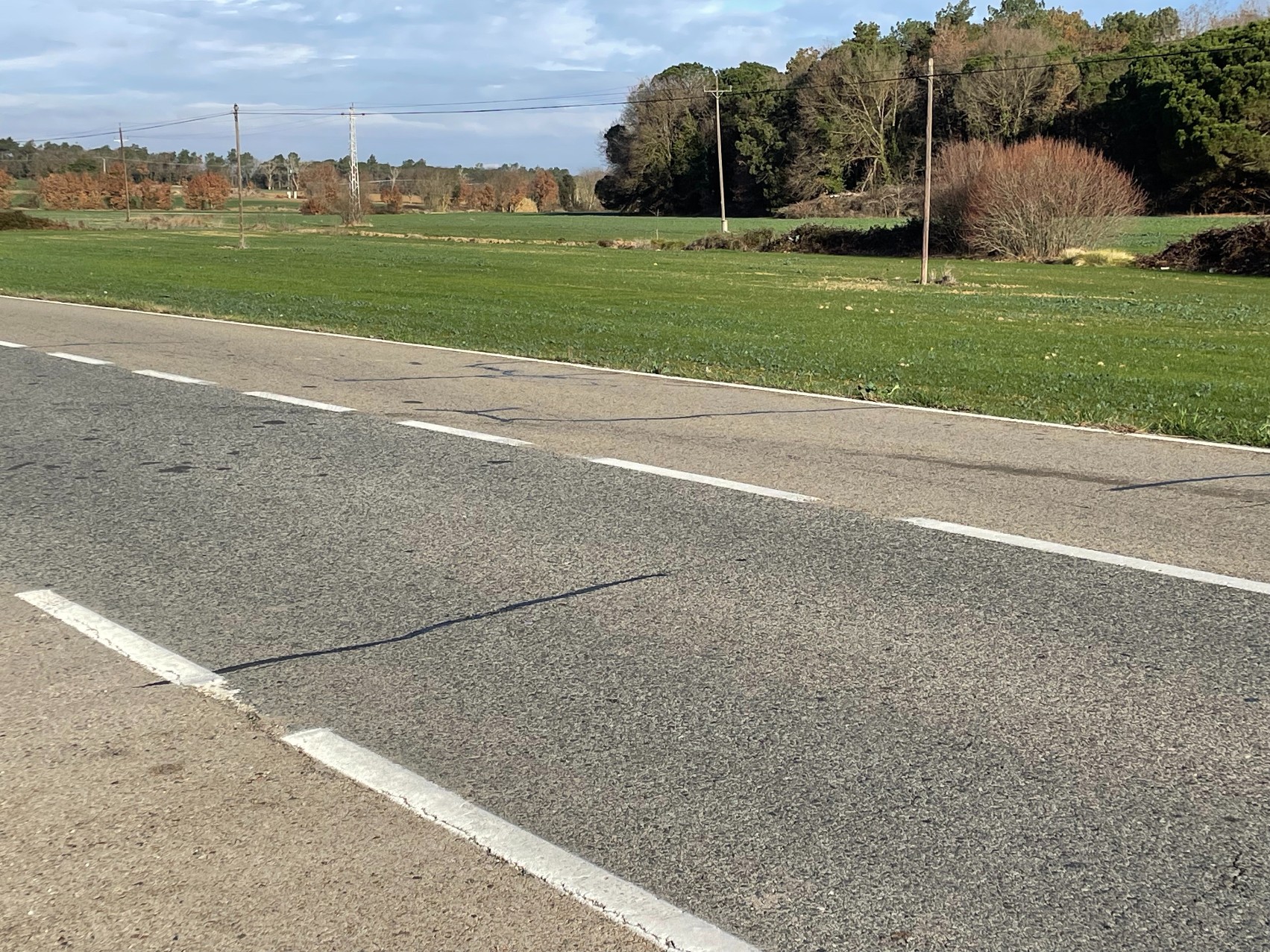
I showed a picture of the road we tested on. It’s not silky smooth. Cracks every 10-20m. It’s much rougher than UAE. As rough as most triathlons I have done.

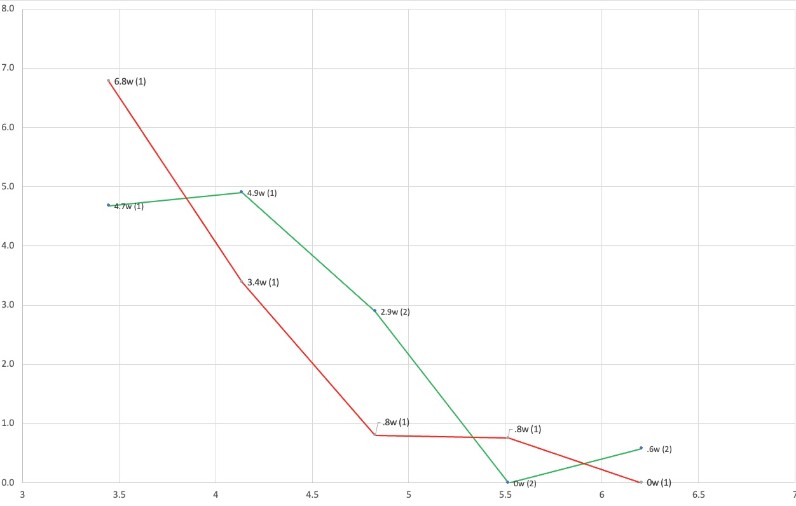
Here are the two closest riders to your weight. Although they are 9 and 3kg less than you.

At 5 bar one is giving up 2 watts, the other 1 watt. Not much, but this grows as weight goes up. One guy is 68kg the other 74kg

At 65PSI (4.5 bar), they would be giving up 4 and 2 watts.

X axis is pressure in bar. Y is watts lost compared to “optimal”

28mm 5000TT tires.

FYI, we measured the vibration felt by the rider. In theory we could correlate this to fatigue

Screenshot 2024-02-25 at 11.08.44 AM.jpg
IMG_1721.jpg