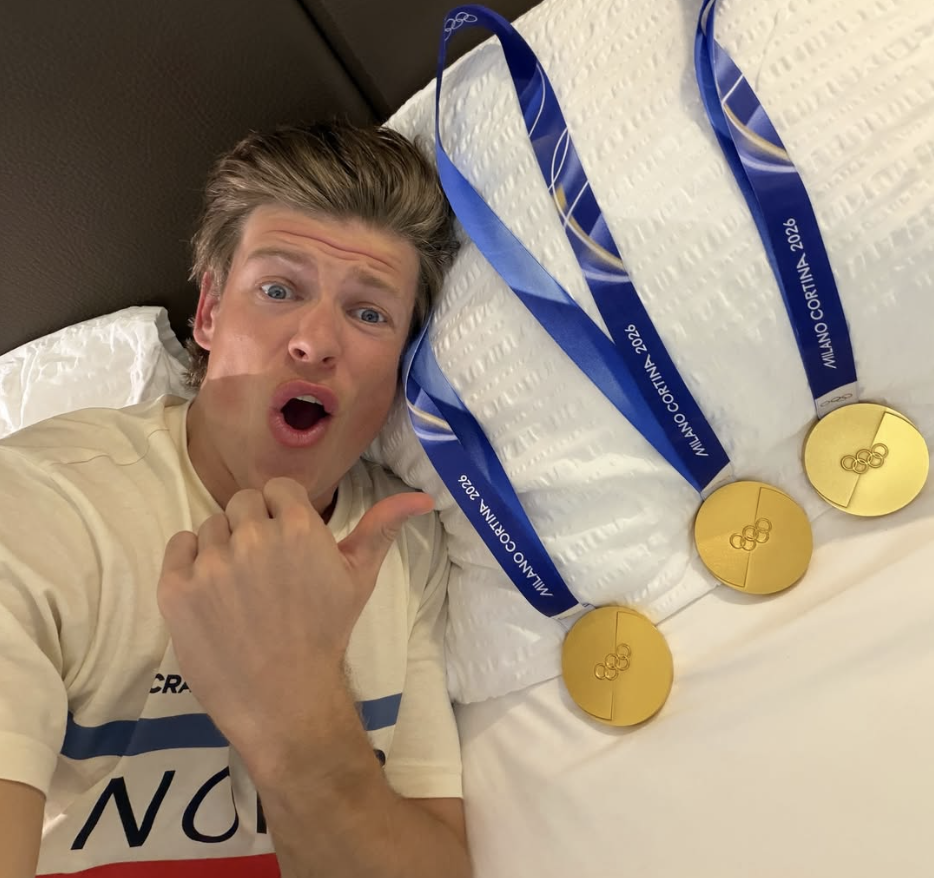
 Johannes Høsflot Klæbo has won five gold medals so far at the 2026 Olympics. Photo: Instagram/johanneshk
Fans of triathlon are well aware of Norway’s ability to produce incredible endurance athletes, and thanks to the 2026 Winter Olympics, anyone who didn’t know this fact is quickly learning it. Norwegian cross-country skier Johannes Høsflot Klæbo has won five gold medals in as many races so far in Italy, giving him 10 in his career (along with a silver and a bronze from past Games) — the second most in Olympic history behind only Michael Phelps. Klæbo has one race left — the 50-kilometre mass start — and he has the chance to pull off yet another Phelpsian feat by winning gold in every event he has entered at these Olympics.
Five for Five
Believe it or not, Norway’s main export is not world champion triathletes — it’s cross-country skiers. (OK, it’s actually petroleum gas and crude oil, but in terms of athletes, it’s cross-country skiers.) In the history of the Winter Olympics, Norway has won 139 medals in cross-country skiing. Sweden sits all the way down at 93 in second place. Norway is really good at skiing, but Klæbo takes it to a whole new level.
Heading into the Milano Cortina Games, there was talk of Klæbo winning six gold medals in all six events that he entered. The prospect of a skier pulling this off would have been unheard of just a few years ago at the Beijing Olympics, but Klæbo changed the skiing world’s idea of what is possible by doing just that at last year’s FIS Nordic World Ski Championships. Racing in his home town of Trondheim, Klæbo won every gold medal available, becoming the first skier to go six for six at a major competition.
With just one race to go in his 2026 Olympic campaign, Klæbo is looking for another clean sweep of gold medals. He kicked the Games off with a win in the skiathlon (a 20-kilometre race with half classic skiing and half freestyle technique), followed by gold in the sprint (a 1,500-metre race) 48 hours later. A few days after that, Klæbo won the solo 10-kilometre race before transitioning to the two team events — the 4 x 7.5-kilometre relay and two-man team sprint, both of which he and his fellow Norwegians won.
Klæbo’s final race is set for Saturday, and although he has already made his mark with this Olympic run, the 50-kilometre (31-mile) mass start is yet another chance for him to etch his name in the history books.
An All-Around Athlete
Even if you have never skied in your life, it’s clear that there is a big difference between the 1,500-metre sprint event at the Olympics and the 50-kilometre mass start, which is essentially the marathon of skiing. As with triathlon, the “sprint” title in skiing is a bit misleading, as it still requires endurance from athletes, especially considering the fact that the finalists in this event will race the 1,500-metre course four times in one day (qualifying, quarterfinals, semifinals and finals).
While there is a level of endurance all skiers must possess if they want to be successful, there are certainly still sprint specialists and others who prefer the longer races. Excluding Klæbo, no men who reached the podium in the sprint at last year’s world championships even competed in the 50K race, and vice versa, with no podium finishers in the 50K also racing the sprint. Klæbo is not the first person to ever ski the sprint and the 50K at the same world championships or Olympics, but this shows just how dominant he has to be to not only be competitive across the board, but to win every race he enters.
Further, at the 2025 world championships, no other male skier reached the podium more than three times in the six events, and of the six who did win three medals, three were Klæbo’s teammates (meaning they won multiple medals while on a relay team with Klæbo, and, nothing against them, but that is sort of a cheat code to winning gold in skiing at the moment).
This cross-distance mastery is rare in any sport. Many endurance athletes evolve over their careers, starting in shorter events and growing into the longer ones, but very few can excel in both at the same time. Klæbo’s compatriot Kristian Blummenfelt is one of those few.
While he is now one of the top long-distance triathletes in the world and has left short-course racing behind (for now, at least — no one can ever be sure where Blummenfelt might end up next), Blummenfelt had an unprecedented 15 or so months in the early 2020s, winning Olympic gold in Tokyo in July 2021, the World Triathlon Championship Series title a month later, the IRONMAN World Championship the following May, third in Kona that October and the 70.3 world crown less than a month after that.
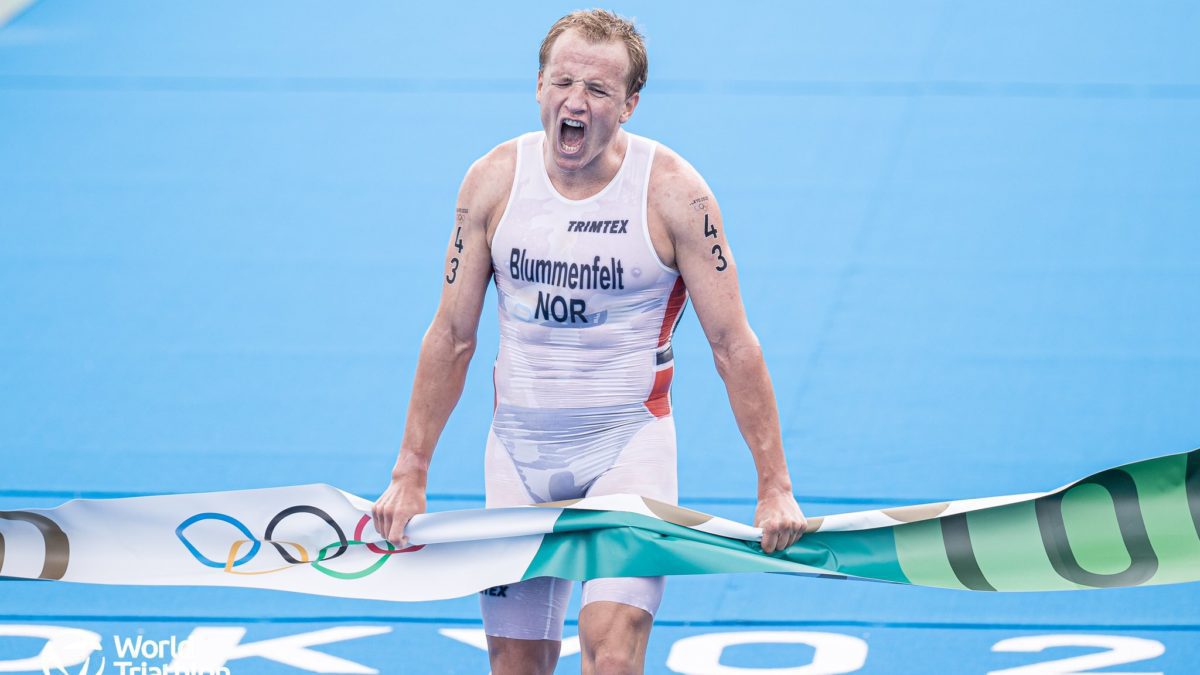 Blummenfelt won Olympic gold in Tokyo in 2021. Photo: World Triathlon/ Wagner Araujo
This was an unbelievable run from Blummenfelt, and although he didn’t do it in a two-week span like Klæbo, it is still remarkable. An even better comparison to Klæbo is Dutch runner Sifan Hassan. A track specialist for years, Hassan burst onto the marathon scene in 2023. A year later, she set her sights on three gold medals at the Paris Olympics, entering the 5,000m, the 10,000m and the marathon. This had never been attempted before, and while she fell short (she won the marathon but only — we’re using that word as loosely as possible — won bronze in the other two races), she still changed the perception of what is possible for runners in a single Olympic Games.
The 5,000m to marathon jump is quite similar to what Klæbo is doing in Milano Cortina. Both the 5,000 m on the track and the skiing sprint require both speed and endurance, while the marathon and the 50 km events are all about endurance, pacing and strategy. It was incredible when Hassan medalled on the track and on the road in 2024, and likewise, Klæbo’s performance at these Games is already incredible. That’s how it will remain — an incredible feat — even if he finishes dead last on Saturday, but it really shouldn’t be all that much of a shock if he leaves Italy with six gold medals around his neck.
