Originally published at: The T100 World Tour is Coming in 2027. More Details from PTO CEO Sam Renouf - Slowtwitch News
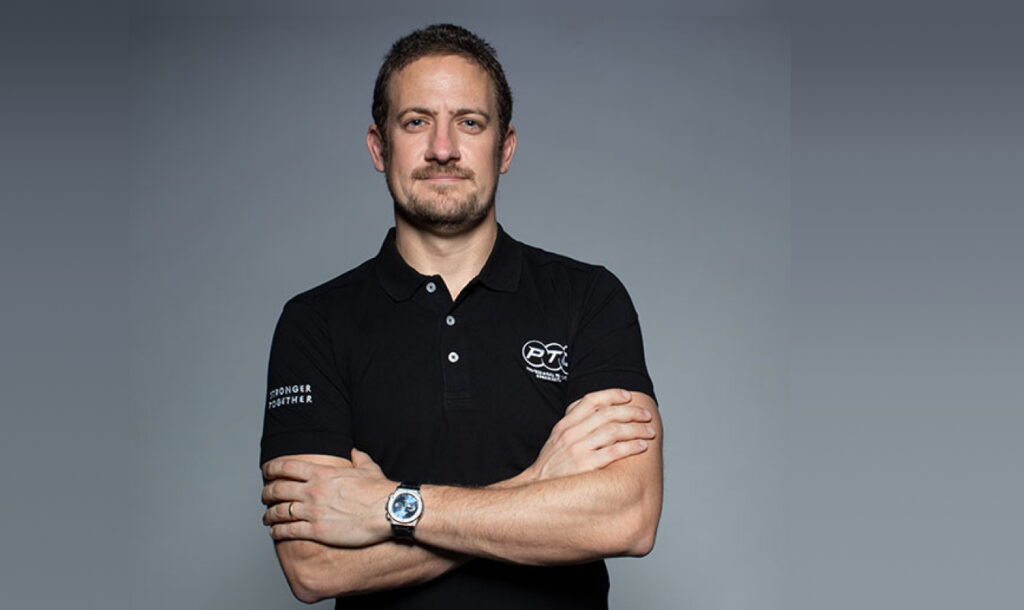
Last weekend World Triathlon and the Professional Triathletes Organisation (PTO) announced some big news for the 2027 season. The new Triathlon World Tour will combine the T100 Series along with the World Triathlon Championship Series (WTCS) and World Triathlon Cup races to a roughly 100-race series.
The new race series will see WTCS events rebranded as the T50 World Championship Series and World Cup and Continental Cup events will join a new “Challenger Series.” Those races will continue to act as a “feeder system” to the higher-end T50 and T100 races.
Exactly how all this will work seemed a bit vague, so we reached out to the PTO to get some answers to our more specific questions about the new series. Here’s an edited version of my conversation with PTO CEO Sam Renouf:
Kevin Mackinnon: As I was writing the story from the press release, I realized I had more questions than answers. That’s why I reached out—to understand how this actually works. One of the first questions everyone’s asking is: Is this a merger? Are you still two separate entities?
Sam Renouf: Right—and “merger” can mean different things. From a sporting-product perspective, it’s a merger in the sense that we’re bringing brands together to create something bigger. But from a corporate M&A standpoint, absolutely not. World Triathlon remains independent. They are the governing body; we’re the commercial partner.
This structure is very much informed by the Deloitte report (prepared for World Triathlon – we wrote about it here) you’ve probably seen. The key takeaway is that many international federations are separating governance from commercial operations—that’s becoming best practice across sport. Formula One is the classic example: the FIA governs, but Formula One operates commercially.
World Triathlon had a choice: build a new commercial entity with outside investors, or partner with someone already set up to do that. We were a natural fit. We already deliver events and can take investment and risk—something a federation can’t easily do.
Another key finding was how fragmented triathlon is—different brands, distances, and competition hierarchies. It’s confusing. That fragmentation makes the sport hard to commercialize and sell. This partnership is about simplifying the structure.
So no, it’s not a merger. World Triathlon is granting us commercial rights to certain IP, which we’ll operate as part of a broader world tour.
Does that mean you’ll be putting on the events themselves?
In many cases, yes. Traditionally, World Triathlon sanctions events but doesn’t operate them. We operate many of our own events, which means we retain commercial rights and can invest to grow them. That’s a core part of our model.
Some events will still operate under license or sanction, but the key difference is that all commercial rights will be pooled and managed centrally. For example, we operate the London WTCS and will continue to do so. In markets where we don’t have operational capacity—like parts of Asia—events may continue under a license model, but we’ll still manage the commercial rights globally.
So the goal is to reduce fragmentation, especially from a broadcast perspective?
Exactly. A broadcaster recently told us triathlon was confusing—World Triathlon, Supertri, PTO, IRONMAN. They didn’t know who to deal with. What we’re doing is simplifying that.
You’ll have IRONMAN as the long-distance product, and the Triathlon World Tour as the core professional product. Each event will include professional racing, mass participation racing and broadcast coverage.
That wasn’t entirely clear in the press release. So every event will have an age-group component?
That’s the vision. Some events—especially former World Cups—don’t yet have mass participation, so it may take time. But long-term, every event will include professional racing, mass participation, and broadcast content. We actually prefer the term “mass participation”—“age group” isn’t very marketable.
There’s still Supertri, Ironman, Challenge… how does this “simplify” that landscape?
Well before it was those three, plus T100, plus WTCS, plus World Cups – so I’d say we’re half way there to simplifying things! And we’ll announce more details in the new year. From a broadcast standpoint, though, most of those events aren’t consistently televised. Our goal is a consistent, year-long broadcast product—roughly February through early December—with around 100 broadcasts.
Does that mean TriathlonLive (the World Triathlon broadcast platform) goes away?
We’ll announce brand specifics at the official launch in Q1. The key idea is a single destination to watch triathlon. Whether that brand is TriathlonLive or something else will be announced later.
There’s room for both a mass broadcast product and a super-fan subscription product (the second-screen concept that we provided with PTO+)—similar to Formula One’s model with F1 TV alongside traditional broadcasters.
Is the second-screen experience working?
We’re happy with the progress. Data is critical. Without timing, biometrics, and context, triathlon isn’t compelling to watch. With data, it becomes much more engaging—like Formula One. That’s where we’re investing heavily, including with major tech partners.
Is the PTO really ready to put on 100 events a year?
That’s exactly why this launches in 2027, not 2026. Many of those events already exist—we’re not creating everything from scratch. We’re repackaging, rebranding and commercializing them under a unified platform.
Will the PTO own a world championship?
No. World Triathlon owns it. They grant us the right to operate it. That’s consistent with the role of an international federation. We could have gone independent, but we believe growing the sport together is the right approach.
Is there concern this creates a conflict of interest, with the PTO becoming too close with World Triathlon? Do you think that could be a concern for other players in the marketplace, like IRONMAN?
We’re only operating a small slice—about 100 events out of thousands worldwide. World Triathlon remains fully independent. In fact, we believe this benefits IRONMAN. If we grow triathlon overall, the biggest player benefits the most.
That makes sense. Everyone wins if triathlon gets bigger.
Exactly. The sport has an incredible demographic but lacks the scale to monetize properly. Other sports—like golf—attract huge non-endemic sponsorship. Triathlon doesn’t yet, because there hasn’t been the right platform. That’s what we’re building.
Thanks so much for your time, Sam. I really appreciate it.
Great chatting with you. Happy holidays.
Before this interview we did talk a lot about this subject on the Slowtwitch Podcast.