 Photos: Courtesy Sea to Summit Triathlon
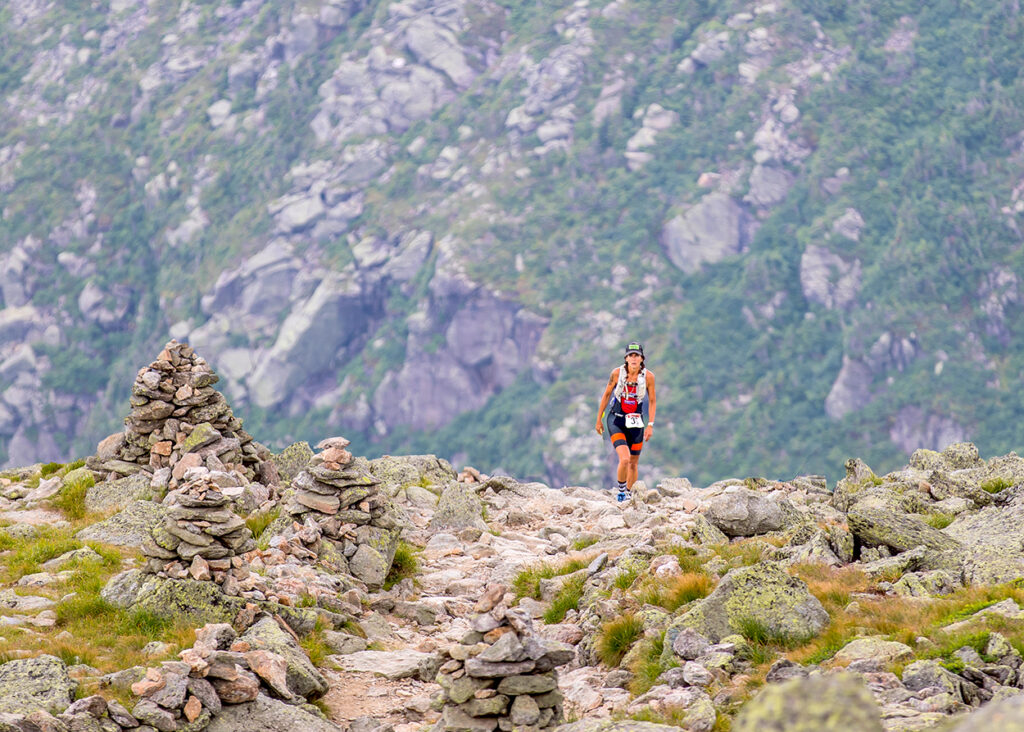
With a finish at the top of Mount Washington and a challenging bike ride that climbs almost 3,000 feet in the last eight miles, the Sea to Summit Triathlon certainly qualifies as an “adventure” triathlon. The uniquely New England endurance race takes athletes from the Atlantic coast to the highest peak in the Northeast – Mount Washington. The race entry is capped at 100 athletes every year – for some it’s a recurrent event on their race calendar, while for others it’s a bucket list event.
“We have so many athletes who get to the finish line at the top of Mount Washington and say to me ‘that was the most amazing thing I’ve ever done,'” race director Andrew Scherding says. “And then they say ‘I’m never doing it again.'”
According to Scherding, the race’s roots go back to 1995 (or possibly 1994) when a group of triathletes decided to combine three difficult disciplines into one. (Sound familiar?) The end result was a couple of mile kayak in a tidal river, a 100-mile bike and “only” a 5.8-mile run up Mount Washington that climbs roughly 4,300 feet. .
The race was reinvented in 2013, this time with a swim instead of the kayak, and Scherding and his wife Kathleen Walker have been putting on the event since 2018. Since its beginning as a triathlon the event has attracted elite endurance athletes – trail runners, cyclists and cross country skiers looking for a challenging event. It remains an iconic event that appeals to those looking for an event that’s simple (the race is self-supported), but tough. And it is certainly tough.
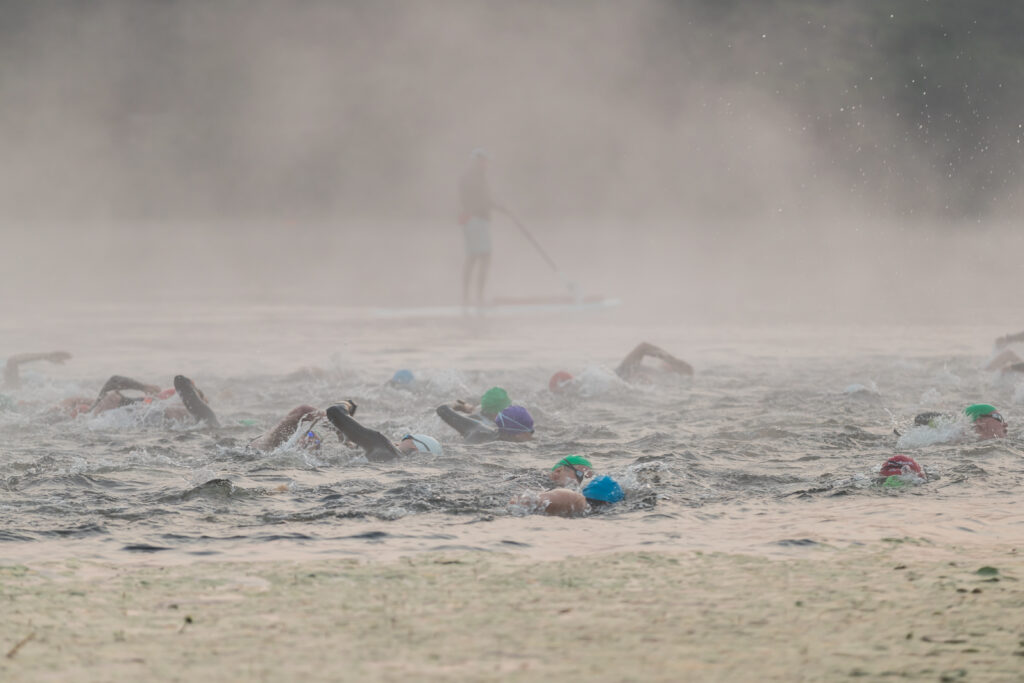
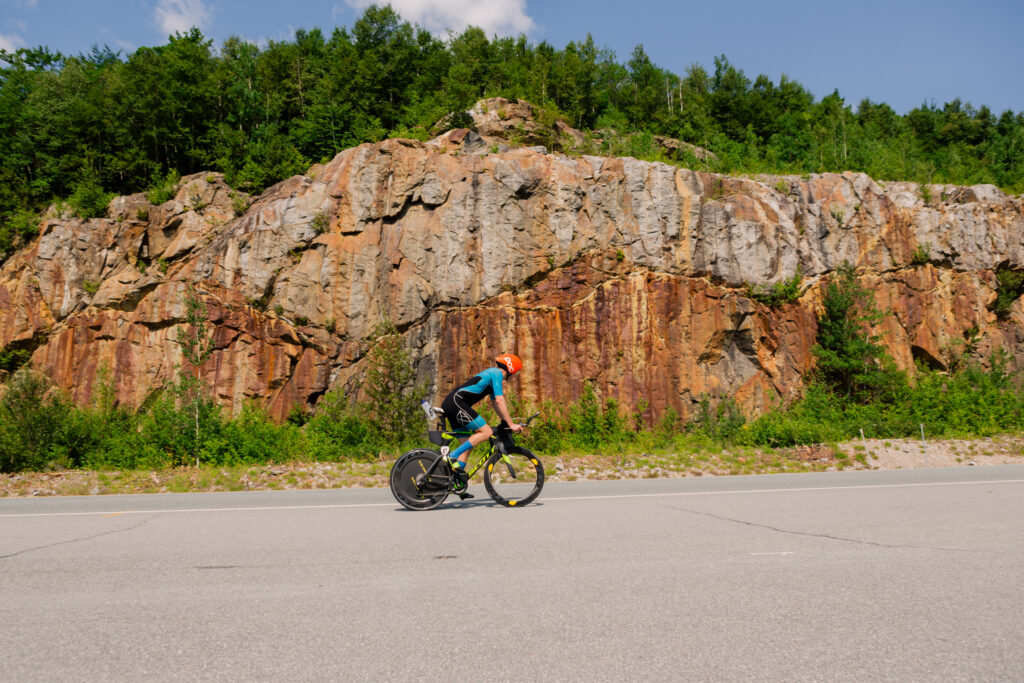
After issues with water quality in the tidal river off Hampton Beach, the 1.2 miles swim got moved to Knight’s Pond, a pristine lake in Maine, a few years ago. Once through that, the athletes head out for the 93 to 95 mile bike course. There’s no set course for the ride that takes the riders from Maine to New Hampshire (hence the variable distance), with the athletes taking in some major climbs as they work their way towards Wildcat Ski Resort. Competitors pull into the parking lot, give their bikes to their “porters” and then see a doctor for a quick health check before they can take on the run. Prior to their heading out, each athlete’s porter must have their backpacks checked – no one is allowed to start the run without a backpack with enough water, nutrition, a headlamp and a first aid kit. Athletes can run by themselves, or with their porter, as they take in the beauty of the Tuckerman’s Ravine Trail on their way to the summit of Mount Washington. Once there, they’re greeted by Scherding, and can bask in the glory of having finished one of the toughest one-day triathlon events on the planet.
Emotional Finishes
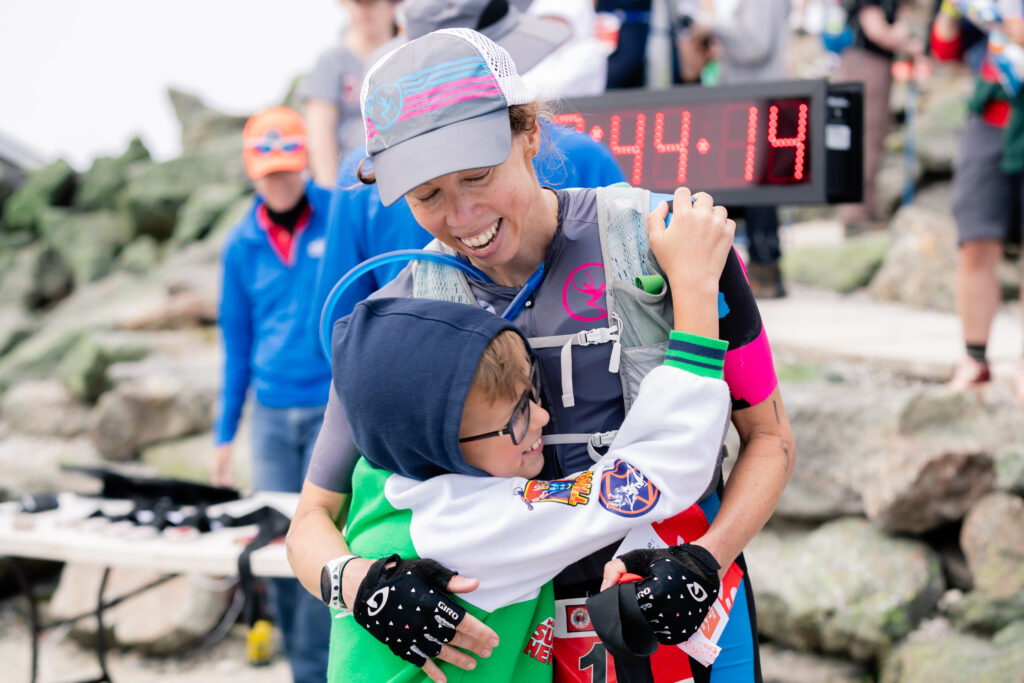
Scherding takes pride in the fact that many athletes talk about how unique the event is.
“It’s something different,” he says. “We get journeymen Ironman triathletes looking for something different. Endurance athletes for whom the carpet in transition area and announcer at the finish line isn’t their thing. The added cachet is that you do have to qualify. To go along the country roads and see the hay bales on the side of the road and be cheered by people on their stoops, then to be cheered on by all the other hikers. Being in nature, crossing over the bridge with the babbling brook underneath. People get emotional. It is not like other races – it’s almost like a different sport.”
Scherding is also proud of the camaraderie that’s generated between athletes and their support crews. Along the way athletes constantly help each other out, while the porters and families become fast friends out on the course.
Qualifying and Registration
Since the event is so challenging and athletes need to be finished before it gets dark on the mountain, the Sea to Summit race enacted qualifying standards. Here’s the breakdown from the event website:
Required for entry into Sea to Summit is the completion of a non-abbreviated 140.6 (“Ironman”) triathlon or a 70.3 distance triathlon with results that show you were in the top 75% of your age group. Additionally your finish time must be better than 14:15 (140.6) or 6:15 (70.3). These qualifying events must have been completed after Jan. 1, 2021. Sea to Summit racers who competed from 2015 to 2025 and finished within the race’s time limit are pre-qualified, as well as any athlete who has qualified for the Ironman World Championships (140.6 or 70.3) during that same 10-year period. Athletes with a current or former pro card are automatically pre-qualified. The race directors do (rarely) allow entries for athletes who have completed other recent events of similar difficulty. But you must contact us beforehand! Athletes must be 18 years of age or older.
There are also two- and three-person relay teams.
You can still register for this year’s event here.
 The IM branded 70.3’s and 140.6’s are fine. I’ve done too many to count. My focus nowadays is on adventure: getting in a 13mi run in a blizzard a couple of weeks ago, hiking/running the Maroon Four Pass Loop outside of Aspen, riding the entire GAP in a day and doing it again the next day, Grand Canyon rim to rim (to rim maybe), gravel bikepacking, open water swims, busting out a sub 5hr century ride on a training day. These things aren’t easy for me, but give me something to strive for. Starting and doing an activity that I think that there’s a 50/50 chance on whether or not I can complete it is amazing for self discovery, problem solving, and building mental toughness (if the mind is willing, the body will follow). This race is one of the few that taps into that frame of mind for me.