What scientific phenomena do you think are super cool?
some of mine
using hot water for ice cubes → clearer ice
the Mpemba Effect (hot liquids may, under certain conditions, freeze faster than cooler ones)
cooling curves in general (their monotonically decreasing at a nonconstant rate - you cool by more degrees in a fixed amount of time at the start than in later intervals of time, and how they have a limit - it won’t go lower than, say, room temp if you’re looking at a cup of coffee sitting on the table)
The Galaxies/Universe. The idea that space is so vast and seemingly infinite. How could it be we are the only single unique intelligent life sustaining planet?
That is where we are now with the most concrete scientific evidence, but the book remains open.
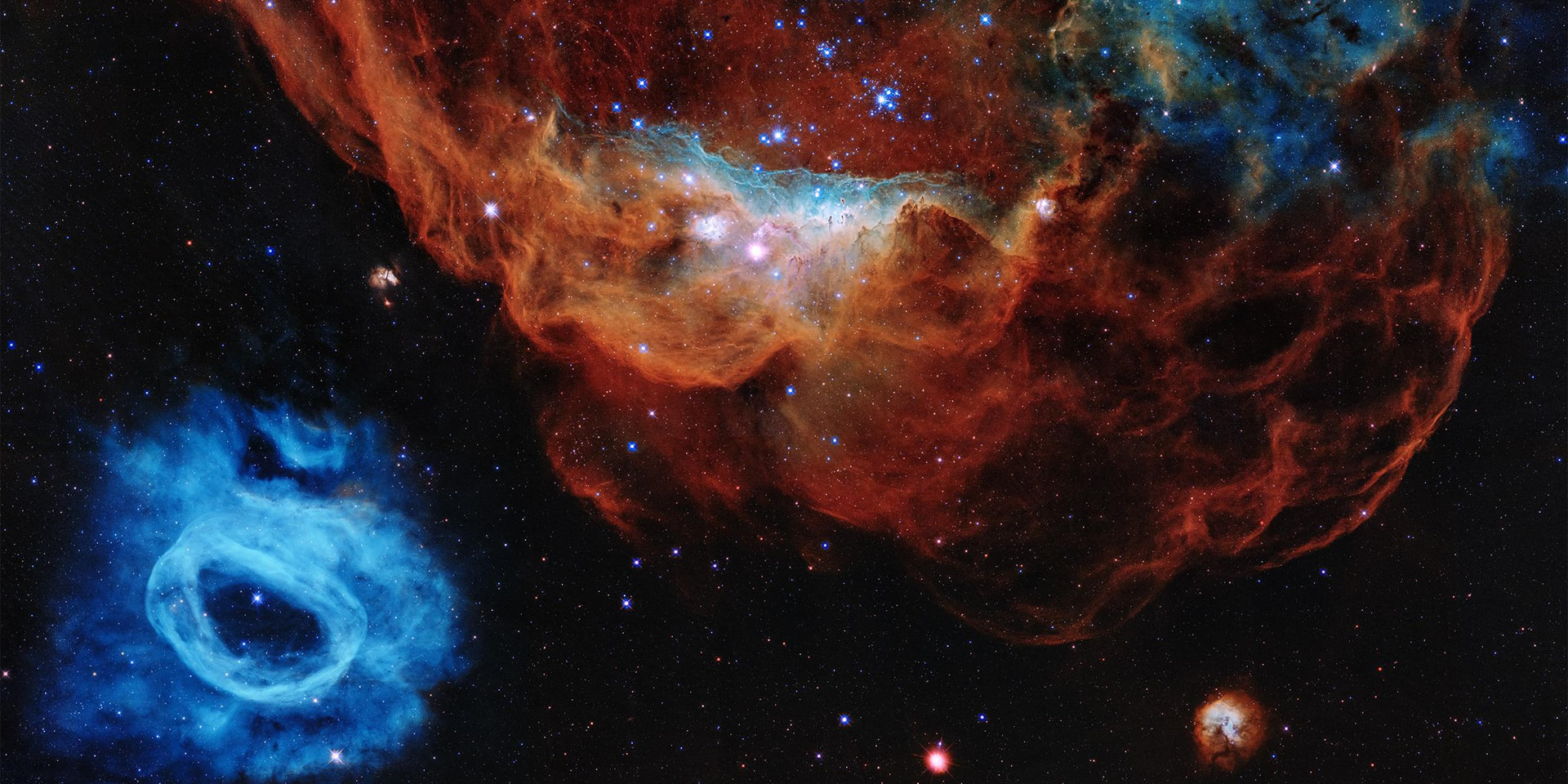
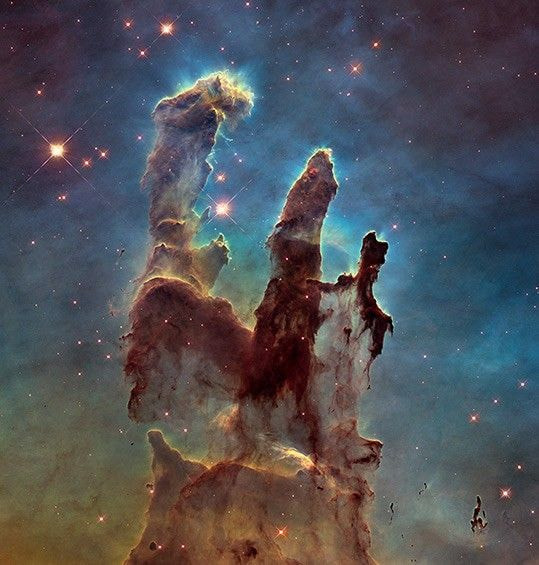
I’m also fascinated by deep space. More specifically, I’m in awe of the images that we’ve seen from telescopes like Hubble. Here are a couple of the more famous ones:
I kind of understand that what we’re seeing are inconceivably large gaseous formations. I just know that they’re beautiful. Like a lot of modern science, we’re the first generations to see anything like this.
I’m fascinated by the math/science/physics involving NASA and the space program. One scene from the movie Apollo 13 is when they had to recalculate the angle of re-entry to the earth’s atmosphere because the original calculation included additional weight from the rocks they were to collect.
The group pulled out their slide rulers and did the calculations to determine the right angle and I remember wondering how they do that so quickly. The whole rocket program is incredible.
How of says, the computers on the rockets are pretty sophisticated. We still do a lot of calculations before hand to make sure it will work, but if a rocket gets hit by a gust of wind in mid-flight it will instantly recalculate it’s whole flight path. Classic educational recording on this topic:
Quantum weirdness has my attention, though I have no idea of the maths I find the whole thing of entaglement, superposition, quantum computing and now quantum biology fascinating. Yes the Lavendar room is a learnng space…
The complete (we think!) understanding of electromagnetism is QED quantum electro-dynamics. Richard Feynman. Google.
The high school science explanation is: every atom is a tiny magnet. In nonmagnetic materials they randomly point in all directions and there is no net magnetic force. In magnetic materials they preferentially point in one direction and we get a net magnetic force.
Answer to this question for me is Relativity. Special and General. In late 1800s the science community already suspected something unknown going on at light speeds. Einstein just beat everyone else to the explanations. But the General was him alone. No one saw that coming until he published the papers. The subsequent experiments proved it right.
Just given mathematical odds of how many galaxies/stars/planets exist, we’re probably not only single unique life sustaining planet - even in our own timescale as homo sapiens. Even less likely that we’re the only ones to have existed, given galactic timescale.
But also, given size of the universe and galactic timescales, we should probably act as if we’re alone.
Red shift jumps to mind. It’s fun because it’s an easy concept to demonstrate to kids (siren sound/frequency when emergency vehicles pass etc.) and useful for how we know otherwise seemingly unknowable things like the expansion of the universe pointing to a singularity.
Also comparative anatomy, in particular the recurrent laryngeal nerve. A wonderful example of evidence for evolution. Reference the giraffe vs other mammals.
I’m an atheist who struggles to explain why the world is full of so many experiences that are not just satisfactory, but exhilarating, or beautiful. This book does an incredible job of tugging a disparate strings to reveal how mathematics and symmetry underly many such phenomena. It’s not a religious / intelligent design book, but a license to use science as a lens through which to fully revel in areas of life that seemingly have nothing to do with science.
A more direct answer is probably the ground effect - I have a long running fascination with Soviet ekranoplans and have often wondered what it must have felt like to be the US satellite analyst who first spotted the Caspian Sea Monster in the 60s.