I am a teacher of 33 years and there is a movement of having our grading program go to an internet based program. My fears are these:
I will not have a hard copy of the grades. If the on-line company goes down, gets a virus, the internet goes down, or has someone hack into it- —the grades are gone. AND
I can only enter grades when I have access to the internet.
Does anyone out there do there work on only internet based programs? Any fears? How do you handle the potential loss of data? Do you worry about people hacking into the program?
The program itself is good and easy to use.
Am I just old? I am paranoid of losing the grades. I have always had a hard copy. I know you guys out there are more up to date than I, help me out.
Anyone else out there have concerns like I do?
speaking as a software developer i feel there are not advantages to you, of having the grading program being internet based.
it will be in some ways beneficial for the company making the program, as they can more easily control upgrades and licensing, whether you like it or not.
also the program will likely suck a lot more, if it has to run as a web browser based application.
Educational data should NOT be kept in the ‘cloud’ - and I suspect it is not. Likely your school district is employing a web based software and the data is kept on their secure servers. If your school district is storing student/teacher data on web servers not under their control (a rough definition of the cloud) - they are cruisin’ for a bruisin’.
If you work in a small district - with insufficient staff for an internal web app - then hopefully they hired out a 3 party firm well versed in internet security and there is full disclosure if the system is compromised.
If your school district is storing student/teacher data on web servers not under their control (a rough definition of the cloud) - they are cruisin’ for a bruisin’.
Why? I would far more trust data stored in an Amazon or Google data center than a server in the IT room at a school. The Google/Amazon data is on better equipment, is better encrypted, better backed-up, far better physical security, and far less susceptible to most methods of hacking, etc. In a quality cloud deployment you’re getting bank-grade data security. Only very motivated and skilled people are going to be able to mess with it. On the otherhand any kid can break into the IT room at a school, install a keyboard sniffer or surreptitious camera, gain the admin password and be off and running.
The Cloud is Your Future. Accept Your Master Willingly, Before Your Master Accepts You!
Educational data should NOT be kept in the ‘cloud’ - and I suspect it is not. Likely your school district is employing a web based software and the data is kept on their secure servers. If your school district is storing student/teacher data on web servers not under their control (a rough definition of the cloud) - they are cruisin’ for a bruisin’.
If you work in a small district - with insufficient staff for an internal web app - then hopefully they hired out a 3 party firm well versed in internet security and there is full disclosure if the system is compromised.
Most cloud enabled software has better security, segregation of duties, encryption, disaster recover, business continuity, performance, change control, and redundancy than any small school district. Or any large school district for that matter.
Virtual Private Clouds are steadily becoming the defacto way to run enterprise software.
You will be fine going to a cloud based system, as long as your IT group does its due diligence when they select a vendor or vendors. Does the vendor go through a SAS70 audit? These are required for publicly traded companies, and any decent data center is going to go through one at least once a year if they plan on working with a publicly traded company. They are useful to review in addition to the due diligence done by the district.
Why do you feel an online company more likely to get hacked, get a virus, or have the network go down than if all this was under the school district’s control? The risk from the district’s own employees is the most likely security breach you will ever face.
As far as backups of data go, my guess is that their process is more robust than the districts as well. If you are concerned about having hard copies, you can always take screen prints or see if the software has any export functionality. But my guess is you might be violating some security policies if you are carrying around students’ personal info without it being properly secured.
speaking as a software developer i feel there are not advantages to you, of having the grading program being internet based.
it will be in some ways beneficial for the company making the program, as they can more easily control upgrades and licensing, whether you like it or not.
also the program will likely suck a lot more, if it has to run as a web browser based application.
I don’t know about that. I could how some software would suck in a web browser but how complicated can a grading problem be, really?
Outlook is a huge pile of shit and it has been for as long as people have had >100 emails in their inbox.
Meanwhile, running only in a web browser, Gmail has been a dream to use for as long as it has been available to the public.
also the program will likely suck a lot more, if it has to run as a web browser based application.
I would be curious what you base this on.
I have a web based Alumni program which runs off my FreeBSD system/Apache with a HTML/Perl front-end that I would put up against any Windoze based app any day of the week. It is lightning fast. Now if you are talking about an ASP application with a IIS backend, I couldn’t agree with you more. We are (attempting) to implement one right now and is a resource hog.
My wife is an ITS consultant and has moved several districts over to cloud based software. Google for docs, spread sheets, and email, and moodle for grading/course docs/links. I use BlackBoard at work (I’m a professor) and was skeptical at first, but have really grown to like it. I used to print out hard copies of grades at various points of the semester, but have gotten away from that. I love the fact I can put up assignments and quizzes in advance, then transfer them over the next semester. My HR course is almost to the point of running itself - and the quizzes self-grade and are entered in automatically. The students like the instant feedback.
My wife, however, knows a TON more about it. If you have any specific questions, PM me and I’ll try to get her to answer them.
My company uses a corperate “cloud” based system for its Point of Sales program, plus all of its manufacturing, material ordering, planning, etc functions. Our servers have never gone down to the best of my knowledge, however our Verison leasted dedicated T3/T1 lines have failed several times. When that happens we might as well shut off the lights and go home. I am told we lose 4 digits a minute when we lose contact with the outside world.
Your concerns are not unfounded in my experience. Even if our “cloud” was in a secure bunker in the valley we would still have the same problem. It only takes one guy wearing a hard hat operating a back hoe to take you off line (the last time it happened). That took Verison 30 hours to fix.
As far as hackability and data loss, never seen either happen. Our passwords are silly complicated and constantly require changing. The data is backed up in 3 different places constantly. If done right the server farm is far more secure and reliable than your desk top.
An added advantage of cloud based software is the ability to access it anywhere. I carry a VPN enable lap top when I travel. I can access all the company data in real time from any boardroom in the world securely.
Thanks for the feedback. Our IT has us offline too often. The company, Edline, will handle it through the district. It sounds like the security is pretty good and I have used the non-internet based version of the software and it works fine. Guess I am just overly concerned about not having a hard copy of grades for 175 students.
Nothing prevents you from having actual copies on your computer. It’s usually a good idea to have a back up of the stuff you often need, that isn’t on the
cloud, so it can be accessed when you don’t have access to the internet.
I am pretty sure that everything is kept on the cloud and I can not save it to my hard drive or thumb drive. The program is all on-line. I could print grades, but then if grades were “lost”, I would have to re-enter hundreds of grades.
Karl,
I am actually in the provider position of the question you are asking. I work for an Information Technology Center established by the Ohio Department of Education. We service 3 counties worth of schools with a total student enrollment of around 80,000 kids in roughly 80 public and private school districts. We host the servers and maintain the software that all these students grades and student records are store on as well as also the financial software they use for PO’s payroll, etc.
We work very hard at keeping up time in the five 9’s (99.999%). We do nightly backups of data and full system backups weekly. We do software maint. and upgrades on the weekends and off hours to minimize disruption.
That being said here are a few expectations you should have.
1.) If you have been doing it your way for 33 years you are probably not going to like any online method of entering grades or assignments. However I have seen first hand how, having this information online really does help to engage parents and give them some clue into whats going on with there kids aside from a progress report and a report card.
2.) The system is going to go down from time to time. That or your internet connection. Is it going to be annoying. Yes very. Is it going to be the end of the world. No. Are there going to be guys like me scrambling like crazy to get things back up as quickly as possible. YES. What is most annoying to me is that when there is a system issue everyone tends to act like the sky is falling and were all doomed. Or that the only time they can enter data is between 8-9am TODAY. If there are outages (which there will be occasionally) just please shift your focus and put off that work for later.
3.) backups. OMG we are nazi about backups. We seriously have real to real tape backups that we could load if neccesary from 15+ years ago. Dont worry your data is safer then it is in your grade book.
4.) Hacking into the program should not be a concern. However I have seen students gain access to our system via discovering passwords left out in the open by staff. Dont write your username and password down and tape it under your mousepad, keyboard, rolodex. Whatever just dont do that and you will help keep the system secure.
5.) I dont know what system you are going to so I dont know how good and easy to use it will be. But like I said earlier it will probably seem very inferior to you at first and will take some getting used to. A lot of the software I see being written is being written by programmers with a punch list of things to include. Not always intuitive or the easiest way to get something done but they are getting better.
If you have any specific questions of me just let me know.
Good response. Only suggestion I have is when you claim to be an IT guy and you refer to technology, at least say it or spell it properly. It’s “reel”, not real.
Reminds me of the fresh out of school kid who tried to talk me into a copier that could connect to my L-A-N ( he said the letters). I offered him a coke as I walked him to the door.
Thanks, very helpful.
The company that runs it is called Edline and I have been using the grade program for several years. My Master’s degree is in Computers in Education and I am not intimidated by the soft ware or the web. Like teaching kids to graph, somethings are done better without the computer (at first). My concern was with safety and ease of use. If the parents can use it easily and that saves me time, I may go to the “clouds”.
Thanks again. Internet is down often at my school. Must be those IT folk 
Karl
LOL you got me! I think its my inner contempt for those tapes that was coming out. I think its absurd that we keep some of this stuff around. I once asked if we even had the software still loaded that would be required to read that backup and well lets just say “cricket”
Why? I would far more trust data stored in an Amazon or Google data center than a server in the IT room at a school. The Google/Amazon data is on better equipment, is better encrypted, better backed-up, far better physical security, and far less susceptible to most methods of hacking, etc. In a quality cloud deployment you’re getting bank-grade data security. Only very motivated and skilled people are going to be able to mess with it. On the otherhand any kid can break into the IT room at a school, install a keyboard sniffer or surreptitious camera, gain the admin password and be off and running.
And this is why Aerospace will probably not move to the cloud based systems. The Chinese have already deployed an advanced group of hackers to pull down data from Boeing and Northrop, Bell, and others. It is skilled, systemic, and focused on these kinds of data storage facilities. So, while classroom data might be secure, more advanced data needs better security.
No matter how secure your software is, it only takes ONE disgruntled tech to open up archives. Which is why we employ clearances in our industry. Security is NOT in software. Security is in PEOPLE. People have to *want to be secure. *
**
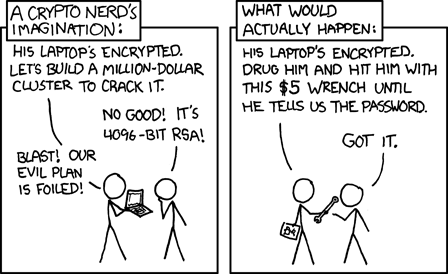
Security is NOT in software. Security is in PEOPLE. People have to *want to be secure. *
Of course. Security is only achieved when all forms are taken seriously: operational, physical, information, personnel, etc.
And this is why Aerospace will probably not move to the cloud based systems.
It’s not so much “not move” but making informed decisions on the risks of what might be moved. HR data and financials - while sensitive - might be moved. Engineering docs - no. However there is much classified information in the US government in on the SIPR net, which is a form of the “cloud” e.g. the information is not centrally stored, and is accessible anywhere with a SIPR tap. Of course this was the very network exposed by the Wikileaks…bringing up the last point…
No matter how secure your software is, it only takes ONE disgruntled tech to open up archives
Not necessarily true. The most secure networks are designed from the ground up to be secure against multiple hostile insiders. (Usually one to two). This starts with physical security - no one is allowed access to the hardware without being in the direct presence of another fully authorized user. If you have more than two hostile insiders you have bigger issues than data security.
There’s a classic example of how to break even the best security:
In Northern Ireland, the banks kept getting robbed, so they started to move most of their cash 3-4 times a day in armored cars. Since this is Belfast, the armored cars were getting blown up…then robbed. So the cars got harder, got tracked, got response units, etc. Then the car companies were infiltrated by criminals who opened up the safes and cars. So the cars got timers on both ends, as well as the safes. Basically, the cash was as well guarded as could reasonably be with actually opening fire on people. SO - The solution to all this security? Easy. The IRA sent 2 people each to the 2 houses of executives in the company. They held the families at gun point and waited 8 hours for the offices to open. Then they sent the executives into arrange an opportunity. The security is disabled and the gates are opened. The cash is (supposedly) loaded up in cars and the criminals drive away. Easy. The IRA just had to be willing to kill (they are) and have a formidable reputation (they do). Everything else is Human Engineering.
While I don’t normally cite from Wikipedia, I happen to have been living in Northern Ireland at this time, very close to Downpatrick, County Down, and worked just outside of Belfast. I know that this account is roughly accurate of what I read in the reports. Here’s the story: http://en.wikipedia.org/wiki/Northern_Bank_robbery