Originally published at: https://slowtwitch.com/swimming/real-time-resistance-training-with-the-gmx7-swim-device/
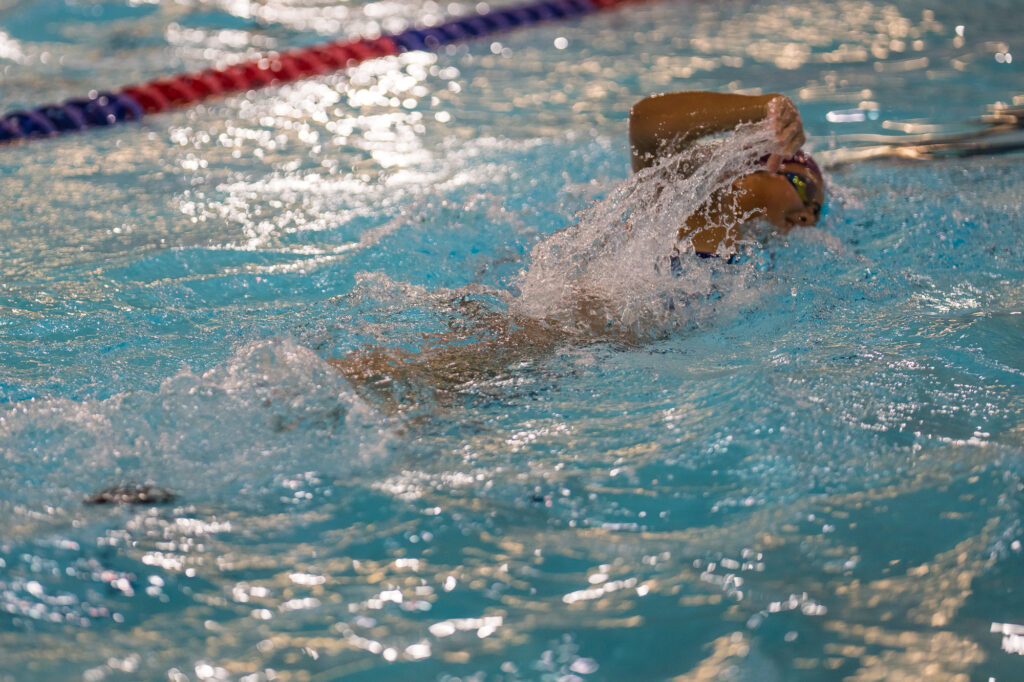
When it comes to improving your swim times, for all but a precious few, there’s no substitute to spending more time in the water. Unless your technique is near perfect, spending crazy amounts of time in the weight room isn’t going to help you go faster. Intuitively we all know this. You know full well that you can likely bench press (or pick any other weight exercise) way more than those tiny kids you see in the pool swimming before your masters workout. They likely swim much faster than you can, though, which means that strength isn’t what’s holding you back from a faster swim split this summer.
That said, when it comes to swimming, there are definite benefits to improving your strength. Spending some time on a strength program can definitely help prevent injuries (by strengthening key muscle groups), counteract muscle imbalances and enhance joint stability. That strength program can also improve your times once your stroke is at the point where having more strength will improve your power and propulsion. A strong core will also improve your stroke mechanics and help keep you streamlined.
Resistance Training in the Water
Wouldn’t it be awesome if you could work on increasing your strength doing the specific swim motion – in the same way that you can improve your strength and power on the run through hill training, or on the bike through intervals and intense trainer workouts? Well, you can. Using paddles can help on that front (I’ve seen swimmers drag buckets and parachutes through the water, too), and there are a number of swim devices that will get the job done, too. The goal is to use this resistance to reinforce correct swimming technique and stroke mechanics.
Back in the dark ages during my early years as a pro triathlete, to improve my swim times I worked with an age-group swim team. We used to do some training using surgical tubing. The tubing would be attached to a harness around our waists and we’d swim out as far as we could, then turn around and get accelerated back to the wall. It was a great way to work on your strength and power, but what I always found most helpful was how it forced me to really work on my “catch” – the point at which your hand and forearm transition from reaching forward to grabbing and pulling yourself through the water.
Taking that to the next level, you will sometimes see power rack (or power tower) systems at some pools – the tether remains the same, but now the swimmer is lifting a weight stack as they swim. One advantage of this is you work on your strength in the water with a constant resistance. The surgical tubing resistance gets harder as you go (variable). The huge disadvantage of this type of resistance training is the equipment takes up a lot of space, and you’re likely to only see it at high performance centres.
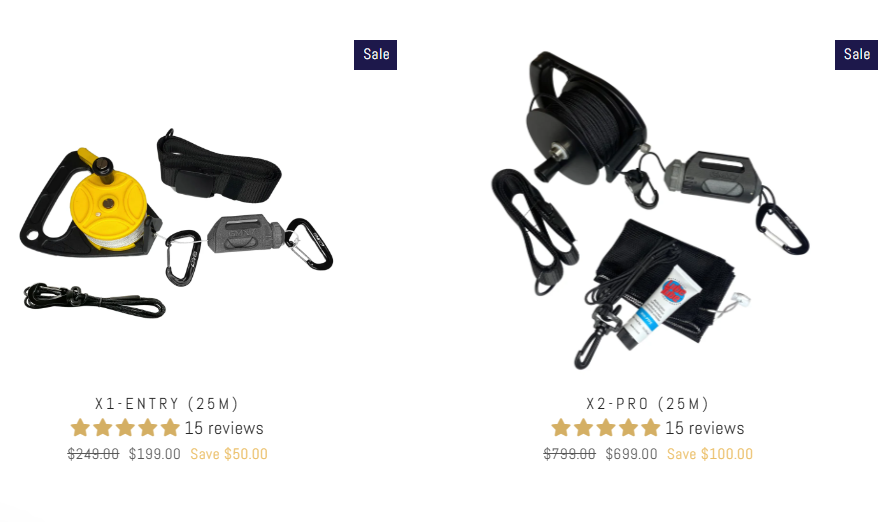
Cue the GMX7, a resistance training device developed by David McCagg, a former 100 m freestyle world champion. McCagg’s device provides constant resistance through the length of the pool rather than the incrementally tough resistance you get with surgical tubing. Since the entire device fits into a small bag and weighs less than four pounds, it’s a much more viable training tool for age-group swimmers and triathletes than a power tower.
Hitting the Pool
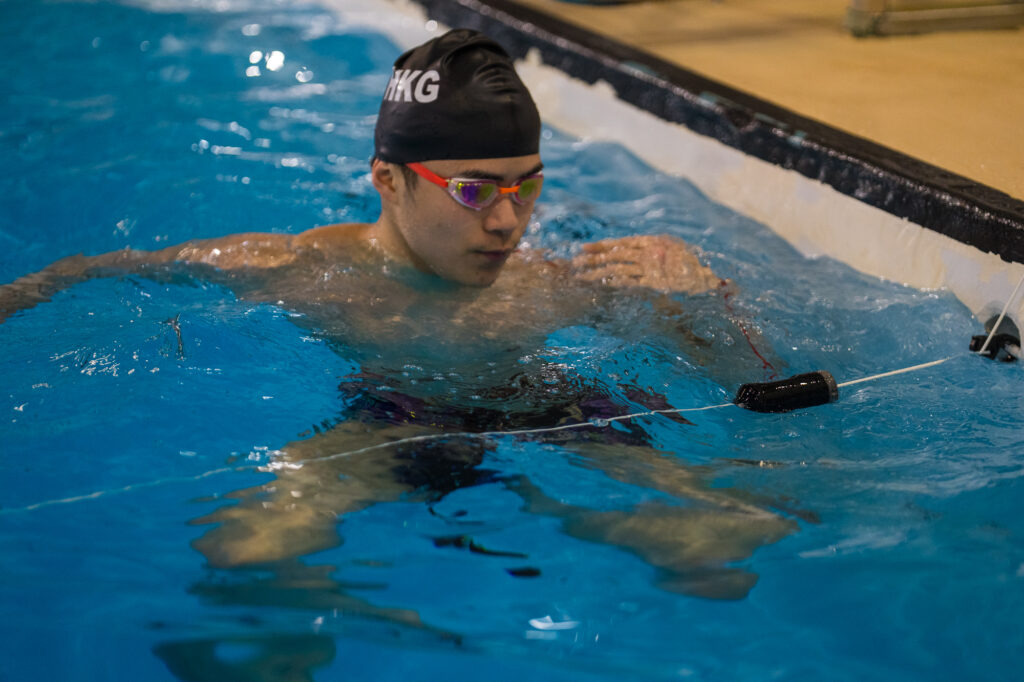
I can’t help but point out one of the biggest challenges of using the GMX7 at this point. I do my swimming during lane swim times at our local pools, so rolling in and commandeering a full lane to do a test wasn’t an option. So I reached out to Grey Fairley, the head swim coach at McMaster University (who I have known and coached with for years), to ask if I could put the GMX7 through its paces at one of his practices with some of his athletes. He was all in – he’d tried the device at a conference, but didn’t feel he’d had enough time to really test it out.
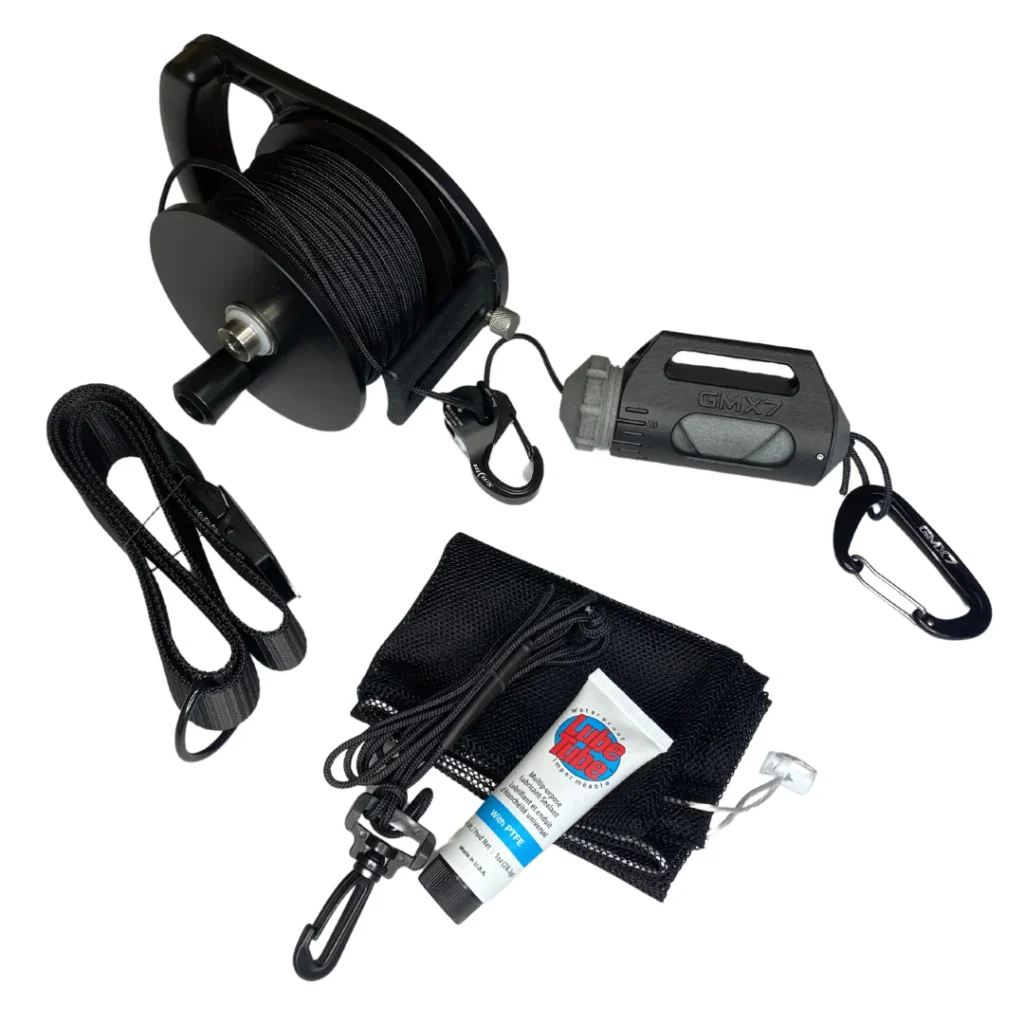
McCagg had sent me the X2 Pro model (50 m), so I chose an afternoon the team was swimming long course to give it a try. It’s incredibly easy to set up – carabiners attach in the lane-rope eyelets at either end of the pool, you attach the tether to the X2-Pro Shuttle and you are ready to roll. The shuttle has a dial that allows you to calibrate the resistance and it truly does range from zero to stop you in your tracks.
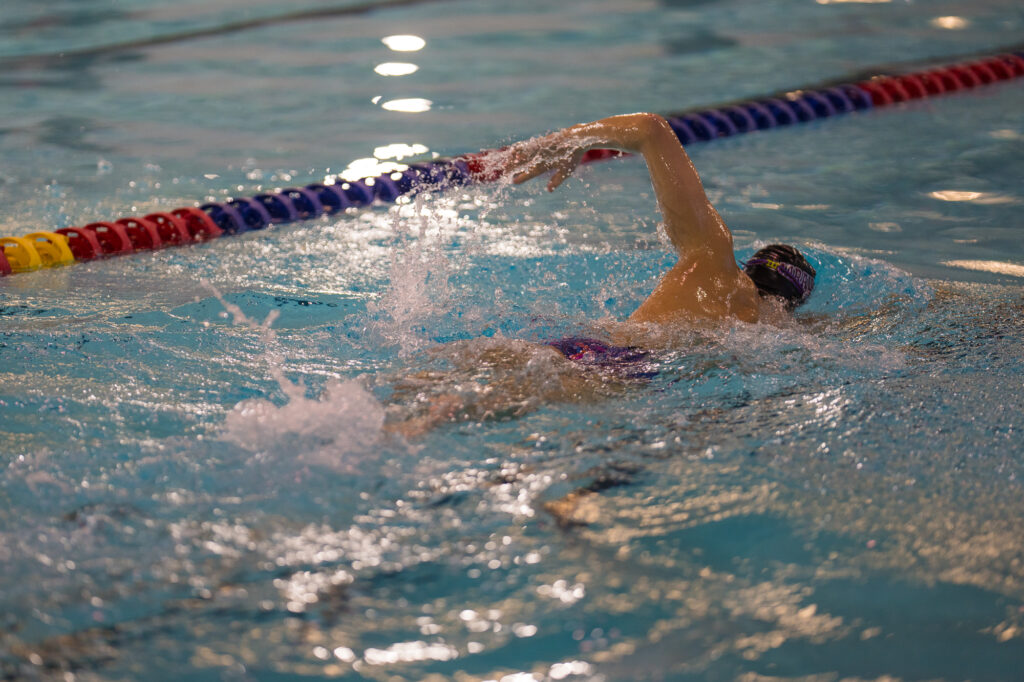
As you ramp up the resistance, you can really get a feel for how important a good catch is, which to me is the biggest benefit of this device. That’s just one of a few benefits, though. The smooth resistance means you don’t have the jerking motion you’ll feel with surgical tubing, and you’re not getting pulled backwards as you’re trying to swim. You are just having to work harder.
With some coaching, the swimmers we had try the GMX7 were able to really see how an improved roll (including through the hips) helped their strokes by enabling them to use more of their lat muscles to pull them through the water. A higher elbow during the catch phase also provided more power, which was easier to feel as the resistance increased, too.
While we focused on technique during our session, time crunched swimmers and triathletes could look to a device like this to streamline swim sessions. Using the GMX7 for a bunch of 25s or 50s will give you a very tough set in a short period of time.
Pros and Cons
McCagg really has developed a device that solves the problems of other resistance training devices like surgical tubing or power towers. The resistance is really easy to dial in, is truly smooth throughout the length (there’s no jerking at all), and allows athletes lots of variability and options for their workouts.
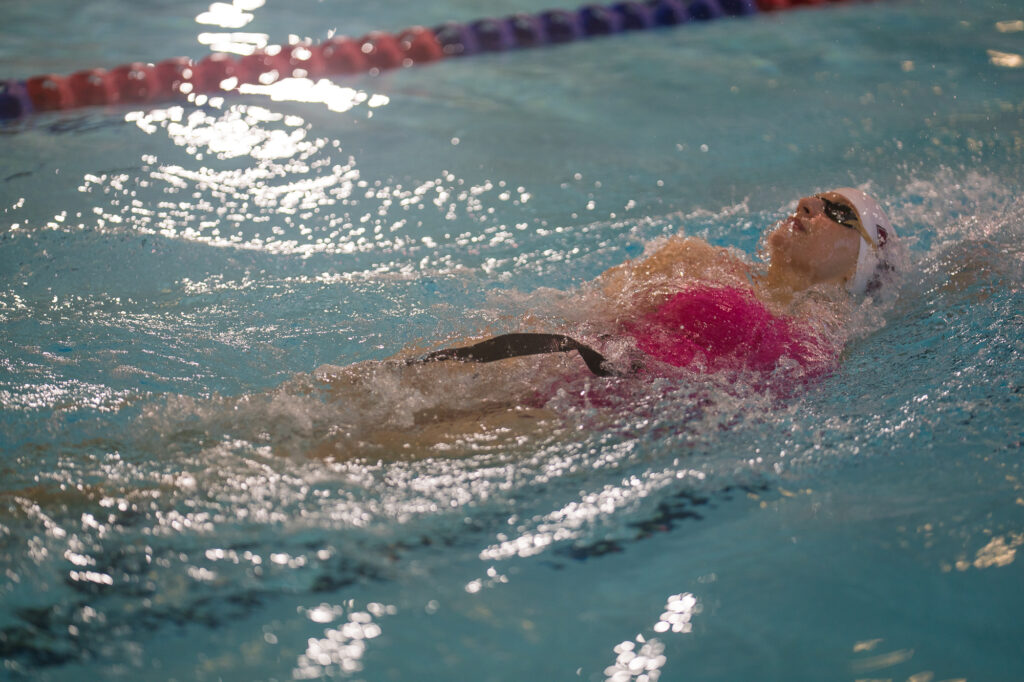
The big down side, though, is that for people who swim at public pools and can’t commandeer a lane for themselves, the GMX7 is a non-starter. The butterfly and breaststroke swimmers we had try the device also found their arms would sometimes snare on the line. That’s not likely to be a game breaker for most triathletes and open-water swimmers, though.
Having tried the device, it’s no surprise why so many of the world’s top swimmers and programs are jumping at the opportunity to use it. The cost of the X2-Pro version (US$799 for the 25 m, $899 for the 50 m) is likely prohibitive for many, but there is a 25 m X1-Entry option that goes for $249.
For those who are looking for every opportunity to improve their swim and/ or want to make their time in the water more efficient (and have the ability to use an entire lane when they are swimming!) the GMX7 is well worth a look.