One thing I couldn’t see in the video coverage was him really using it, but then he also went with such little travel. I’d go full slam, that way when it’s too steep to pedal, could get really low, especially in switch backs - whip that rear wheel around motocross style. Enve put out a mechanical 10mm road dropper last year. Again, I’d go near full drop, and as low as a super tuck but safer with weight further back.
He said he used it back and forth constantly. He chose 6 cm because 12 cm was too much and he needed to choose between those due to availability.
I have a dropper post on my gravel bike. It does make technical descents better
So, the super tuck advantage is real… as is the lack of safety of riding in a super tuck position: good luck if you need to apply the brakes suddenly or snag your shorts on your saddle when getting out of that position.
I predict that an integrated dropper (see the new BMC XC bike as an example) can be made to be lightweight and allow for a safe(r) supertuck where the rider can get their mass further back for more control, allowing for supertuck positions through switchbacks… I think we could see such technology adoption by at least a rider or two within three years
So, the super tuck advantage is real… as is the lack of safety of riding in a super tuck position: good luck if you need to apply the brakes suddenly or snag your shorts on your saddle when getting out of that position.
I predict that an integrated dropper (see the new BMC XC bike as an example) can be made to be lightweight and allow for a safe(r) supertuck where the rider can get their mass further back for more control, allowing for supertuck positions through switchbacks… I think we could see such technology adoption by at least a rider or two within three years
Cycling News has a great story about Mohoric’s dropper post: https://www.cyclingnews.com/…-use-a-dropper-post/
RP
One thing I couldn’t see in the video coverage was him really using it, but then he also went with such little travel. I’d go full slam, that way when it’s too steep to pedal, could get really low, especially in switch backs - whip that rear wheel around motocross style. Enve put out a mechanical 10mm road dropper last year. Again, I’d go near full drop, and as low as a super tuck but safer with weight further back.
He was cited as saying he wanted to be able to pedal and said he couldn’t get the power out when he tried a deeper dropped post.
Overkill for most triathlon bike descents and just adds a potential mechanical issue for amateur athletes.
I did a recent xtri where the road was so rough the repeated big hits caused my saddle to slam down, completely wrecked my output for around 30km until I could get to the bag drop area and fix, cost me the win in the end really.
Having used them on an mtb they are good for tech or super steep, but they can be temperamental
Nealhe: in those diagrams. A dropper isn’t shown. A dropper would allow for something in between the 14% rearward and 17% supertuck positions BUT could be maintained for longer because turns could be taken safely, something neither of those two positions afford.
As for losing power while pedaling… then don’t go down as low when you pedal but slam it when it’s too steep to pedal. In that course, he was pedaling most of the time, so probably not applicable.
There is a pro here in Boulder who has set up a Scalpel with drop bars and road tires and on descents, merely by opening the rear/front suspension so the bike lowers a fair amount, he can drop some of the better descenders here like we’re standing still, and that was w/out a dropper. Getting the body out of the wind is such a huge advantage on descents.
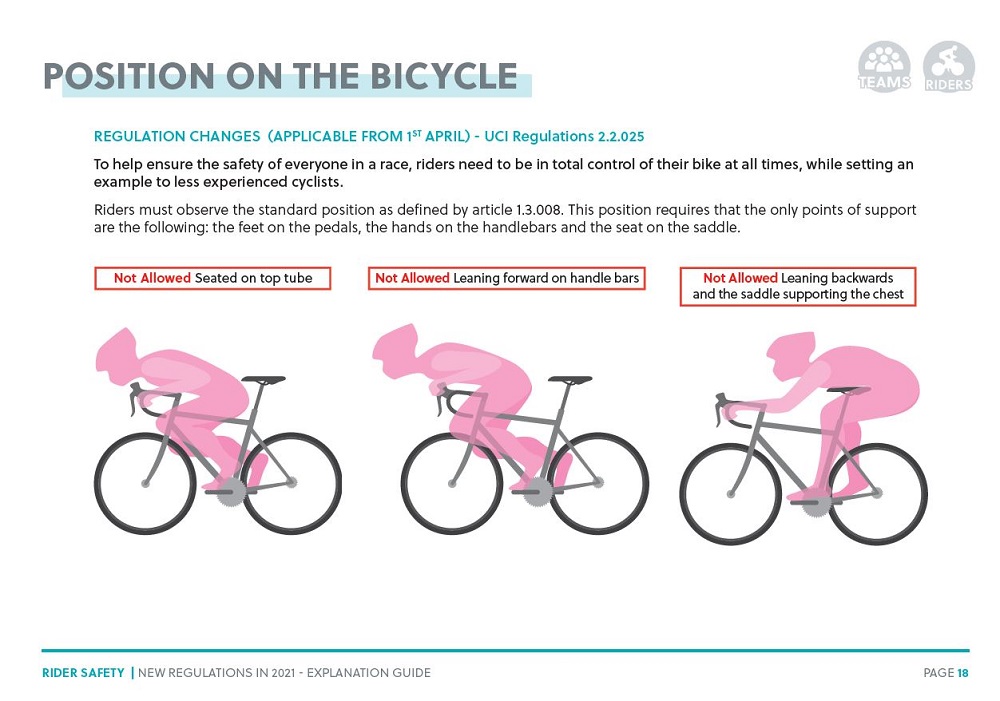
What am I missing … I read UCI banned supertuck effective 1 April 2021?
I am surprised by the delta between the 9 percent and 17 percent positions. The big difference between 9 and 17 seems to be the seat post sitting up like a mast in the wind behind the butt vs the seatpost and butt ending up as one unit that the wind sees
What am I missing … I read UCI banned supertuck effective 1 April 2021?
I am surprised by the delta between the 9 percent and 17 percent positions. The big difference between 9 and 17 seems to be the seat post sitting up like a mast in the wind behind the butt vs the seatpost and butt ending up as one unit that the wind sees
Just looking … it seems the Pantini position has the weight further back and the advantage of using your weight on the seat for additional stability … although slipping further back could be a problem without a fender to protect from the back wheel …
Making an drop seat for the Pantini position and a sturdy fender over the back wheel shouild not be too difficult …
What am I missing … I read UCI banned supertuck effective 1 April 2021?
I am surprised by the delta between the 9 percent and 17 percent positions. The big difference between 9 and 17 seems to be the seat post sitting up like a mast in the wind behind the butt vs the seatpost and butt ending up as one unit that the wind sees
Just looking … it seems the Pantini position has the weight further back and the advantage of using your weight on the seat for additional stability … although slipping further back could be a problem without a fender to protect from the back wheel …
Making an drop seat for the Pantini position and a sturdy fender over the back wheel shouild not be too difficult …
Assuming all these position numbers are accurate the 12 percent position seems to offer the best speed vs stability tradeoff. Add the dropper post to the 12 percent and you win Milano San Remo (or maybe it gives you enough of a gap to hog the draft of the motos, but either way, you gotta be at the front to get the moto benefit)
Nealhe: in those diagrams. A dropper isn’t shown. A dropper would allow for something in between the 14% rearward and 17% supertuck positions BUT could be maintained for longer because turns could be taken safely, something neither of those two positions afford.
As for losing power while pedaling… then don’t go down as low when you pedal but slam it when it’s too steep to pedal. In that course, he was pedaling most of the time, so probably not applicable.
The UCI 5cm rule is that the saddle tip must be no closer than 5cm behind the bottom bracket unless you’ve had a morphological exemption. That probably wouldn’t be an issue for most pro’s although some sprinters or shorter riders do run saddles at that limit.
What am I missing … I read UCI banned supertuck effective 1 April 2021?
I am surprised by the delta between the 9 percent and 17 percent positions. The big difference between 9 and 17 seems to be the seat post sitting up like a mast in the wind behind the butt vs the seatpost and butt ending up as one unit that the wind sees
Just looking … it seems the Pantini position has the weight further back and the advantage of using your weight on the seat for additional stability … although slipping further back could be a problem without a fender to protect from the back wheel …
Making an drop seat for the Pantini position and a sturdy fender over the back wheel shouild not be too difficult …
with a dropper, all of those positions are obsolete, unnecessary and slower when you factor in taking corners with the saddle slammed. The biggest plus is that it’s safer.
there is a GCN video from July 2016 where Dan Lloyd compares the time to descend a 4K hill with and without using a dropper post (it has been retrofitted to a Canyon Ultimate). He averages 10 seconds faster (mean of 2) with the dropper post - over about a 4.5 min run…and then offers other comments on increased confidence and stability and predicts it will be coming to a grand tour soon.