let’s say a company holds a patent that was applied for 20 years and 2 months ago, and that patent was applied for in (say) japan. within a year patents were also applied for elsewhere. the US. in Europe. i believe that there is a convention that if you apply for a patent within a year in another country, that’s your time window. a year. yes?
my question is this. do all the patent dates, for the purpose of expiration, retreat back to that original patent application filing in the original country? in other words, if i am granted a patent in the US a year later, does that (utility) patent have a 19-year life, as opposed to a 20-year life, because the original patent filed in japan was filed a year earlier?
Generally patents are going to have lifespans going back to the international application - the PCT application). The japan application doesnt matter. If specific dates are really important you also need to determine the PTA (patent term adjustments - which can be years, especially for older applications).
(3) PRIORITY.—Priority under section 119, 365(a), 365(b), 386(a), or 386(b) shall not be taken into account in determining the term of a patent.
Timeline:
File Japan App - 01/01/2000
File PCT app - 01/01/2001 (this is the date)
You have 30 months from 01/01/2000 to file US/EU/ETC. applications.
Granted patents go back to 01/01/2001, except for maybe Japan App. (the clock for provisional applications in the US starts when the utility - not provisional is filed).
**II. **INTERNATIONAL APPLICATIONS
A patent granted on an international application filed on or after June 8, 1995 and which enters the national stage under 35 U.S.C. 371 will have a term which ends twenty years from the filing date of the international application. A continuation or a continuation-in-part application claiming benefit under 35 U.S.C. 365(c) of an international application filed under 35 U.S.C. 363 designating the United States will have a term which ends twenty years from the filing date of the parent international application.
Generally patents are going to have lifespans going back to the international application - the PCT application). The japan application doesnt matter. If specific dates are really important you also need to determine the PTA (patent term adjustments - which can be years, especially for older applications).
You have 30 months from 01/01/2000 to file US/EU/ETC. applications.
Granted patents go back to 01/01/2001, except for maybe Japan App. (the clock for provisional applications in the US starts when the utility - not provisional is filed).
let me make it simpler. simpler for me that is. has this patent expired?
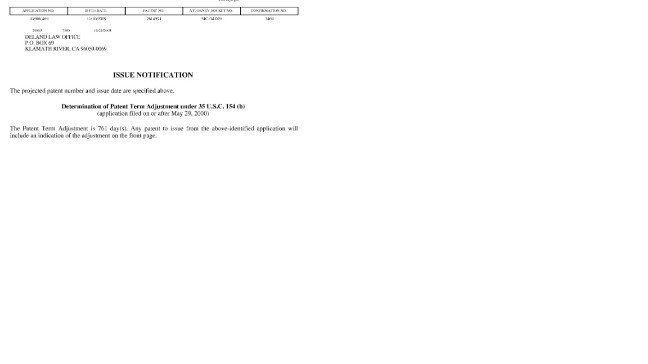
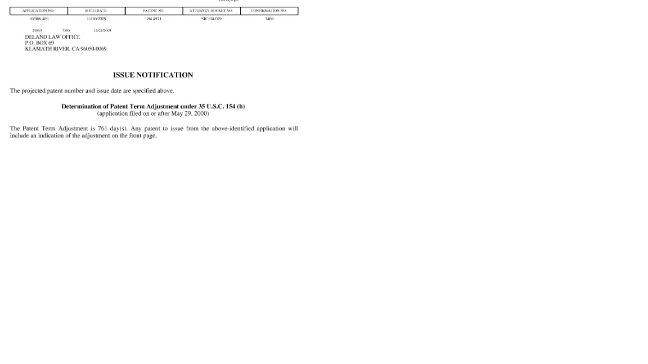
No. There was PTA of 761 days for the patent (for delays) at the patent office. A quick back of the napkin math is 2 years from the filing date of 02/2005 + 20 year (term) + 2 year delay= 02/2027 .
As a note, they paid their maintenance fees for the patent. So its likely going to be enforceable for the next 2.5 years.
No. There was PTA of 761 days for the patent (for delays) at the patent office. A quick back of the napkin math is 2 years from the filing date of 02/2005 + 20 year (term) + 2 year delay= 02/2027 .
As a note, they paid their maintenance fees for the patent. So its likely going to be enforceable for the next 2.5 years.
Generally patents are going to have lifespans going back to the international application - the PCT application). The japan application doesnt matter. If specific dates are really important you also need to determine the PTA (patent term adjustments - which can be years, especially for older applications).
(3) PRIORITY.—Priority under section 119, 365(a), 365(b), 386(a), or 386(b) shall not be taken into account in determining the term of a patent.Timeline:
File Japan App - 01/01/2000
File PCT app - 01/01/2001 (this is the date)
You have 30 months from 01/01/2000 to file US/EU/ETC. applications.
Granted patents go back to 01/01/2001, except for maybe Japan App. (the clock for provisional applications in the US starts when the utility - not provisional is filed).
let me make it simpler. simpler for me that is. has this patent expired?
Going by the link you provided, if you click on the “US” tab in the right hand side - no, not expired. Expected expiration is 2027-03-25.
As others have noted, you need to consider patent term adjustments. That’s not always a simple answer. I don’t know if the google link you provided has a solid underlying algo for determining adjustments on a question like this.
Generally patents are going to have lifespans going back to the international application - the PCT application). The japan application doesnt matter. If specific dates are really important you also need to determine the PTA (patent term adjustments - which can be years, especially for older applications).
(3) PRIORITY.—Priority under section 119, 365(a), 365(b), 386(a), or 386(b) shall not be taken into account in determining the term of a patent.Timeline:
File Japan App - 01/01/2000
File PCT app - 01/01/2001 (this is the date)
You have 30 months from 01/01/2000 to file US/EU/ETC. applications.
Granted patents go back to 01/01/2001, except for maybe Japan App. (the clock for provisional applications in the US starts when the utility - not provisional is filed).
let me make it simpler. simpler for me that is. has this patent expired?
Going by the link you provided, if you click on the “US” tab in the right hand side - no, not expired. Expected expiration is 2027-03-25.
As others have noted, you need to consider patent term adjustments. That’s not always a simple answer.** I don’t know if the google link you provided has a solid underlying algo for determining adjustments on a question like this**.
Generally patents are going to have lifespans going back to the international application - the PCT application). The japan application doesnt matter. If specific dates are really important you also need to determine the PTA (patent term adjustments - which can be years, especially for older applications).
(3) PRIORITY.—Priority under section 119, 365(a), 365(b), 386(a), or 386(b) shall not be taken into account in determining the term of a patent.Timeline:
File Japan App - 01/01/2000
File PCT app - 01/01/2001 (this is the date)
You have 30 months from 01/01/2000 to file US/EU/ETC. applications.
Granted patents go back to 01/01/2001, except for maybe Japan App. (the clock for provisional applications in the US starts when the utility - not provisional is filed).
let me make it simpler. simpler for me that is. has this patent expired?
Going by the link you provided, if you click on the “US” tab in the right hand side - no, not expired. Expected expiration is 2027-03-25.
As others have noted, you need to consider patent term adjustments. That’s not always a simple answer.** I don’t know if the google link you provided has a solid underlying algo for determining adjustments on a question like this**.
thank all you guys for your help on this. i’m writing - and will probably publish today - an article describing why SRAM’s new RED front derailleur, and front shifting, is so much better than anything SRAM has produced before. it is my contention that the big difference is that, for the first time, SRAM is using trim - automatic trim - in its FD, which allows SRAM to make a narrower cage. this has allowed SRAM to catch up to shimano.
it has been my guess that SRAM has been precluded by patents from using trim in its FDs and, if so, why is it using trim now? my thought is that a patent expire. but in my own nosing around it seems as if this would be the patent. but it hasn’t expired. and it’s unlikely shimano would’ve sold SRAM a license. so, do i have the wrong patent? not that it matters. the point is, the derailleur works really well.
it’s possible SRAM has worked around the patent and it has this patent which seems to me to describe a sensor that detects changes in the orientation of the pulleys in the RD, and that change causes “the component to perform the action in response to the determination that there is a newly engaged gear.”
could that “action” be performed by a different component? as in, could the FD trim itself based on the change in RD pulley orientation? that might allow SRAM to get to FD trim by using a different input than shimano gives its FD, and that’s the workaround.
i don’t know. but that’s the reason i asked this question.
I don’t have time to really dig into the 2 patents you’ve linked, and they’re both quite technical, but my overriding assumption with all the patents I’ve ever been involved with is that they’re circumventable. It’d just take many many hours of technical deep-dive on these to determine whether or not SRAM dodges the Shimano prior art.
thank all you guys for your help on this. i’m writing - and will probably publish today - an article describing why SRAM’s new RED front derailleur, and front shifting, is so much better than anything SRAM has produced before. it is my contention that the big difference is that, for the first time, SRAM is using trim - automatic trim - in its FD, which allows SRAM to make a narrower cage. this has allowed SRAM to catch up to shimano.
it has been my guess that SRAM has been precluded by patents from using trim in its FDs and, if so, why is it using trim now? my thought is that a patent expire. but in my own nosing around it seems as if this would be the patent. but it hasn’t expired. and it’s unlikely shimano would’ve sold SRAM a license. so, do i have the wrong patent? not that it matters. the point is, the derailleur works really well.
it’s possible SRAM has worked around the patent and it has this patent which seems to me to describe a sensor that detects changes in the orientation of the pulleys in the RD, and that change causes “the component to perform the action in response to the determination that there is a newly engaged gear.”
could that “action” be performed by a different component? as in, could the FD trim itself based on the change in RD pulley orientation? that might allow SRAM to get to FD trim by using a different input than shimano gives its FD, and that’s the workaround.
i don’t know. but that’s the reason i asked this question.
from my patent playing days, the patent attorney basically said, if you reduce or in some way simplify the process you have a new patent, and yes I do… so it may be that SRAM simplified the process, dropped some steps or in some way reduced the complexity and thus they did not circumvent but instead have themselves a new patent. or more simply they chose to not patent it but have in essence not violated the patent.