Originally published at: https://slowtwitch.com/running/nike-sued-by-former-ncaa-division-i-runner-claims-foot-fractures-caused-by-carbon-shoes/
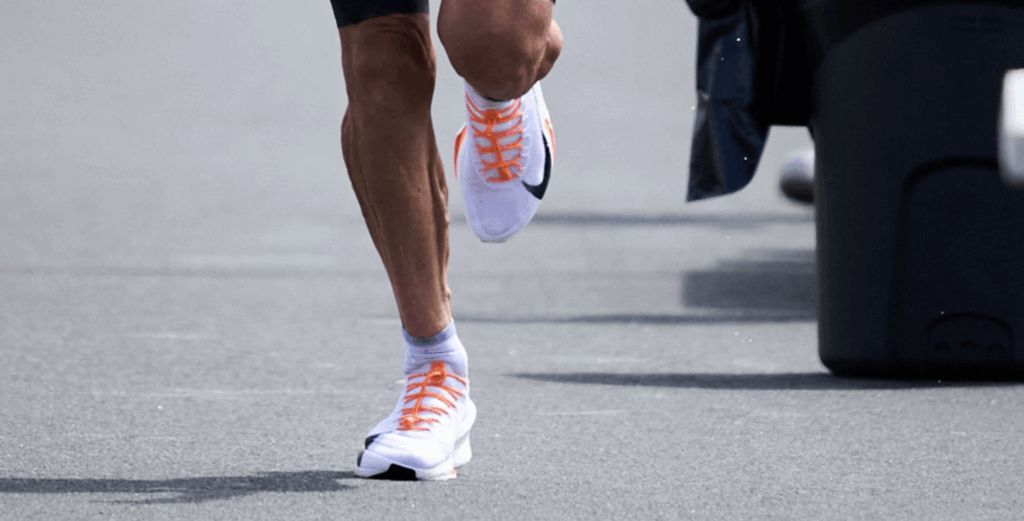
Nike, the pioneer of carbon-plated footwear, has been sued by a former NCAA Division I athlete who claims that the AlphaFly 2 caused her to suffer a catastrophic fracture in her foot.
Heather Cerney’s attorneys filed the suit against the footwear behemoth this week in U.S. District Court for the Northern District of California, which alleges Cerney suffered a sesamoid fracture in her left foot due to the carbon plate and geometry of the AlphaFly.
Cerney ran track and cross-country for the University of California, Berkeley. She ran mostly distance events during her tenure there from 2011 to 2015, with appearances at the NCAA West Region Cross Country Championships. Her best event on track was the 1500, whereas she performed best at 5 kilometers at cross country.
The suit includes allegations of product liability, negligence, failure to warn, and breaches of both express and implied warranties. It also states that Cerney was unaware of any potential risks of carbon-plated footwear.
According to the suit, Cerney paid full retail plus local tax of nearly $300 for the AlphaFly 2 in November 2023. She then wore the shoes for the first time for the San Francisco Turkey Trot, a 5 mile road race. Cerney finished as the second overall female and won her age group. After the race, the suit claims Cerney began suffering from severe pain in her left foot.
Testing showed a fracture in a sesamoid. The sesamoid bones are two small bones underneath the joint of the first metatarsal. It effectively acts much like a kneecap does, facilitating movement during walking and running activities. Cerney was forced to undergo surgery for the injury, as sesamoid fractures are susceptible to necrosis due to a lack of available blood supply.
According to the complaint, Cerney has been left with a permanent partial disability despite the medical intervention, which impacts both her daily life and her ability to work. Cerney is no longer able to run competitively. The suit references both an ongoing loss of earnings as well as loss of potential earning capacity as a result of the injury.
The suit references heavily a 2023 article published in Sports Medicine, titled “Bone Stress Injuries in Runners Using Carbon Fiber Plate Footwear.” Authors of that article include Dr. Adam Tenforde, a professor in the Department of Physical Medicine and Rehabilitation at Harvard Medical School. That article came after the study of five navicular bone fractures in what it called “highly competitive athletes,” and assessed the potential risks related to the geometry and stresses from running in carbon-plated shoes. Particularly relevant to Cerney’s case, the article includes an image showing the geometry of the carbon-fiber plate, and the location of the fulcrum point of it: directly underneath the metatarsal phalangeal joints and the sesamoid Cerney fractured.
As many runners can attest, the benefits of carbon-plated footwear are relatively clear: faster running. According to the landmark New York Times article, carbon shoes can help runners save upwards of four percent of their race time using the shoe; these are the kinds of margins that can make or break, for instance, a Boston Marathon qualifying time or not.
Nike, of course, is no longer the sole brand offering a carbon-plated running shoe. Nearly every manufacturer offers some type of carbon racer in their product line. In our recent articles on the preferred running shoes of professional triathletes, Nike no longer registers within the peak of the field. In its place appears brands like On, ASICS, HOKA, Puma, New Balance, Adidas, and Saucony.
That said, it sometimes does not pay to be the first brand on the innovation front. Vibram, which led the minimalism movement with their FiveFingers product line, was forced to settle a class-action lawsuit in 2014 for false advertising and injuries stemming from wearers being introduced to “barefoot” concepts. It is possible this is just the first of what could be many suits going forward.
Nike did not provide comment to media when contacted about the suit. For a more detailed analysis of the legal procedure likely to occur from here, you can read this article from sports attorney Michael McCann.