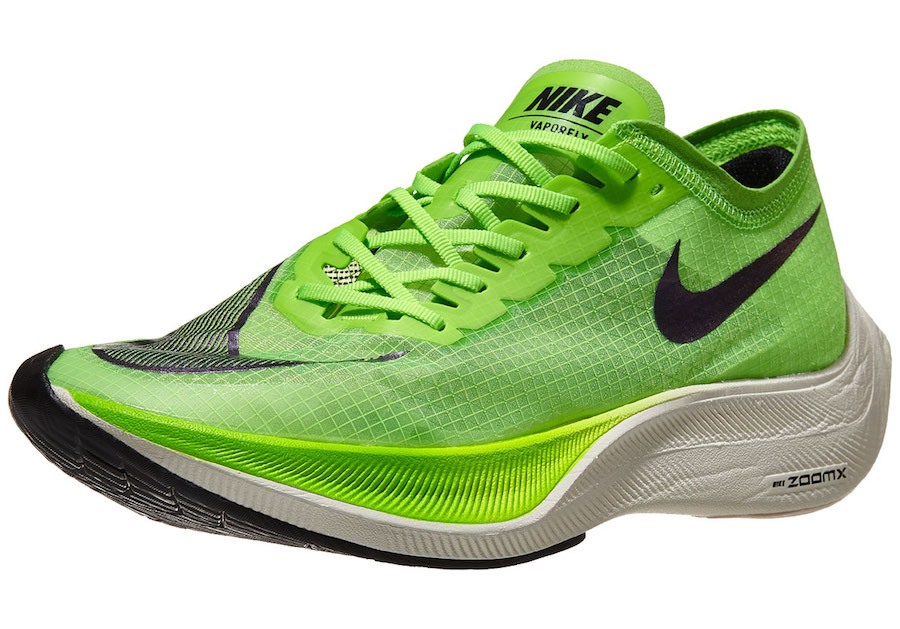
 The godfather of nearly every current road racing shoe on the market - the Nike Vaporfly. Image: Nike
It’s hard to believe that it’s been almost 10 full years since the original generation Nike Vaporfly (then known as the Vaporfly 4% Elite) started trickling into the hands of Nike’s elite runners. It would be nearly another full year before the first releases would be open for public sale. But by that point, Nike athletes had started taking down victories everywhere; for example, the 2016 Olympic marathon men’s podium was a sweep of Vaporfly wearers. The hype train made sure that those first limited releases of shoes sold out, often times within minutes of them hitting store shelves or e-commerce sites.
It’d be another two years before the AlphaFly would come to market. Nike celebrated it by offering a pair to literally anybody who had qualified for the U.S. Olympic Trials. It was, by all accounts, incredibly successful, as hundreds of runners accepted their pair and ran the qualifier in them. The release also dovetailed with the current World Athletics regulations on stack height and carbon plate design. The regulation, which the Alphafly narrowly made it under, attempted to limit the technological push as the record books continued to be re-written.
Just about every shoe manufacturer on the block now makes some form of carbon-plated racing shoe at this point in time. It’s easier to list brands that don’t have plates in them anymore than it is to list the ones that do. Heck, in our forum, we have an entire thread dedicated to runners trying to get their hands on certain Chinese brands that otherwise don’t have presence in the U.S. Thanks to the World Athletics regulations, no matter who makes the shoe, all of the carbon racers tend to follow nearly the same recipe: maximize the stack height of some type of supercritical foam, ensure it’s just barely under the 40 millimeter maximum in the key measurement location, and put a single carbon-fiber plate in there.
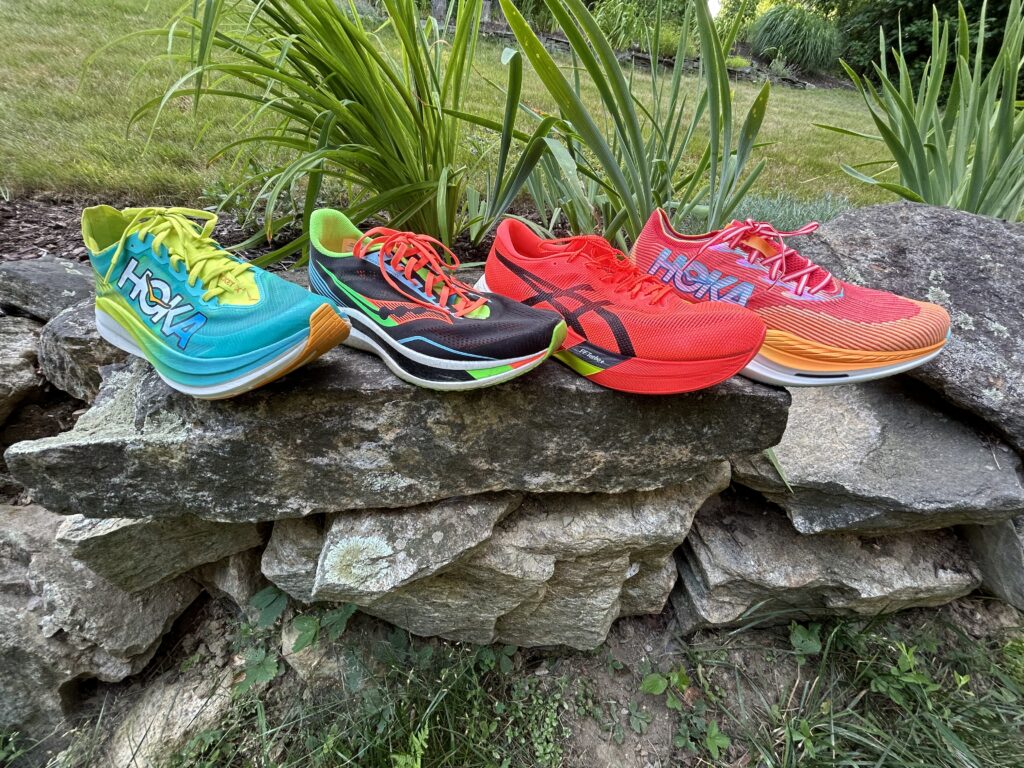 An armada of modern racing shoes from HOKA, Saucony, and ASICS. Image: Ryan Heisler
It means that there’s really only a select few places that you can see radically different approaches out of these shoes. Brands will look at foam formulations and make changes to it, either to soften the ride or provide more rebound. They’ll play around with uppers to ensure the fit is clean; look no further than On’s clever LightSpray technology in their latest generation racing shoes. Heel-to-toe drop might be different, depending on that brand’s particular philosophy towards it.
And then there’s overall weight of the shoe. It’s probably the biggest performance differentiator lever left to pull, all things being equal between the foam and plate. The general rule is that for every 100 grams a shoe is heavier, there is a corresponding 1% increase in race time. At the elite level, that can translate to nearly a minute’s worth of savings at the marathon distance. In fewer words: we probably don’t see two men run under two hours for the marathon in London without the combination of lightweight, foam, and carbon plates.
The theoretical problem, of course, is where you cut weight from — and the trade-offs that come with it. There’s really only five places you might be able to pull out grams from in a shoe. You could go with thinner, flimsier uppers that don’t hold the foot as well to the shoe (or innovate, like On has done). You could make the sockliner thinner, too, and just rely more on the cushioning in the midsole. You might be able to specify a different lay-up of carbon for your plate, but it might mean you’re sacrificing some of the energy transfer benefits you were looking for. Similarly, you might take weight out of the foam, but that generally means you’re sacrificing durability.
That leaves the outsole. There’s not much remarkable to modern outsoles, as there’s only been three options for materials. Carbon rubber is the standard option, which has good durability but often weighs a bit more. Blown rubber is effectively its lighter cousin, using…you guessed it, air to make it lighter. Lastly, you can just leave it bare, and go with an exposed midsole.
An exposed midsole is by far the lightest option. Of course, it also comes with a durability trade-off. Scuffing your feet will quickly see deterioration of the midsole. It also means that you have significantly less traction. And this is one area where we’re starting to see that perhaps the pendulum has swung perhaps a bit too far, at least for triathlon (or less than perfect running conditions).
We’ve seen two high-profile falls out of athletes at the 70.3 distance while running this year. First was Jamie Riddle, who slipped while cornering at IRONMAN 70.3 Aix-en-Provence. He was forced to stop after this hard fall.
Then came Matthew Marquardt this weekend at Happy Valley 70.3. Marquardt, rolling through an aid station, either slipped or tripped on a raised section of roadway and tumbled. Marquardt luckily was able to get back up and continue on for a fourth place finish.
Both athletes were wearing racing shoes from Adidas. Riddle was wearing the Adizero Adios Pro Evo, the same line worn to the recent marathon world record. Marquardt was in the slightly heavier Adizero Adios Pro 4. Both, however, sacrifice traditional outsole configurations in the interest of weight savings.
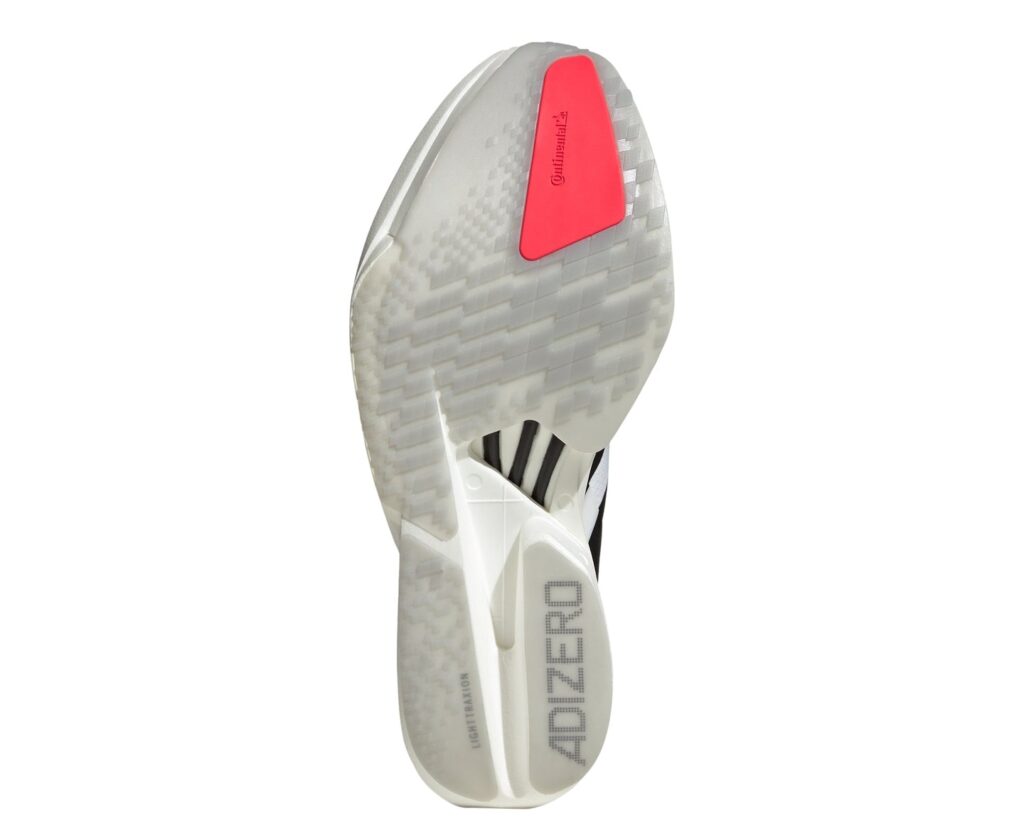 The outsole of Marquardt's shoe of choice, the Adidas Adizero Adios Pro 4. Image: adidas
These falls are, from my memory, the first time beyond bonking or heat-related issues where professional triathletes are falling while running. That’s simply not a normal occurrence. I think it’s coincidental that both Riddle and Marquardt fell with the same shoe manufacturer on; Adidas is not the only one who has pulled this much weight out of their outsoles. For example, here’s the latest version of the Puma FAST-R Nitro Elite, which touts the new “PUMAGRIP” outsole as a feature.
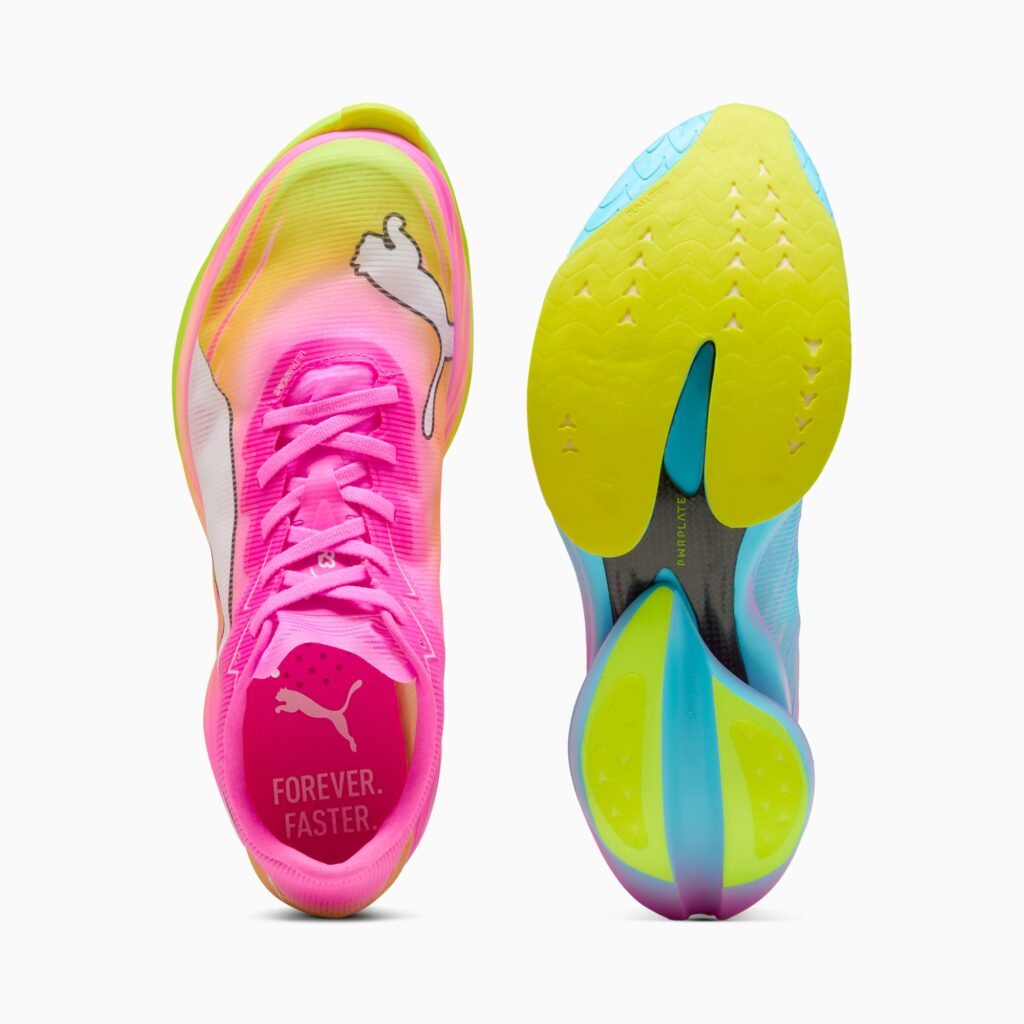 The latest generation of Puma's flagship racing shoe. Image: Puma
Then there’s also the question as to whether this combination of foams and plates is pushing the human body too far. As we reported last week, Puma is now facing three separate lawsuits in Massachusetts from formerly sponsored athletes, all of whom claim that the company’s racing shoes caused catastrophic injuries that derailed their running careers. Along with Heather Cerney’s ongoing suit against Nike, all of them claim foot or leg injuries as a result of the force changes that come from the combination of carbon plates and foam.
It does start to beg the question — are these shoes in their current iterations safe?
I think the answer, unfortunately, is it depends. And that’s going to probably be a field day for the lawyers in the room.
I don’t think there’s any denying that modern racing shoes load stress in the body differently than running in a more traditional shoe. I also don’t think it’s unreasonable to conclude that athletes are also going to try to choose a shoe that advertises itself as being faster, and how it gets there (whether by plate, by foam, by weight reduction, or some combination thereof). It is, however, murkier when we try to figure out whether this combination of factors winds up making a shoe that is more likely to bring athletes to a fall hazard or tripping, and if the manufacturer is disclosing that kind of thing.
In the case of triathlon, I think there’s two things that could be of benefit. First, on the consumer-side, it’s important to look at traction as non-optional for your running. Aid stations are usually covered with wet wax or paper cups; the pavement doesn’t dry out; sometimes we have tight corners on our run courses. Ensuring that you stay upright by not skimping on the outsole of your run shoe is worth it.
But I do also wonder whether that stack height limitation is a source of some of the problems that the aforementioned Puma athletes ran into. Is it that, at that stack height, the modern racing shoe does introduce enough stress that could be problematic? I’d love for World Athletics to take the lead on that. In the interim, though, I don’t think the stack height limit makes any sense in a triathlon context. Far too many regular running shoes run afoul of this limit, and any look at the various race Facebook groups shows there’s a fair amount of anxiety that pops up in the week prior to the race.