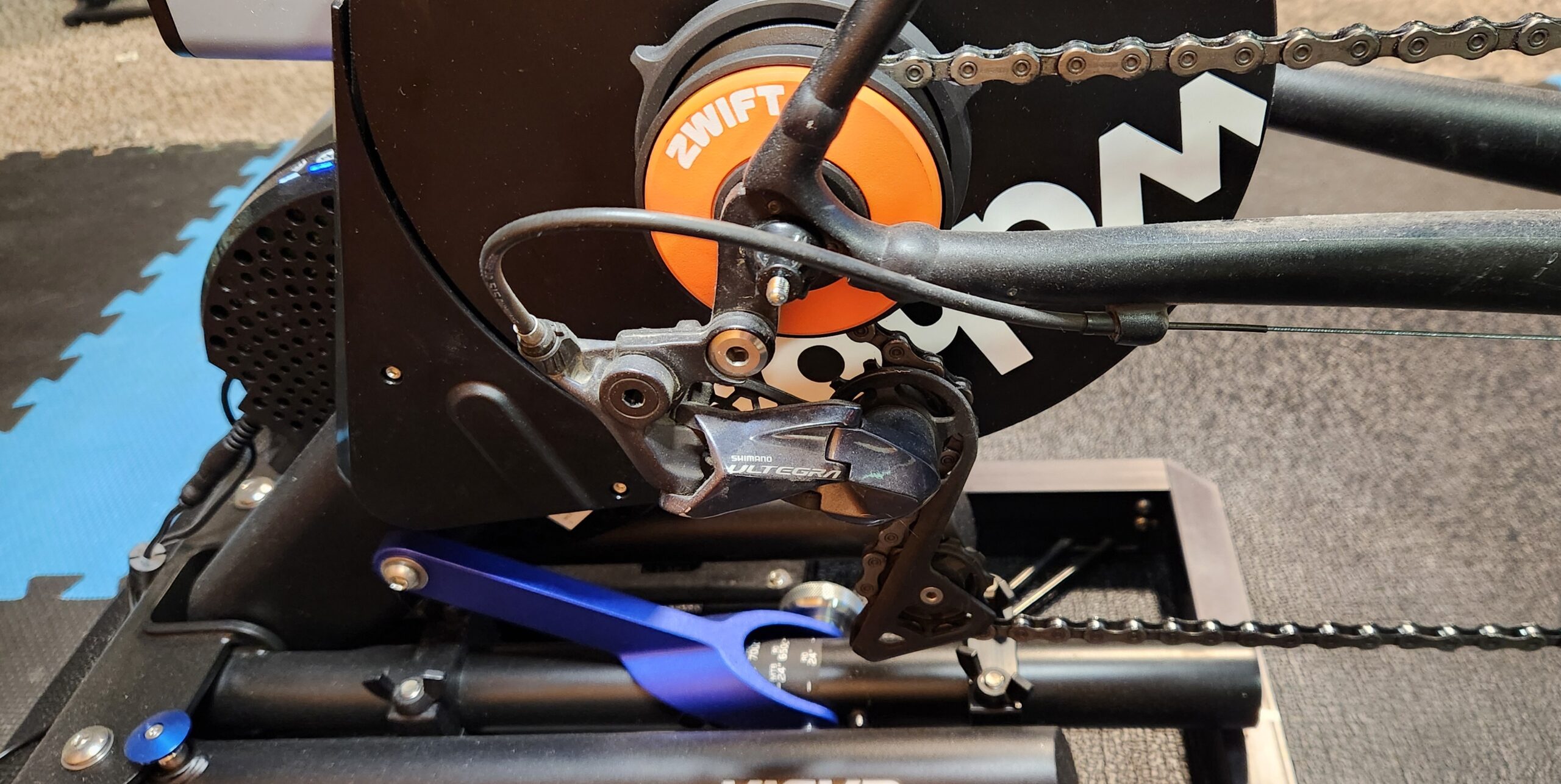
The indoor versus outdoor debate is no longer seasonal. With increasingly better platforms, better smart trainers, and more data-driven training, indoor training has become a year-round tool. So, the question is no longer which is better but what adaptation are you seeking?
Foul weather or other basic matters that make inside training an obvious compromise don’t necessitate more discussion. And, for numerous reasons–from bike handling and pacing skills to just plain joy–there is no debate that outside riding can ever be replaced. So, assuming that you are training with a purpose and following a structured training program: When should you choose outside over in? How do you convert an outdoor session to an indoor one? And why should you always be considering which is best for every session?
Why should you always consider riding inside?
Riding inside offers one massive advantage: control. There is no weather, traffic, or imperfect terrain to interfere with your prescribed session. You can control, or at least influence, every variable from cadence to temperature. You can set a smart trainer at a certain power output, you can stay in the aero position for as long as you like, and execute a structured session to perfection.
Of course, all of the good things about indoor training come at a cost. Thermal control might pose a problem, as well as cardiac drift, since it’s near impossible to get the same cooling effects as outside in a home set up; there is no skill development or bike handling challenge, and, as much as virtual platforms and music can make it fun, there is no denying it can be tedious.
Nevertheless, there is a reason why many pros even opt for an inside session in the middle of summer. The control–and challenge that control brings–is simply unmatched since there is nowhere to hide. There are no hairpin corners or descents or even slight terrain changes to offer microseconds of respite, you simply have no choice but to pedal constantly. While that makes indoor training incredibly efficient, it makes it equally difficult–which can seem like a negative but, as endurance athletes who love to suffer, we all know that’s actually a positive.
When should you choose inside over outside?
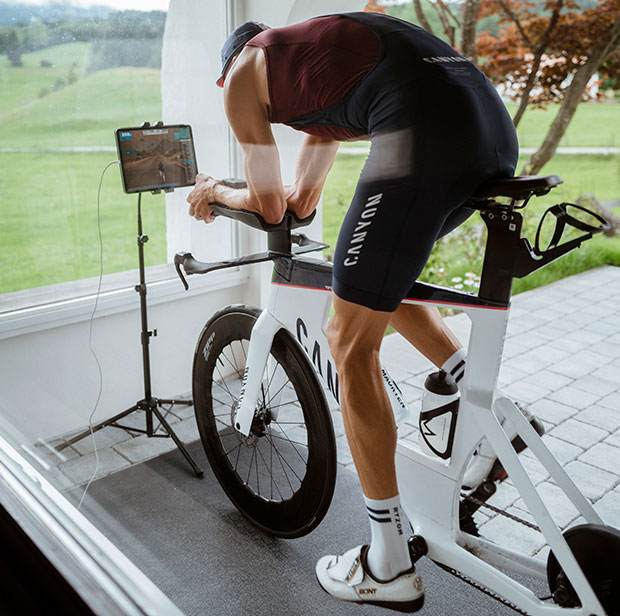
Putting aside that every workout can be executed outside, some sessions can offer more inside. For triathletes especially, those sessions include race pace and threshold work where you want to stay in aero. Over/unders, where you’re holding a high aerobic power and bumping up into threshold only to come back to high aerobic power, is a good example of a great inside session since it negates any micro rests between changes and forces the precise power. Longer sessions in the aero bars can’t be matched outside, especially since you can do them safely and even with a mirror to really work on your position and position durability.
Skill development might be best done outside, but that doesn’t mean the indoor trainer has nothing to offer in that department. High and low cadence efforts can work well inside, as does one leg pedaling. Without the worry of bike handling, you can truly relax in the effort to engage your core and train your pelvic stability without gripping the bars or worrying about external factors.
How do you convert an outdoor session to an indoor one?
In the past, time and distance were always the metrics used for conversion, but that’s a bit of a misnomer. The gold standard is to match intended stimulus. Matching the intended TSS (training stress score) or IF (intensity factor) is more accurate. Time should still be considered since inside offers continuous load, but the reduction in time should aim to yield the same TSS or IF. Alternatively, as German pro Dr. Merle Brunnee prefers, you can also you energy expenditure as measure, using by kilojoules as your metric. For example, a 3-hour aerobic ride can be reduced to a 2.5-hour ride, both aiming for an IF of 0.70, or a TSS of 130, or 1,200 kilojoules.
Intervals can be matched exactly, but power can be difficult to reproduce. Some athletes can match their indoor and outdoor power numbers, while others need to reduce their indoor targets slightly. Using the whole range of your power zone with heart rate data and RPE (rate of perceived exertion) will give you guidance for if, and how, you need to adjust. For example, if your threshold zone is 250 to 270 watts, outside you might be closer to 270 watts, whereas inside 250 watts might feel the same and be enough to yield the same desired result. It’s important not to let your ego get in the way here–listen to your body feedback and objectively adjust.
What should you watch out for training inside?
Temperature control, as mentioned above, can be difficult. Without the cooling effects of the air outside, it is essential to have a fan and adjust your fluid and electrolyte intake. Heat stress can significantly impact performance, so stay cool and hydrated.
ERG mode can be your best friend or your worst enemy. ERG mode is a fantastic tool to ensure you’re staying on the prescribed watts, but if your cadence drops and the trainer adjusts making it feel too heavy to turn the pedals, choose another mode of resistance.
Don’t forget to ride outside. Training inside is great for physical stimulus and even mental toughness, but it will do nothing about teaching you how to descend a mountain pass, ride in a peloton, pace your efforts yourself, or give you the same amount of joy as summiting a mountain or winning the group ride town sign sprint. Even pedaling outside is different and, since most of us are aiming to race and perform outside, use indoor training when necessary or more effective, not as a complete replacement.