Originally published at: In a Non-Draft Pro Race: 12, 16, or 20 Meters? Or Should We Care? - Slowtwitch News
When IRONMAN began in 1978, the race promised individual racing – in other words, non-drafting.
Until 2015, the draft zone at triathlon races varied based on each country’s federation rules, which generally were between 7 and 10 meters. Officials used their own judgement and, like today, penalties were inconsistent and pretty controversial. In 2007 the 7-meter rule was fairly standard at IRONMAN races around the world and, moving into 2015, the current 12-meter professional draft zone, with 25 seconds to pass, became the standard.
“Drafting” and “drafting penalties” have always been a huge talking point. The Challenge Family race series was the first to implement a 20-meter draft rule, which was featured at some of their races in 2016. Over the next few years the 20-meter zone became the standard at Challenge and all the Professional Triathletes Organisation (PTO) and T100 races. (Think back to that wonderful line of riders around the Daytona International Speedway for the PTO 2020 Championship.)
On “Non Drafting” and “Fairness”
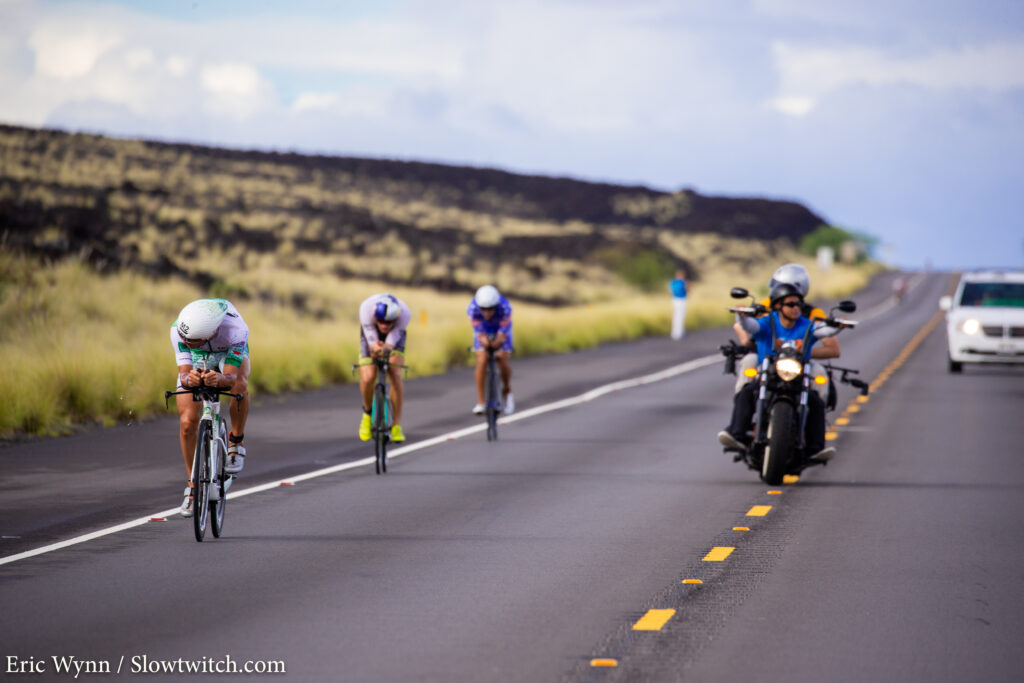
I was taken back a little bit while I watched the Lionel Sanders YouTube video yesterday morning. Up until this point, it had never really occurred to me just how focused everyone was on “fairness” on the bike. I have been shaking my head over the last couple of months as I keep hearing people say “20 meters is more fair,” or “you get too much of a draft at 12 meters.” I kept thinking that, if everyone is following the same rules, it’s not about whether something is “fairer,” but rather about what you personally think is your strong suit, and if you think that the current rule benefits, or hurts, you.
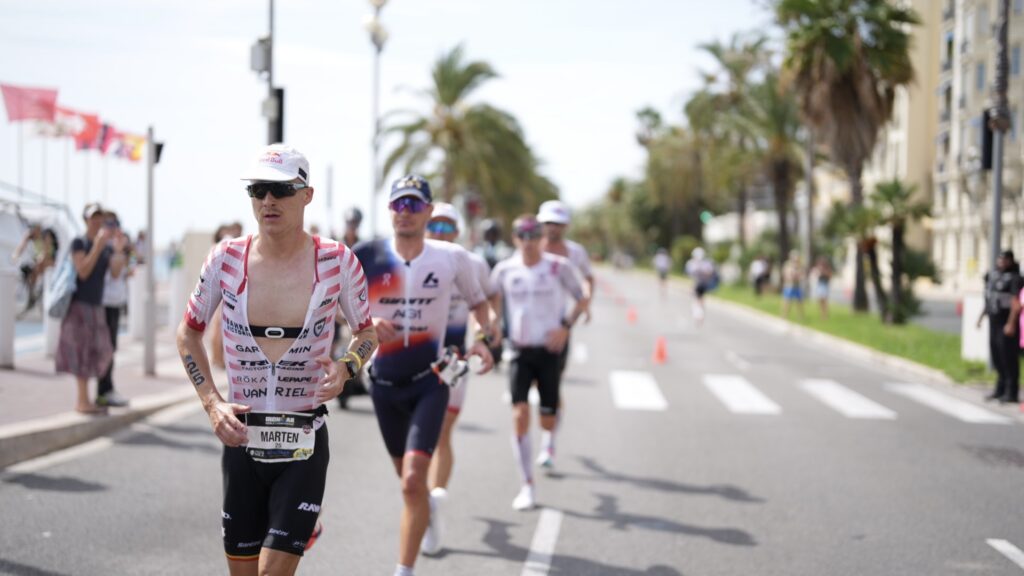
That led me to think about other parts of the race where drafting happens that aren’t issues for any of the people who are very pro-20 meter zones when it comes to what they feel is “fair.” So maybe we will be having a conversation about drafting in the swim, or on the run, sooner rather than later, since we see the “train” coming every time the men exit the water. We are starting to see that on the run, too – just look at the worlds in Nice this year – five guys running together like it was a group effort, taking turns into the wind on the Promenade des Anglais. And to be frank, the media, athletes and viewers loved every single sec of it. Following the race I don’t think I heard a single pro athlete say “that run was unfair.”
My point is that I don’t think this conversation will stop here.
Where We Are Today
IRONMAN’s Recent Testing
Until now, the conversation on drafting zones and distances has been led by been gut checks, ChatGPT and misguided TV angles. I’m not saying those are bad, but I’m saying they are guesses. So, finally, as a reaction to a vocal group, IRONMAN is actually taking the time and spending some money on actual testing. Now, while I have said I have been disappointed in the amount of testing so far (based on all the hype), I do like the guy that is doing the testing, and I like the guy inside IRONMAN that got upper management to finally approve getting something done. You can listen to us talk about this testing with Jimmy Riccittello here:
I would like to point out that this is not the first time IRONMAN has done testing. It’s believed it was done years ago under the direction of Ben Fertic (IRONMAN’s CEO from 2004-2012). These tests were done with Ford in a wind tunnel, but those results were never released to the public. And, to my knowledge, they are the only race organization that has actually done any proper testing.
The Recent PTN Effect

Pro Tri News (PTN), in my opinion, has been the driving force on this subject outside of some individual professionals and, for the most part, have done a pretty decent job at gathering information. I also think the noise they have made pushed IRONMAN to do some testing again.
They (PTN) do seem to be pretty one sided, and I would say that some of them are jumping the gun over the last couple of days on “results,” but that could just be them getting excited and/or convinced of what they think will happen.
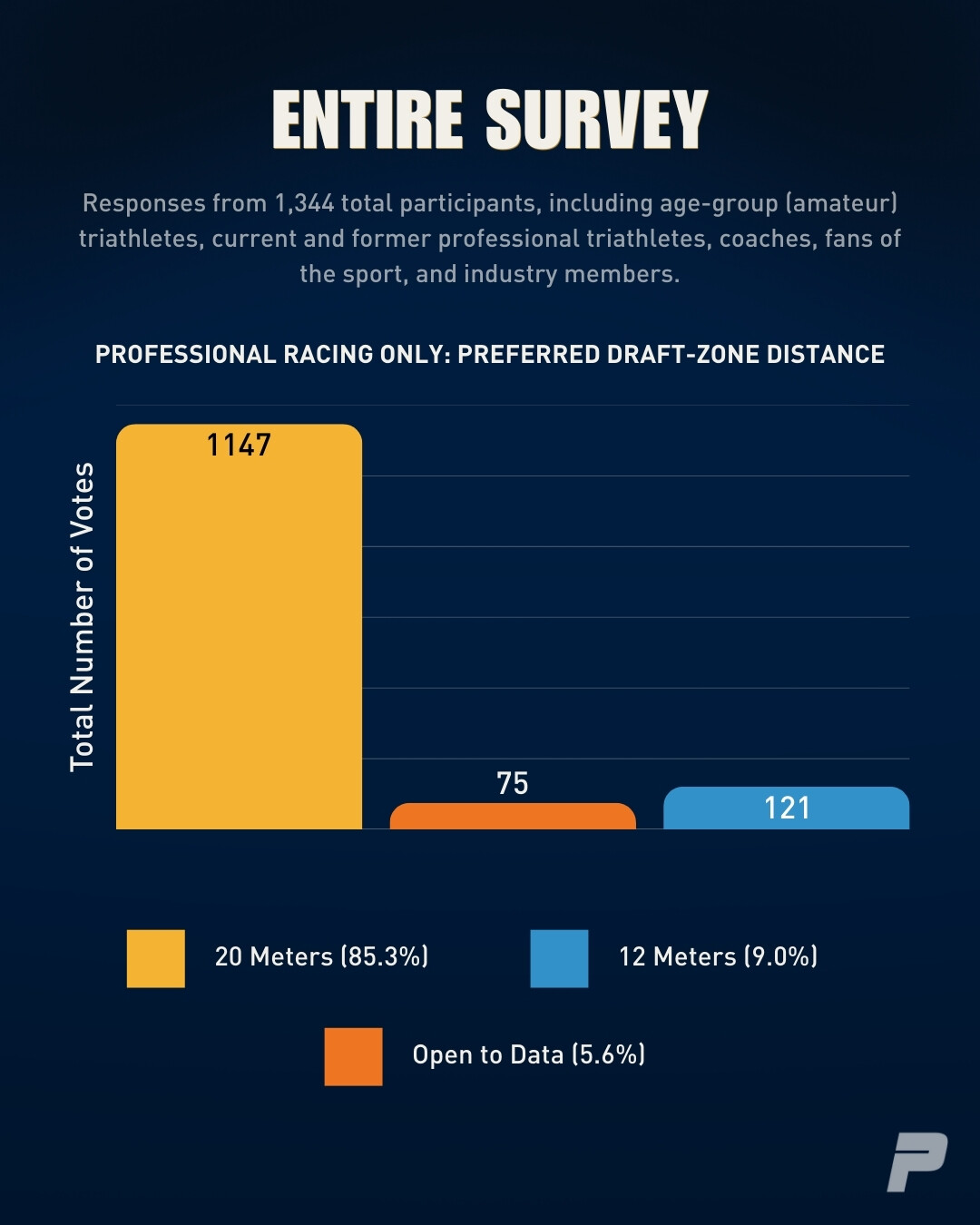
While I think some of their polling questions could have been asked better (in hindsight I, too, could have asked better polling questions here on Slowtwitch in some of the polls we have taken), it has brought a lot of information to the table to be considered. I think that is a great thing – you can find pretty much all the results of their polls on their Instagram account or in their podcast.
https://www.instagram.com/p/DTLSL0-kREX
The Hand that Feeds Everyone
We all know that IRONMAN is really in charge of this whole thing. While the company does care about opinions, the company executives will, of course, do what is best for the health of their business. I would encourage them to do just that. So far, IRONMAN has been very methodical in how they are dealing with this. The people looking into these questions are taking their time with the testing and will not rush the process, or make any changes, without looking into all aspects of any decision.
To make a change to the draft zone would, in fact, be a large undertaking. Through lots of experience over the years the folks at IRONMAN know that such things need to be carefully thought out. IRONMAN officials also claim that the feedback and results they have been getting aren’t the same as those given to, and reported by, PTN. Will there be some sort of compromise that makes sense?
We just started our own internal polling on this subject which we will report later. And, of course, as with all polls, our questions are likely skewed from our side of the table.
What is my personal opinion on this matter, and why write this article?
It occurred to me the other morning that personally, I don’t really care about a 12- or 20-meter draft zone. And, in my opinion, neither should anyone who isn’t a pro triathlete. In the end they are the ones that seem to be asking for an extended draft zone, and they are the ones that will have to deal with the change of it. But I do care that people (the triathlon community) get proper information so that they can make good decisions. I think that is why I, in the end, wanted to get involved with this conversation back when I first listened to Talbot Cox talk about this issue in Kona. As we move forward into 2026, our vision at Slowtwitch will be very much focused on more than just IRONMAN and the pros. We have a great groundswell happening at the grassroots level of our sport, and we are committed to helping those new athletes and race directors outside IRONMAN and the T100 series. We will still cover these subjects and topics, but you’ll see way more about other things, too.
So, in my opinion, here are some of the positive and negatives around this subject and the possibility of expanding the pro draft zone to 20 meters:
Positives
- Unified rules across the different professional race series
- Put up or shut up. Everyone waving this flag of “fairness” will get what they want, and the results will come in. No more “theories.” just proof
- It will be easier for us to get photos at races 🙂 Trying to shoot a line of 20 pros in Kone for our side angle stories is very hard at 12 meters 🙂
- We can move on from this subject (this has been talked about for too long)
Negatives
- Without further adjusting race timing, it will push pro male athletes into the faster pro women. (20 meters pushes things back, not forward)
- It will create more interesting dynamics with looped courses and age-group interference. (Age-groupers can slot in, and they only need to be 12 meters behind.) So, imagine a fast age group male catching slower pro females – following their rules, they can overtake and slot in. The female pro they passed now needs to be 20 meters behind that age group male and, as soon as that male chooses to leave and try to pass, she now has a 32-meter gap to keep with the group ahead. (lets not even talk about the lack of race ranger in this situation that is not on that Male)
- It will almost double the amount of time it will take for any pro athlete to make a pass, assuming the same rate of passing
- It will give athletes less chance to pass, and limits the parts of the course in which they can. (Looped courses and winding narrow roads in Europe are a thing.)
What would I like to see more of? First I want to see some data. As in real, concrete, white-paper data. We all know that they have a bigger drafting benefit at 12 meters then 20 meters. But how much? And, again, does that really matter?
I want to see them dive into some timing data over the last four years. IRONMAN has it. They can 100% get, and give, a better Idea on what actually is happening with packs. They now also have RaceRanger stats to go off of. So a combination of those, I think, would be very helpful. For example, my instinct is that we will have issues within the women’s fields if no other rules change. But I don’t really know that without data. But, I bet if you got all the data from the timing mats and put those numbers into some simulations, you can figure it out.
I want way more testing done, especially considering all the fanfare that has been created around this topic. If IRONMAN doesn’t do more testing after this, then I don’t know how serious they really are. We need women included in the aero testing and we need them tested in different situations to better mimic real-world racing conditions. For example why did we only test 5 guys? Is that the average size of the packs that are the issue?
And, why not pilot this for a couple of races? IRONMAN has opportunity to leverage some of their non-Pro Series events as a testing bed for rule changes. There’s precedence in other sports for this, too, where rule changes are first tested before being rolled out to the big stage. The pitch clock in baseball originated in the minor leagues before hitting primetime.
But, as I said at the outset: this probably isn’t the last conversation about this topic.