#1 people in the thread REALLY like 25mm tires #2 people really think that if they go over the guidelines even a little really bad shit is going to happen #3 most people dont even understand tubeless yet let alone hookless. (this is a real and honest issue) the other ones… Not so much…
and
4) some people in the thread are over 80kg and so are confused by the conflicting advice on recommended pressure vs maximum pressures stated by wheel manufacturers.
5) some people are on bikes like the current get Speed Concept that has a stated max of 25mm tyre.
I believe that Slowtwitch is trying to help with understanding about these issues. The audience here is very aware and interested - so - at this point I’m personally not worried about forum users.
Yesterday I went to a small party of friends that are doing Ironman Wisconsin this weekend. Most of these athletes have done 2-3 long course evens before and train regularly. Some have new bikes and some have bike that are a few years old.
I asked each of them what wheels/tires they were running and what pressures they were going to run. 2 of them are in the 135lb ranged 4 of them are around 175-190 lbs.
All of them said that they were doing 85-95 psi and none of them knew if they were on hooked or hookless. They either said “the wheels/tires that came with the bike” or “the same set up I have been running the last few years”.
I did not try and probe further about sealant, tubeless, hooked or hookless. They are all in their tapper and plenty nervous and pumped up about this weekends race.
What ever they are doing it has been working for their training. As much as I have talked about Slowtwitch over the years - none of these athletes are on this forum. These are the people we need to figure out how to reach - once we know what to tell them.
You really hit the nail on the head of the problem: there does not appear to be any solid industry consensus regarding limits, guidelines, and “what exactly to tell” users so that they can be assured complete safety (and excellent efficiency) in real world riding conditions, both in rides and in races.
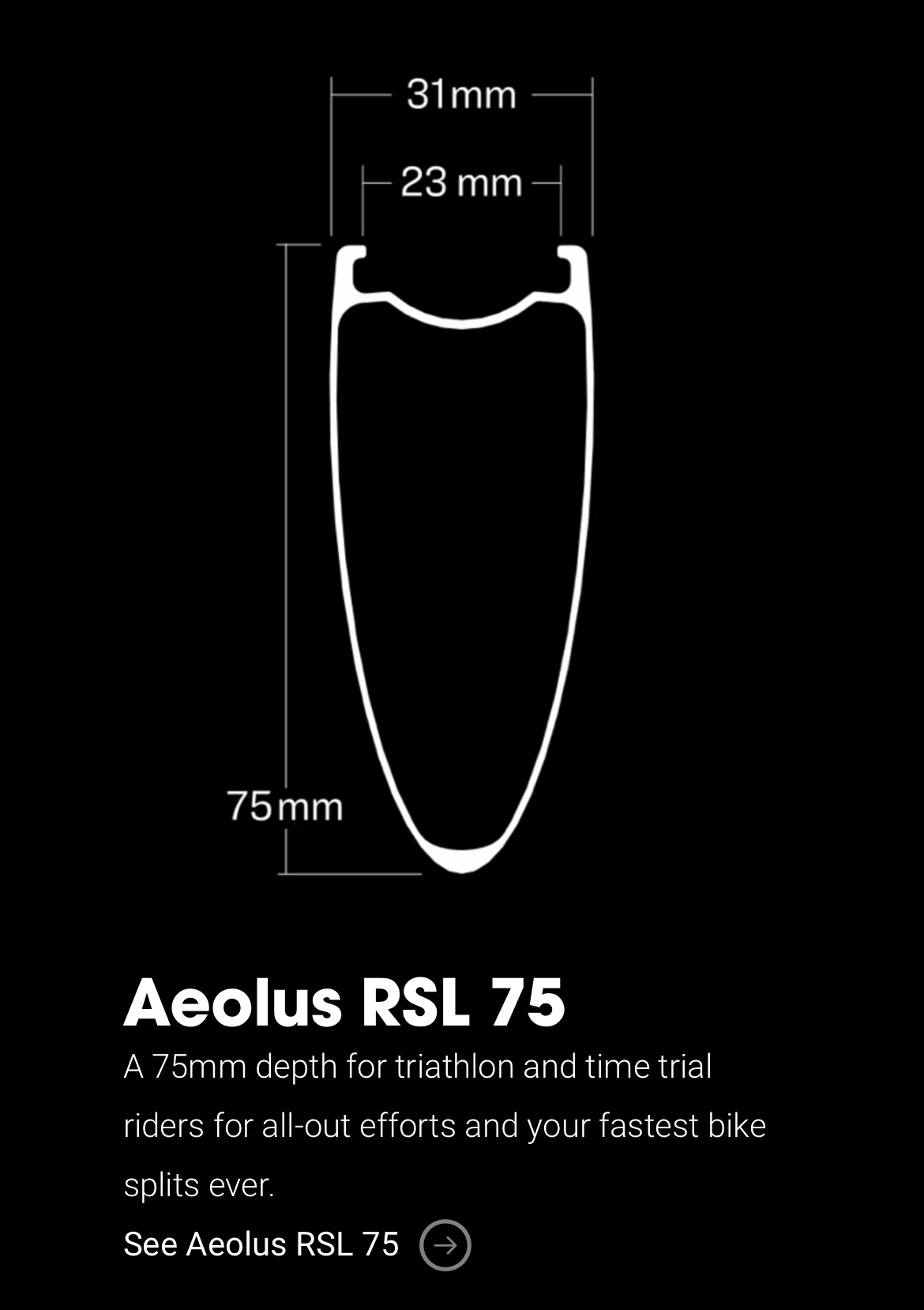
You just made me realise something funny (or tragicomical?). Trek’s own TT wheel, the Aeolus RSL 75, is 23mm inner width and hence not allowed to run less than 28mm tyres. So to run that TT wheel in the same manufacturer’s own TT bike you have to either disregard ETRTO guidelines and/or their own stated maximum tyre size.
And of course your comment highlighted that even as someone following this discussion I ride exactly that combination. My Project One build was delivered to the shop with their own 25mm tyres on there tubed, but shop built it up tubeless Conti GP5000s 28mm before I picked it up.
And I’ve been running at 80-85psi (I’m 85kg).
Now the thing here is I believe, and really really hope the wheels are hooked - you have me worried now.
Which also comes back to as you say, Trek supply bikes to consumers that break the standards, standards that to be fair no consumer or even bike shop can actually see as they are paywalled. So only Trek as a wheel and tyre manufacturer can see and presumably with the benefit of their in house lawyers choose to ignore.
Update, despite not being stated on the trek website, the wheels are hooked. But I found it on the Slowtwitch review, which also had this:
“When this wheelset is mounted on a Trek Speed Concept, with 28mm tires installed, it’s clear that the bike was made to accommodate this tire size. You could put a 30mm tire on there and there be plenty of room. I don’t know, I don’t want to make a bigger deal out of it than is warranted, but the body language of the wheelset and the bike indicates to me that a 28mm tire is what the designers may have had in mind.” Bontrager’s Compelling RSL 75 - Slowtwitch News
Other than the Trek spec as you say limits the fork to 25mm width…
As above, the industry as a collective is not exactly helping consumers to make informed choices…
Saving 1% on the manufacturing cost is never going to meaningfully make it’s way to the consumer. I’m not buying Zipp because they’re $989 and the competitor is $999.
Even if it’s saving half of the manufacturing cost it’s hard to see that making it worthwhile. Hoping that someone can jump in who know, but I’ll Chatgpt as a first guess.
$60 for carbon material
<$10 for epoxy
$35 for hub
$15 for spokes
$35 for labor in Asia
Molding=“significant equipment cost”, $10,000-$50,000 per mold
Total ~$100-$150 per wheel (in Asia) or $300-$500 in US
It also says the mould can last 2000-10,000 cycles.
I’m just really failing to see how the hookless manufacturing is more than ~$10-20 cheaper per wheel. Best case scenario where they keep the margin the same that’s <$100 per wheelset. I can’t imagine the margin would stay the same, especially not in the cycling market.
I am picking that it’s the ‘height’ gap isn’t sufficient for 28mm wide tyres if you’re running on 19mm internal rims. Obviously on 23mm ID then as people are finding, it’s got plenty of clearance. I had the same on my old Argon E114, I could only run 21mm tyres on my race wheels (13mm ID), but could just get away with 23mm on my Zipp 101 training wheels (a massive 16mm). #kidsnowadayshavenoidea