Originally published at: Hoka Drops the Gaviota 6 — A Plush and Reliable Ride for Your Everyday Miles - Slowtwitch News
Photos: Hoka
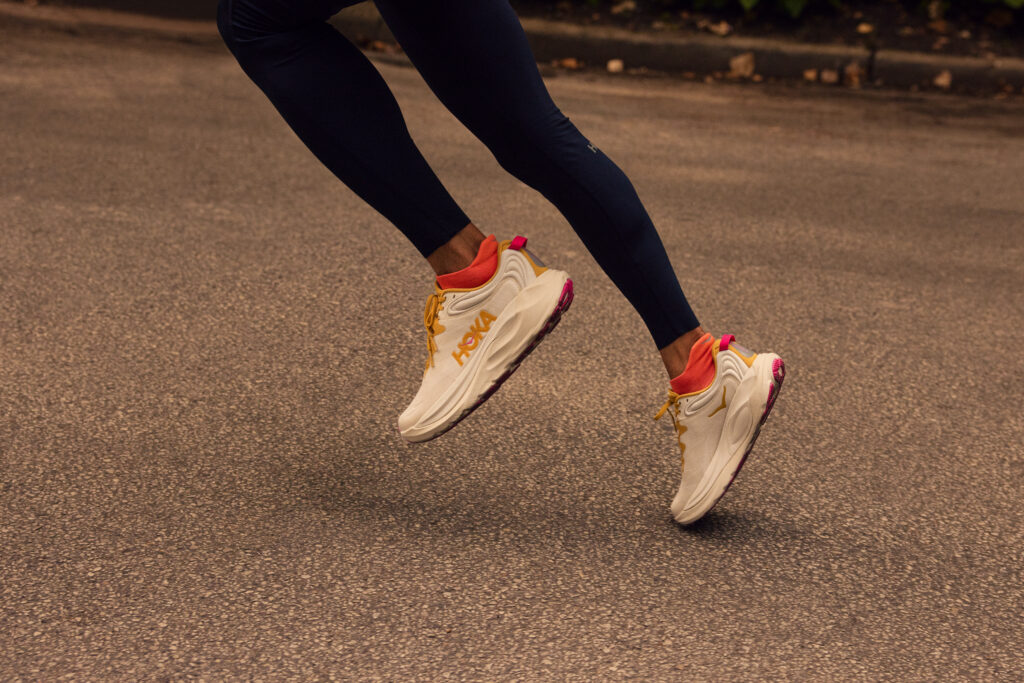
Hoka made a name for itself with its plush and comfortable shoes, carving a lane to compete with the Nikes and Adidas of the running world. While the company has a great collection of fast shoes, Hoka also has an extensive lineup of comfy rides that are excellent for long runs and easy miles. One of Hoka’s top stability shoes in recent years has been the Gaviota — a reliable shoe that has won over many runners in its time.
Since it’s such a popular model, it’s no surprise that Hoka recently released the sixth iteration of the shoe. Slowtwitch got the chance to test the shoe before it hit the market, so here is everything you need to know about the all-new Hoka Gaviota 6.
The Tech Stuff
Hoka isn’t trying to re-invent the wheel (or the Gaviota) with this latest version of the shoe. The Gaviota 6 does have some updates from the 5, but overall, the two shoes are quite similar. Like the Gaviota 5, the 6 has a 6 mm drop. It also has the same CMEVA (Compression Molded Ethylene Vinyl Acetate) midsole as the fifth Gaviota, giving it a tremendous amount of cushioning.
While the midsole is mostly the same, where the Gaviota 6 improves on its predecessor is inside the shoe’s H-Frame. This is a dual-density layer of foam shaped like an H (hence the name) that provides support and will help guide your foot and gait. The H-Frame is especially helpful in preventing overpronation (an inward roll with each step).
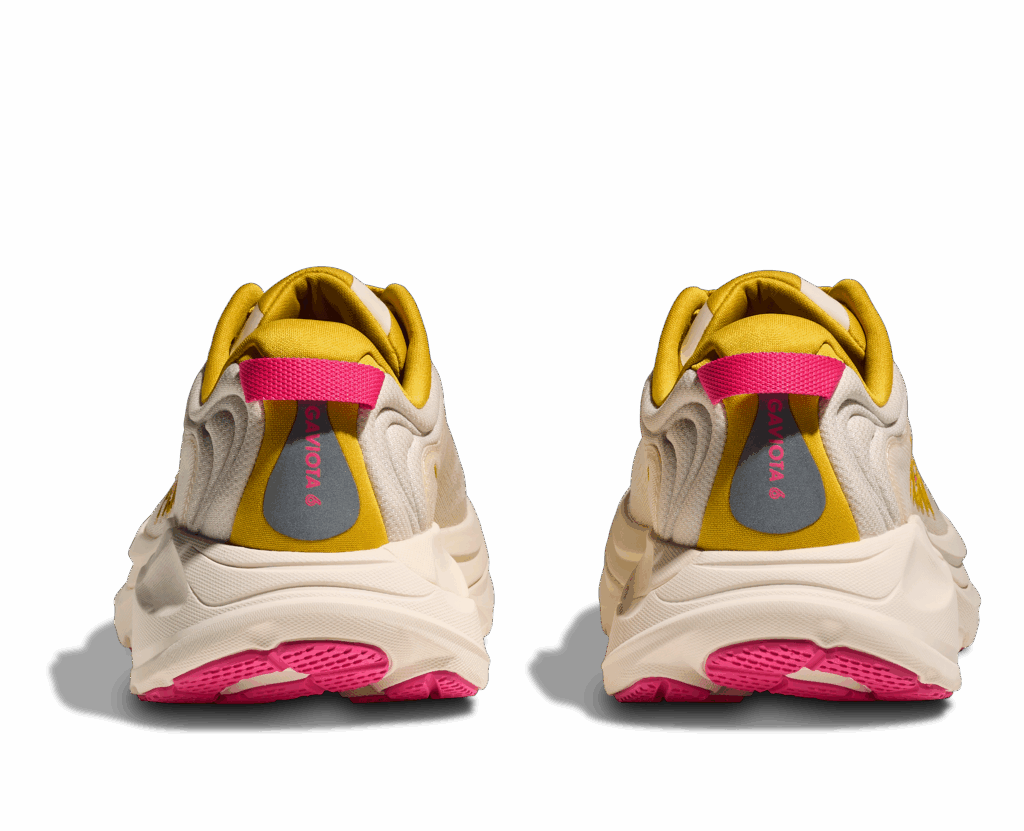
The H-Frame’s firmer foam makeup lines the foot’s perimeter, which smooths the transition in the gait cycle with each step, enhancing support on the medial and lateral side.
The Gaviota 5 was the first in this lineup of shoes to feature an H-frame, as previous versions of the shoe featured a J-Frame. While the J-Frame was a great feature, its J-shaped design focused on the medial side of the shoes, therefore only helping certain runners.
The upgrade from J to H offered runners even more support and is more compatible with different foot types and for those whose feet pronate or supinate too much during each stride. The H-Frame in the Gaviota 6 has been updated once more, giving you an even more stable ride than before.
Running in the Gaviota 6
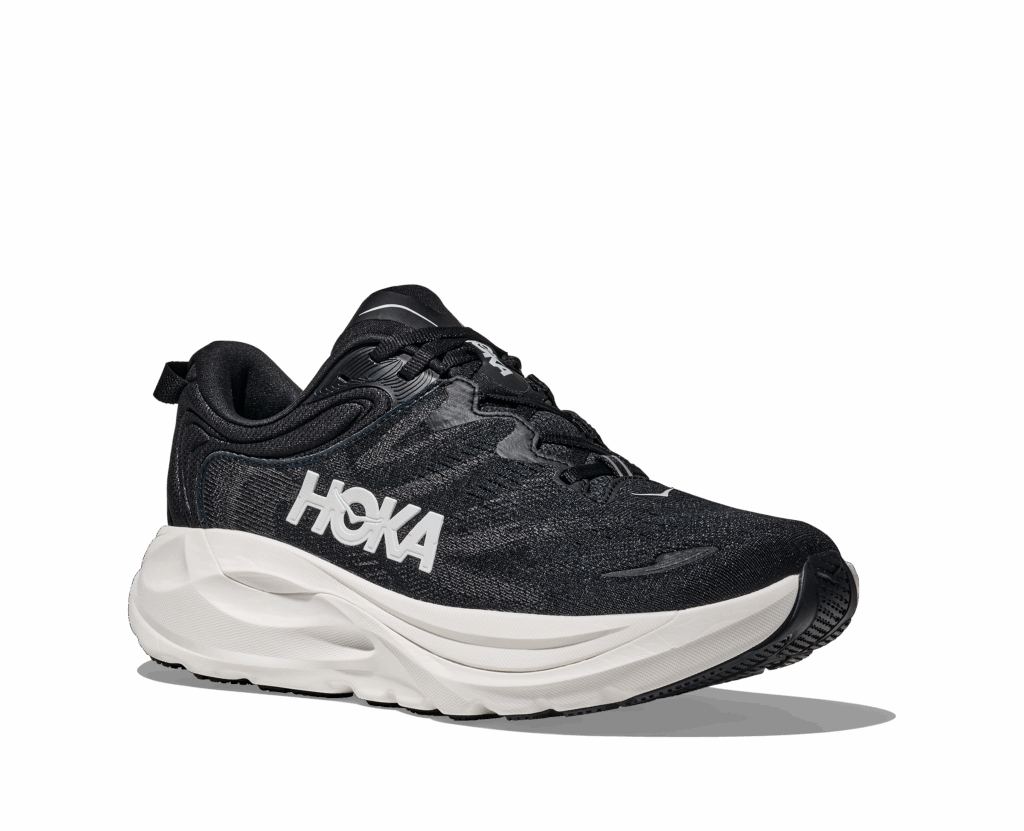
“Stability without sacrificing comfort.” This is Hoka’s tagline for the Gaviota 6. It had been years since I had run in a Hoka shoe, so when I took the Gaviota 6 out for the first time, I was pleasantly surprised by how true that statement is.
I overpronate, so I was the perfect person to test the shoe and its enhanced H-Frame design. I was also running in the middle of the Canadian winter, adding another wrinkle to the stability shoe test. After the first few steps, it was clear that I was not only going to enjoy many comfortable runs in the Gaviota 6, but that it would keep me running well, smooth and with an improved gait.
This is going to sound quite silly, but for the past year, I have been running in what are essentially racing flats. Incredibly lightweight shoes with a minimalistic mesh upper and almost no cushioning underfoot. Long runs, hard runs, any runs were in these shoes. I had multiple pairs from older reviews that had been sitting in my closet for years, so I finally decided to break them out and wear them as everyday trainers.
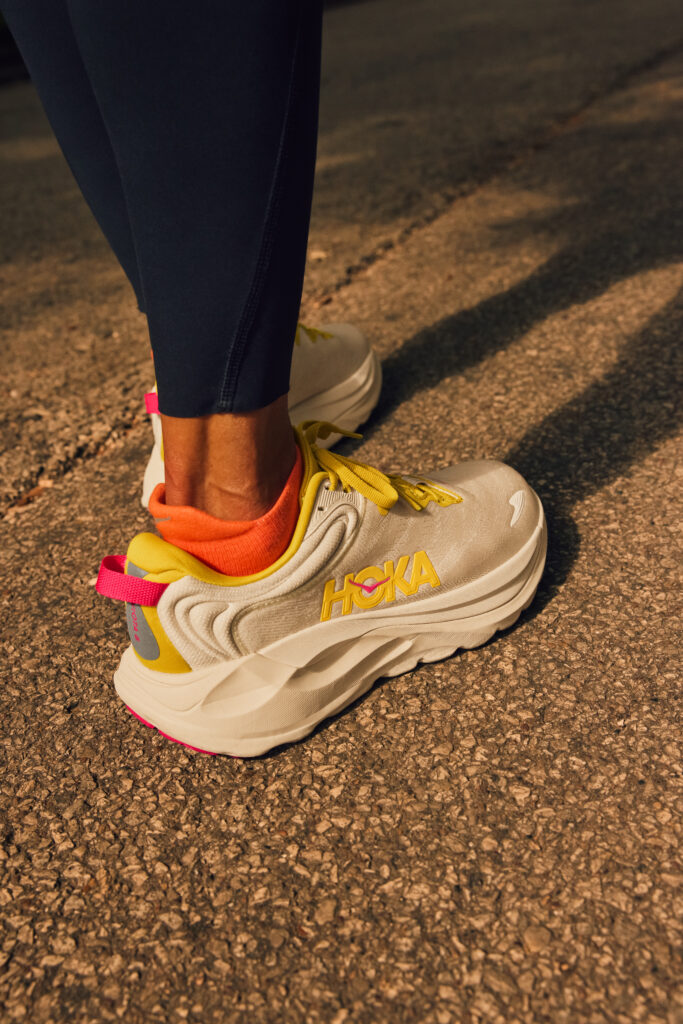
I know, this is rather silly of me. I’ve likely written articles telling readers not to do something like this. There are stability shoes and maximalist shoes for a reason, and as someone who overpronates, I should have been taking advantage of this technology. But what can I say? I don’t want to buy new shoes if I have fresh ones available at home.
Every now and then in these minimalistic racing flats I would feel a little discomfort. Maybe in my arches, my ankle, wherever. It was never enough to sideline me or last longer than the run itself, though, so I kept wearing them. Less than one mile into my first run with the Gaviota 6 and I knew I’d been a fool for the past however many months.
My ankles were no longer rolling inward (or at least the overpronation was curbed dramatically). My gait felt smooth and fluid. The shoes were heavier on my feet and I didn’t feel like I’d be running any personal bests in them, but that is never the point of a long or easy run anyway.
I have had the Gaviota 6 for about a month now, and they have been the only shoe I’ve worn since they arrived. I have felt no discomfort whatsoever while wearing them, even when I make a spur-of-the-moment decision to go twice the distance I’d planned when setting out at the start of the run. (If I went more than, say, six miles in the other shoes I would, unsurprisingly, pay for it.)
Another reason the Gaviota 6 is so nice to wear is the shoe’s engineered mesh upper and “comfort collar.” Shoe manufacturers are getting better and better at designing what are essentially ready-to-run-in shoes that won’t rub uncomfortably, but every now and then you still find a pair that gives you blisters (or threatens to) on your first few runs before you break them in. There is not a whisper of blisters, rubbing or chafing with the Gaviota 6. I have been remarkably comfortable in them since Day 1.
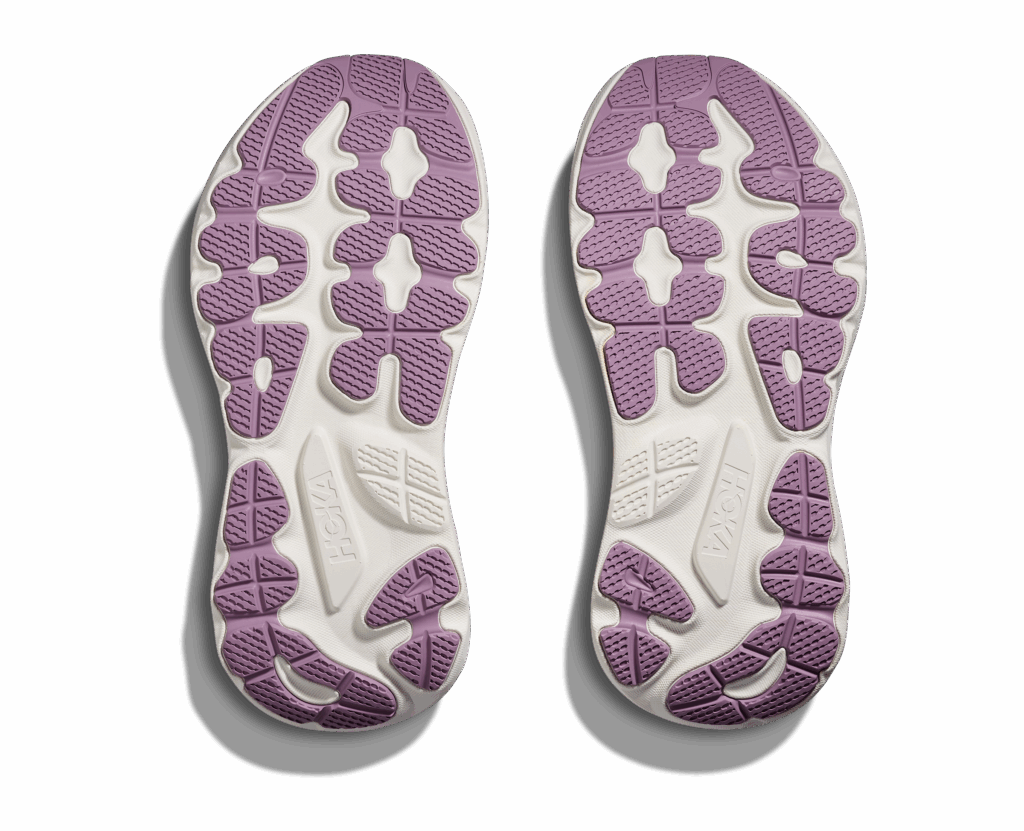
Finally, there is the shoe’s abrasion-resistant rubber outsole. As I already noted, I have exclusively worn these in the Canadian winter. That means they’ve seen snowy roads, icy sidewalks, wet paths and salted surfaces. The outsole has performed excellently in all of these conditions, keeping me on me feet and running confidently over even the most slippery of routes.
Conclusion
Don’t be stupid like me. If you have racing flats or minimalistic shoes, reserve them for fast workouts or race days. This will not only save the shoes and extend their life, but it will also save your feet, ankles and legs.
Instead, find a plush shoe with ample foam like the Hoka Gaviota 6. It’s not the fastest shoe on the market, but, again, that’s not what it’s made for. It’s designed to help keep you healthy and injury-free while you log your many long miles in training, preparing you for the day when you’re actually supposed to break out the racing flats. It’s a pretty good system, if you think about it.
[/um_show_content]