When Felt launched the AR 3.0 back in 2020, it was a strong entry into the modern aero era — disc brakes, truncated tube profiles, internal-ish cabling, decent tire clearance. It won races. It worked. But the aero road category has moved fast since then, and the AR started to show its age — particularly in weight. At nearly 9kg in the 105 Di2 build and an estimated 7.5–8kg even at the FRD level, it was one of the heavier aero bikes you could buy.
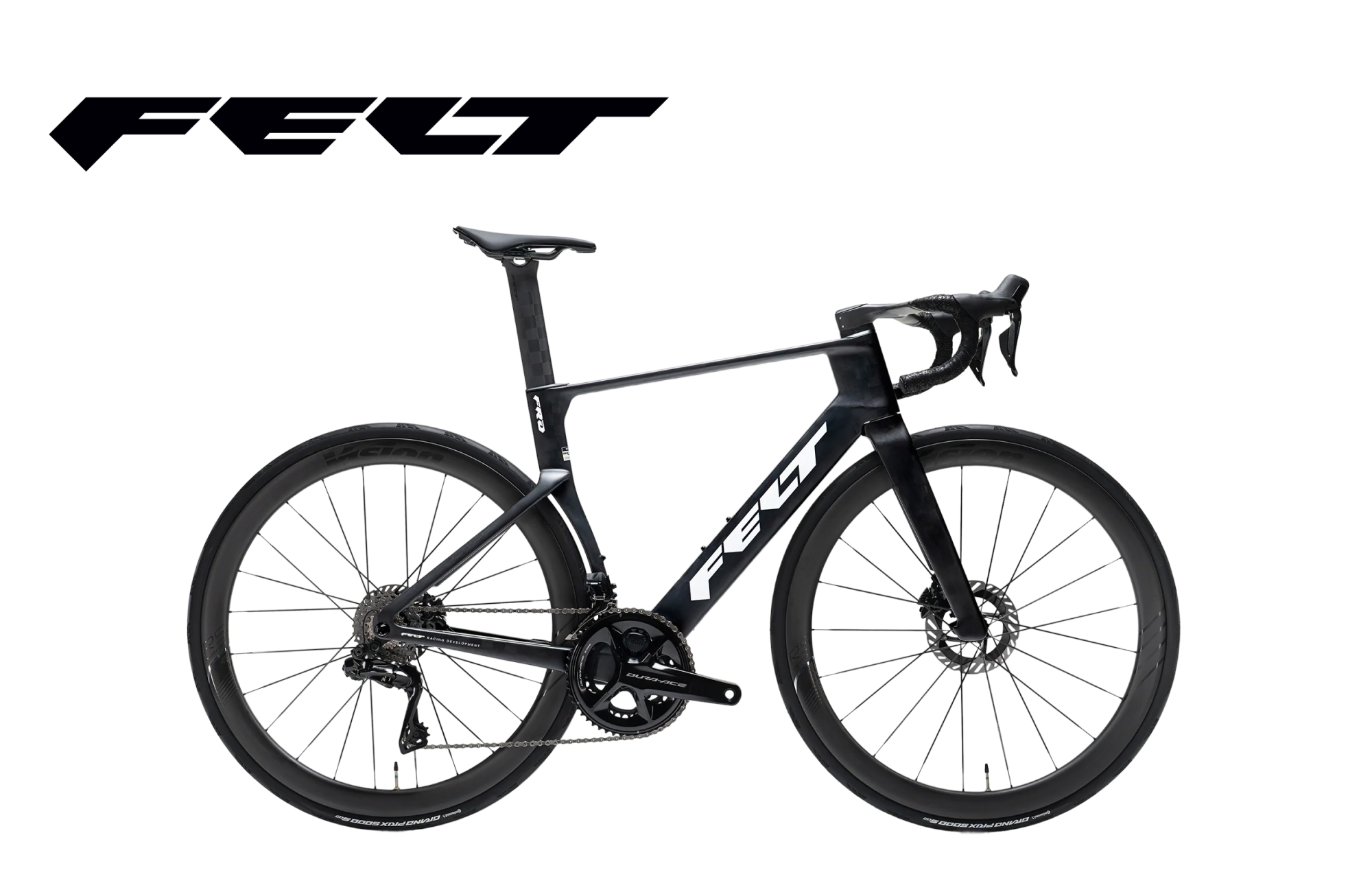
The NEXAR fixes that. Aggressively.
Felt says the top FRD build hits 6.48 kg in a size 54. The frame alone is 800 grams. For context, that puts it in the same conversation as the Cervélo S5, Specialized Tarmac SL8, and Trek Madone — bikes that cost the same or more and don’t always hit that number. Whether that claimed weight holds up under independent verification remains to be seen, but if it’s even close, this is a serious statement. I will say that while it’s an impressive update. It does make it a lot easier when you are comparing things from six years ago.
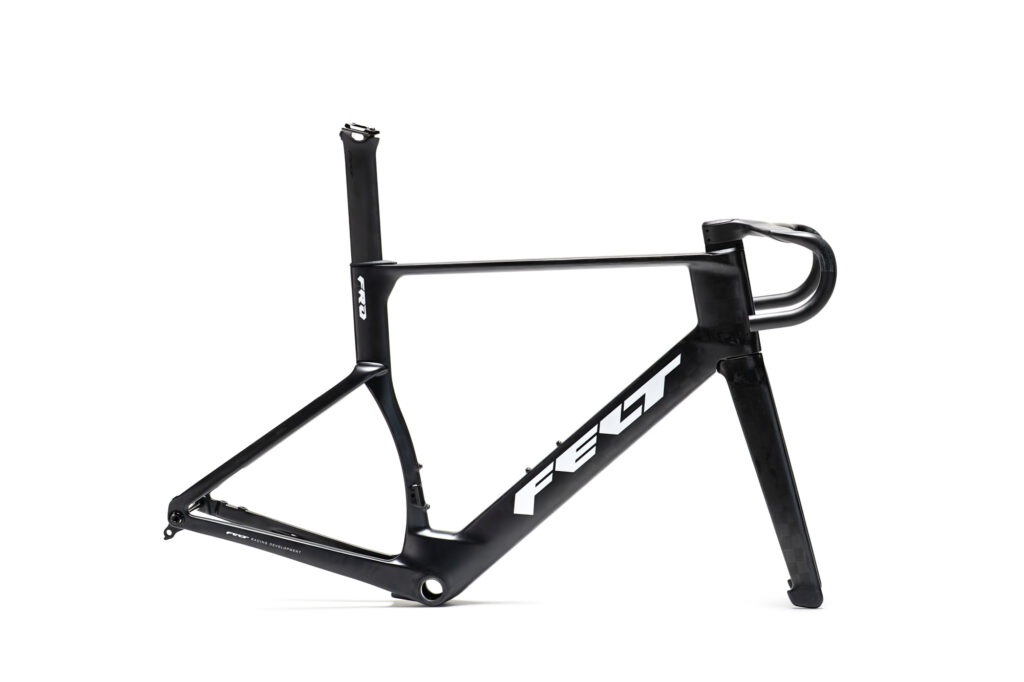
The headline numbers for the frame
| Spec | AR (outgoing) | NEXAR (2026) |
|---|---|---|
| Frame weight, 54cm | ~1,100g est. | 800g |
| FRD build weight, 54cm | ~7.5–8.0 kg est. | 6.48 kg |
| Aero vs. predecessor | — | 5% less drag than AR 3.0 |
| Aero vs. competition | Not claimed | Within 4W of fastest at 40km/h |
| Tire clearance | 30mm | 32mm |
| Sizes | 6 | 7 |
| Stock power meter | None | 4iiii (FRD + PRO) |
The Biggest Change: The Cockpit
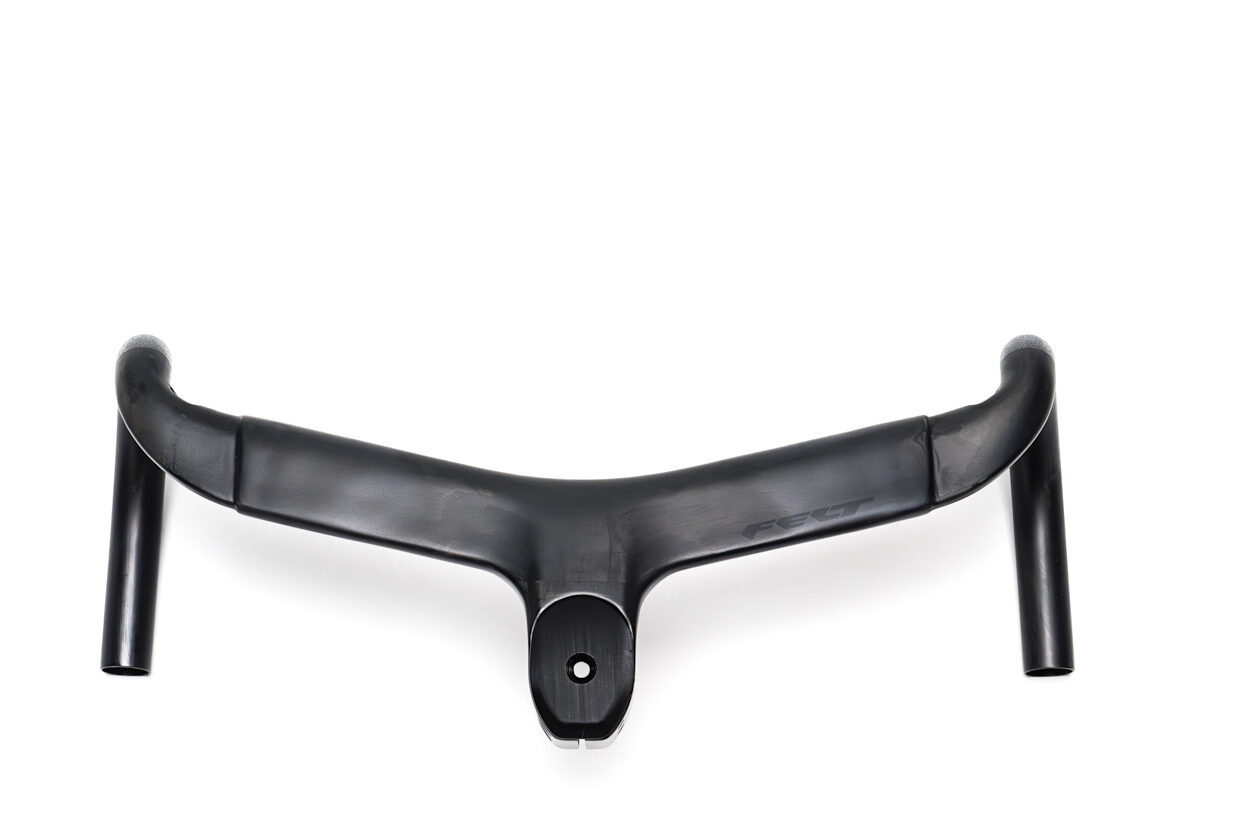
The old AR used a separate handlebar and stem — Felt’s Devox aero bar paired with the oversized Sprint stem. It was semi-integrated, meaning cables were hidden through the cockpit but popped out through visible entry ports on the frame. Functional, easy to adjust, easy to service. But in 2026, that approach looks dated next to competitors running fully integrated front ends.
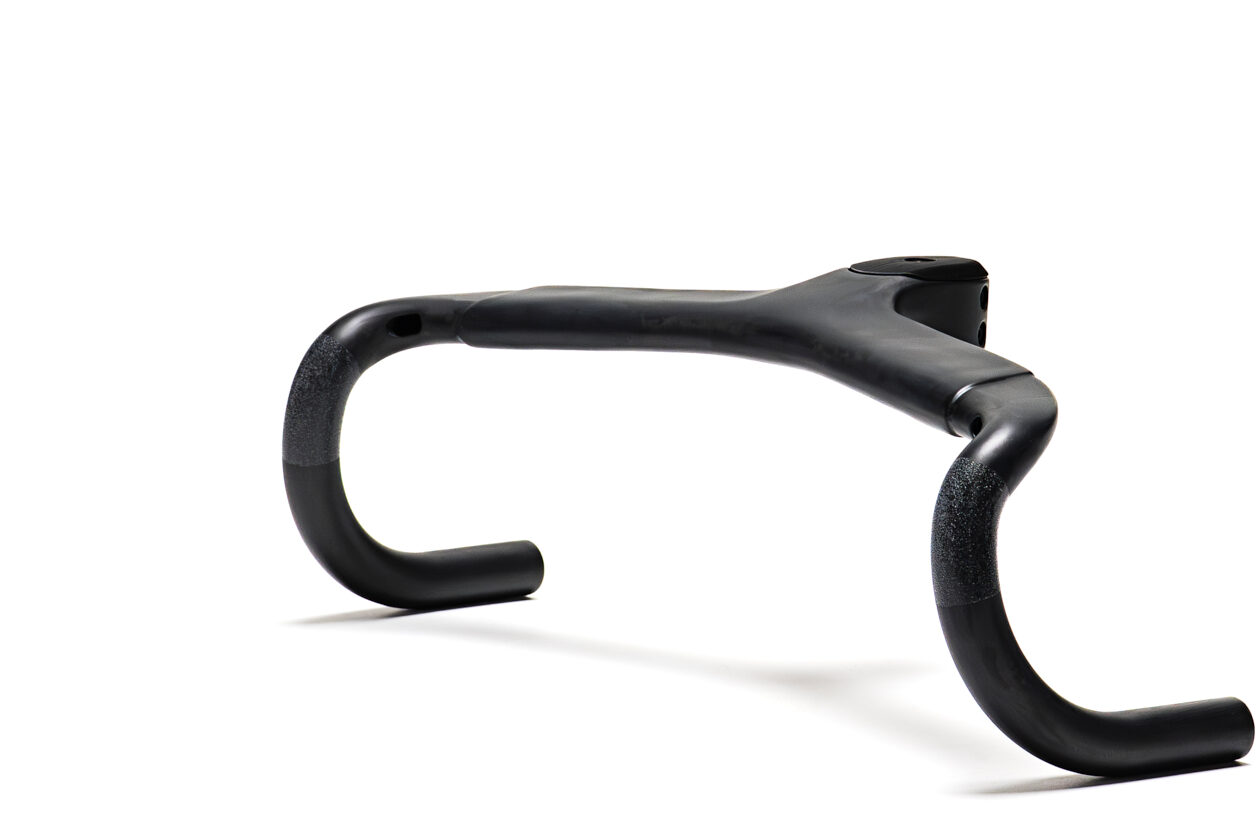
The NEXAR goes all-in on a one-piece carbon cockpit at roughly 300 grams. Everything is fully internal now — no visible cable entries, cleaner aerodynamics, stiffer front end. Felt says multiple aftermarket cockpit options will be available, which helps somewhat, but you’re trading the AR’s easy bar-swap adjustability for the aero gains of a modern integrated system. That’s a tradeoff some riders will feel more than others, especially anyone who travels with their bike regularly. Although that also changes with the bike case you own.
Carbon and Weight
The AR frame had two tiers: UHC Ultimate + TeXtreme for FRD models, and UHC Advanced + TeXtreme for everything else. The NEXAR replaces that with its own naming — FRD 12K Carbon Light (used on FRD and PRO builds) and UD Carbon Standard (Expert and Race).
The more interesting detail is what’s inside. Felt says the premium layup now uses higher ratios of T800, T1000, and T1100 grade fibers with optimized ply orientation — fewer overlaps, thinner low-resin plies, and selective use of 30T–40T modulus fibers in high-load areas like the head tube, bottom bracket, and rear triangle. The result is that claimed 300 grams frame weight savings over the old FRD.
One notable detail: the PRO build (Ultegra Di2) also gets the premium 12K frame. On the old AR, you had to buy the FRD to get the top carbon. Now, two of the four builds use the best layup. That’s a meaningful shift in how Felt is positioning the range.
Geometry: a Philosophical Shift
This might be the most consequential change — at least, for the broadest number of riders. The old AR had a traditional aero race geometry — long reach, low stack, aggressive. Fast if you had the flexibility and core strength to hold the position, but punishing if you didn’t.
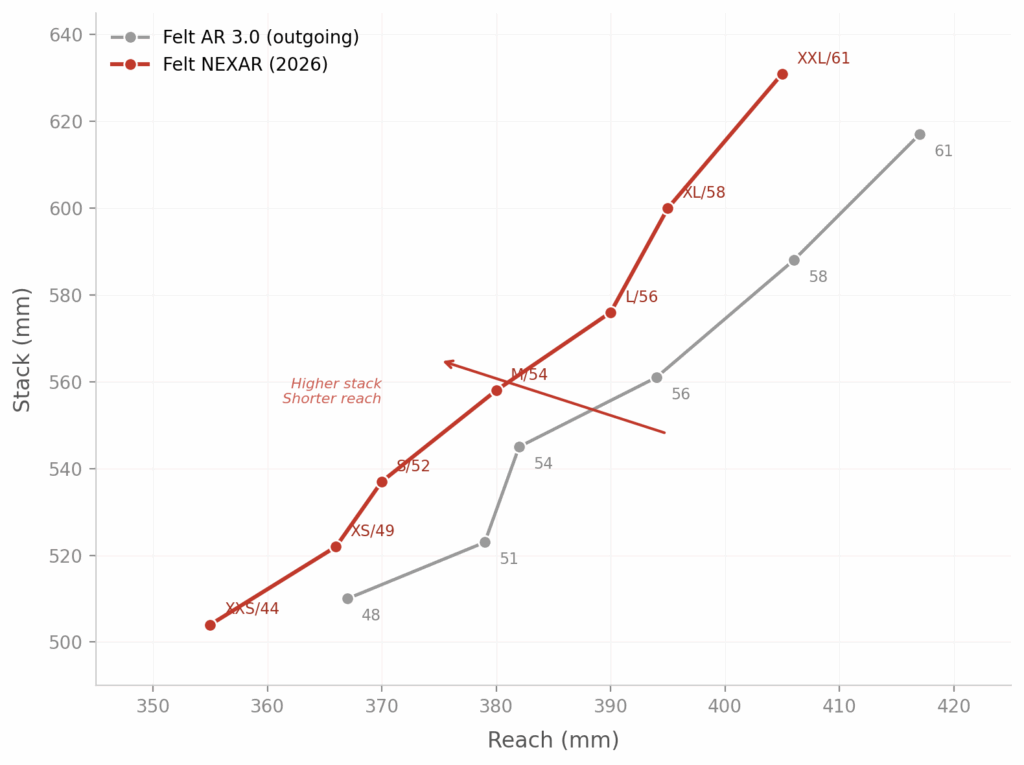
The NEXAR goes a different direction: higher stack, shorter reach, steeper seat tube angle. Felt says they worked with World Tour–level fitters and studied thousands of rider positions to arrive at a geometry that puts more riders in an efficient riding position without requiring extreme flexibility. They’ve also eliminated the offset seatpost — the steeper seat tube means riders sit naturally over the bottom bracket without needing the post to push them forward or back. This is something that I personally saw (at least in the data sheets) when I was in Spain in the fall. And it was something I could feel a bit when I rode the bike.
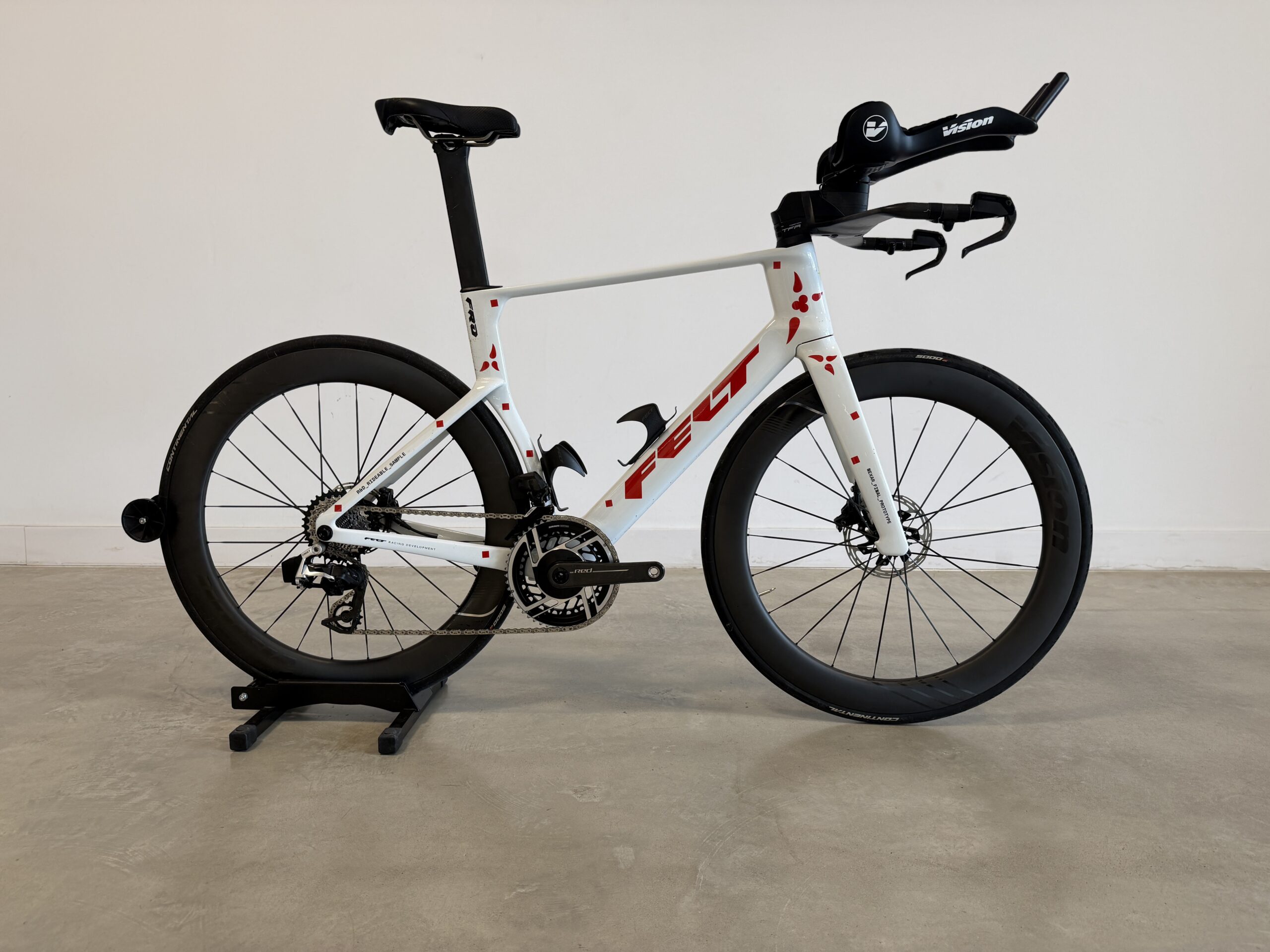
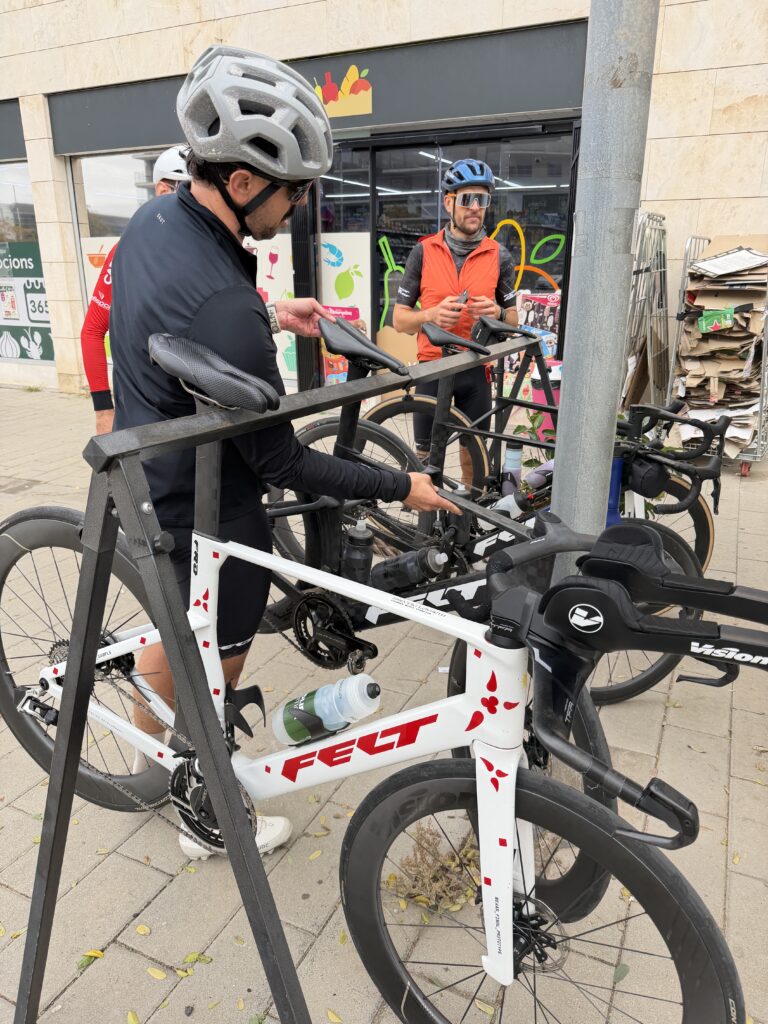
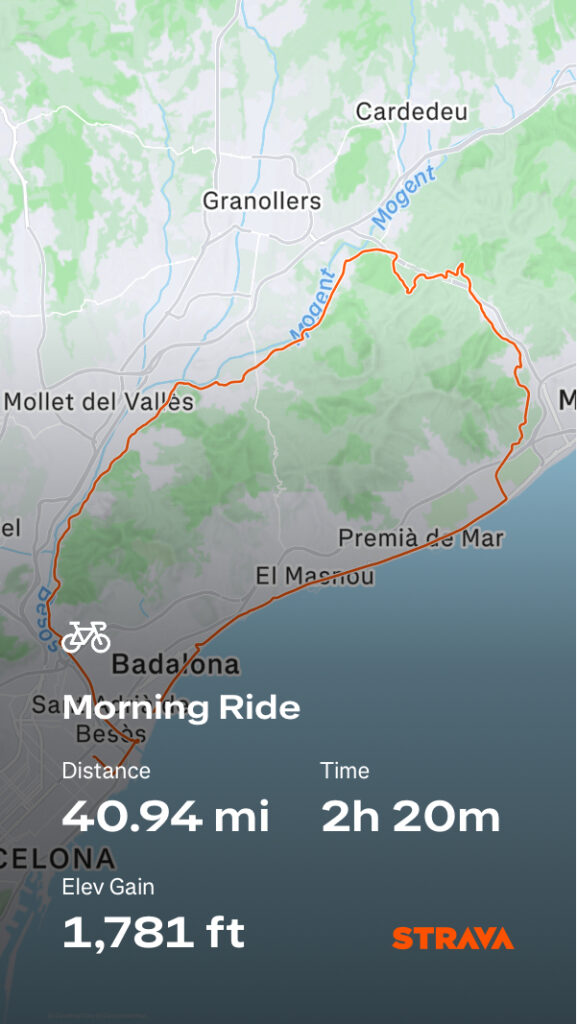
At the time during my visit in November 2025, Felt were a little short on available sizes so I was on Solveig’s bike. That meant I was riding one size smaller than I traditionally do — a 56cm frame instead of a 58. I was also on some TT bars because, well, you know: we are a triathlon site. So, that all said, do I really know how this handles in the corners when in the drops? I would say about 70%. What I can say — especially those with long memories — it very much feels like an old Specialized Transition. It was very snappy and climbing in Spain didn’t suck.
There are now seven sizes instead of six (adding coverage at the top and bottom of the range), and notably size-specific (and appropriate) crank lengths. XXS and XS get 165mm cranks, S and M get 167.5mm on the FRD, and L through XXL get 170mm. Most brands will still ship 170mm or 172.5mm across the board and call it a day.
Felt’s pitch is that the NEXAR is “engineered for the 99%, not just the 1%.” That’s marketing language, but the geometry and crank decisions back it up a little. This is a bike that wants to be fast for regular strong riders, not just WorldTour pros.
The Lineup: What You Can Buy
The old AR offered five complete builds — ranging from a $3,995 mechanical 105 with alloy wheels up to a $12,999 SRAM RED eTap AXS flagship. The NEXAR streamlines to four builds, all featuring Shimano Di2 electronic.
Outgoing AR builds
| Build | Group | Wheels | MSRP |
|---|---|---|---|
| FRD / RED eTap AXS | SRAM RED 2×12 wireless | Zipp 454 NSW | ~$12,999 |
| FRD / Dura-Ace Di2 | Shimano DA Di2 2×12 | Shimano DA C50 | ~$12,799 |
| Advanced / Ultegra Di2 | Shimano Ultegra Di2 2×12 | Reynolds AR58 | ~$6,499 |
| Advanced / 105 Di2 | Shimano 105 Di2 2×12 | Reynolds AR58 | ~$5,499 |
| Advanced / 105 mechanical | Shimano 105 2×12 cable | Devox alloy | ~$4,199 |
New NEXAR builds
| Build | Group | Wheels | Powermeter | Weight |
|---|---|---|---|---|
| FRD | Dura-Ace Di2 2×12 | Metron 45 RS | 4iiii dual | 6.48 kg |
| PRO | Ultegra Di2 2×12 | Metron 45 SL | 4iiii single | 7.04 kg |
| Expert | Ultegra Di2 2×12 | Metron SC45 I23 | — | 7.53 kg |
| Race | 105 Di2 2×12 | Metron SC45 I23 | — | 7.96 kg |
| Frame | FRD frame + cockpit + seatpost | |||
Not only is the SRAM RED build totally gone — Felt is going Shimano and electronic only for now. The mechanical 105 entry point is gone, which means the cheapest NEXAR (the Race with 105 Di2) will almost certainly cost more than the old $4,199 AR. And while Felt hasn’t published NEXAR pricing yet — they’re directing everyone to local dealers — the spec level suggests the FRD will land somewhere in the $11,000–$13,000 range based on comparable competition.
The real value play looks like the PRO build: FRD-grade frame, Ultegra Di2, a power meter included, and 7.04 kg. If that comes in around the $7,000–8,000 mark, it could be one of the more compelling price-to-performance ratios in the aero category.
Component-Level Comparison: AR FRD vs NEXAR FRD
For the spec-sheet people, here’s how the top builds compare part-for-part. The drivetrain is nearly identical — both use full Dura-Ace Di2 R9200 series. The differences are in the frame, cockpit, wheels, power metering, and tire spec.
| Frame Spec | AR FRD Dura-Ace | NEXAR FRD |
|---|---|---|
| Frame Carbon | UHC Ultimate + TeXtreme | FRD 12K Carbon Light (800g) |
| Cockpit | PRO Vibe Aero Superlight + Felt Sprint stem | Felt 1-piece integrated carbon |
| Seatpost | Felt AeroRoad IL 2.0 (split, offset) | NEXAR dedicated carbon (no offset) |
| Shifters & brakes | Dura-Ace R9270 | Dura-Ace R9270 |
| Crankset | DA FC-R9200, 52/36T | DA FC-R9200, 52/36T |
| Power meter | None | 4iiii dual-side |
| Cassette | DA 11-30T | DA 11-30T |
| Rotors | RT-CL900, 160/140mm | RT-CL900, 160/140mm |
| Wheels | Shimano DA R9270 C50 | Metron 45 RS |
| Tires | Conti GP5000 TR, 25c | Conti GP5000 S TR, 28c |
| Saddle | Prologo Dimension 143 Nack | Prologo Nago R4 PAS Nack 137 |
| Complete weight | ~7.5–8.0 kg (est.) | 6.48 kg |
What Felt Dropped
A few things didn’t make the transition. The SRAM RED eTap AXS build is gone — the old AR’s most expensive model. No word on whether a SRAM option comes later. The mechanical 105 entry point is also gone, which eliminates the most affordable way into the platform. The semi-integrated bar/stem cockpit, which was one of the AR’s genuinely practical features (easy to adjust, easy to maintain, easy to pack for travel), has been replaced by the integrated one-piece design. And the old split seatpost — one of the AR’s signature features for vibration dampening — has been replaced by a more conventional dedicated carbon post.
The wheel partnerships also shifted. Zipp 454 NSW (flagship AR), Shimano Dura-Ace (FRD Dura-Ace build), Reynolds AR58 (mid-range), and Devox alloy (entry) are all gone. Metron now supplies the entire NEXAR range across three tiers.
The Bigger Picture
Felt is no longer part of Pierer New Mobility. Since November 2025, it’s been 100% owner-operated by Cesar Rojo and Florian Burguet out of a new headquarters in Barcelona. The brand is narrowing its focus to high-performance drop-bar bikes — road, gravel, triathlon, and track — and distributing through specialist dealers rather than chasing volume. This makes things a little more difficult for some athletes to buy a Felt. That’s something that we hope to address when we launch our new directories soon — brands, fitting, and of course, which dealers are triathlon friendly?
The NEXAR is the first product of the new Felt era. Whether the weight claims hold up, whether the Metron wheels perform at the level of the Zipp and Shimano hoops they replace, and whether the pricing makes sense against the Tarmac SL8s and S5s of the world, is yet to be seen. The other big gamble is going away from SRAM completely. While I personally prefer Shimano, SRAM makes a much more user friendly TT build option and that’s important when we’re talking about integrated cockpits. I see this bike definitely being used in triathlon, and SRAM is just simply easier to build out for that use case. But these are questions that’ll be answered once bikes hit shops at the end of March.
For now, though, the launch of this bike is going exactly as Felt claimed it would this past November. They hit their expected date on the launch. That’s saying something for the bike business these days, as we’ve seen consistent delays from many manufacturers post-COVID. The AR was getting long in the tooth and while the brand has struggled with finding its identity over the last couple of years, the NEXAR looks like Felt is moving towards their internal claims of what their future will look like. Now they just need to deliver it in the real world.
For more information about this can be found on Felts Website