ENVE Foundation AR40 Wheelset: The Olive Branch to The Cycling Community

Originally published at: ENVE Foundation AR40 Wheelset: The Olive Branch to The Cycling Community - Slowtwitch News
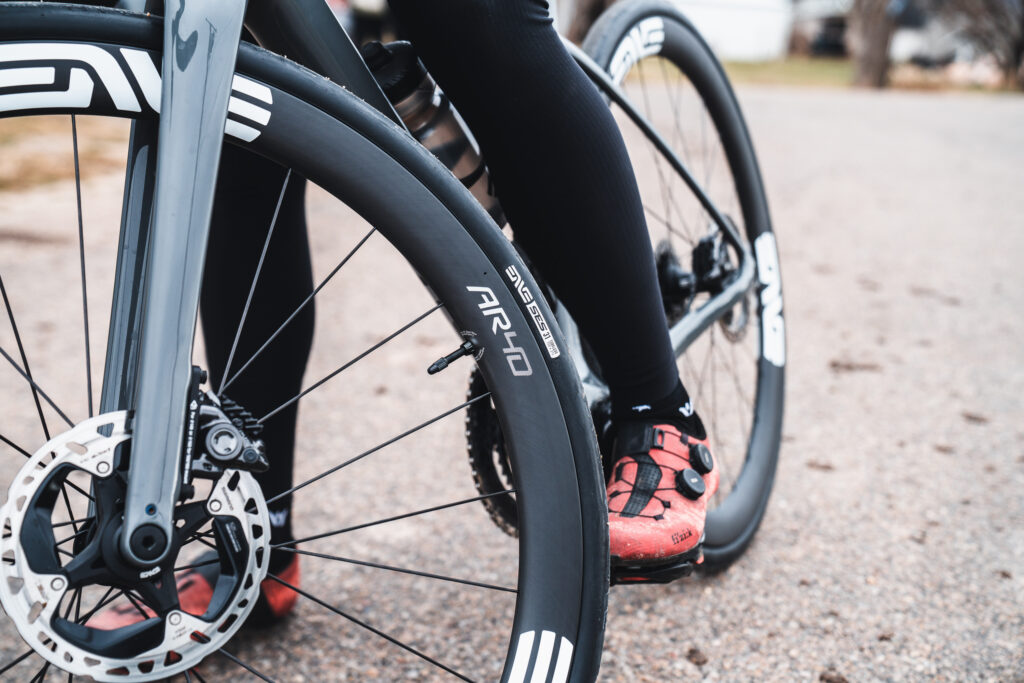
The AR40 is ENVE’s newest Foundation wheelset and it’s what I consider the latest “olive branch” to the OEM and new consumer world for the company. If you’re not familiar with the Foundation line up, it’s ENVE’s sub-$1,500 play—designed to give you the ENVE experience (aerodynamics, ride quality, reliability and warranty) without the premium ENVE price tag (handmade is never cheap). One could think of it as the gateway drug to their more premium line up. This is why I think we will start to see these more and more.


The Numbers That Matter

Spec What You Get
Wheelset Weight 1,515 g (with tape and valves, HG freehub)
Rim Weight 425 g each
Rim Depth 40 mm front and rear
Internal Width 25 mm
Price US$630 front / $770 rear

So you’re looking at $1,400 for a full wheelset. For a carbon aero wheel from ENVE, that’s a pretty compelling number.


The Aero Story

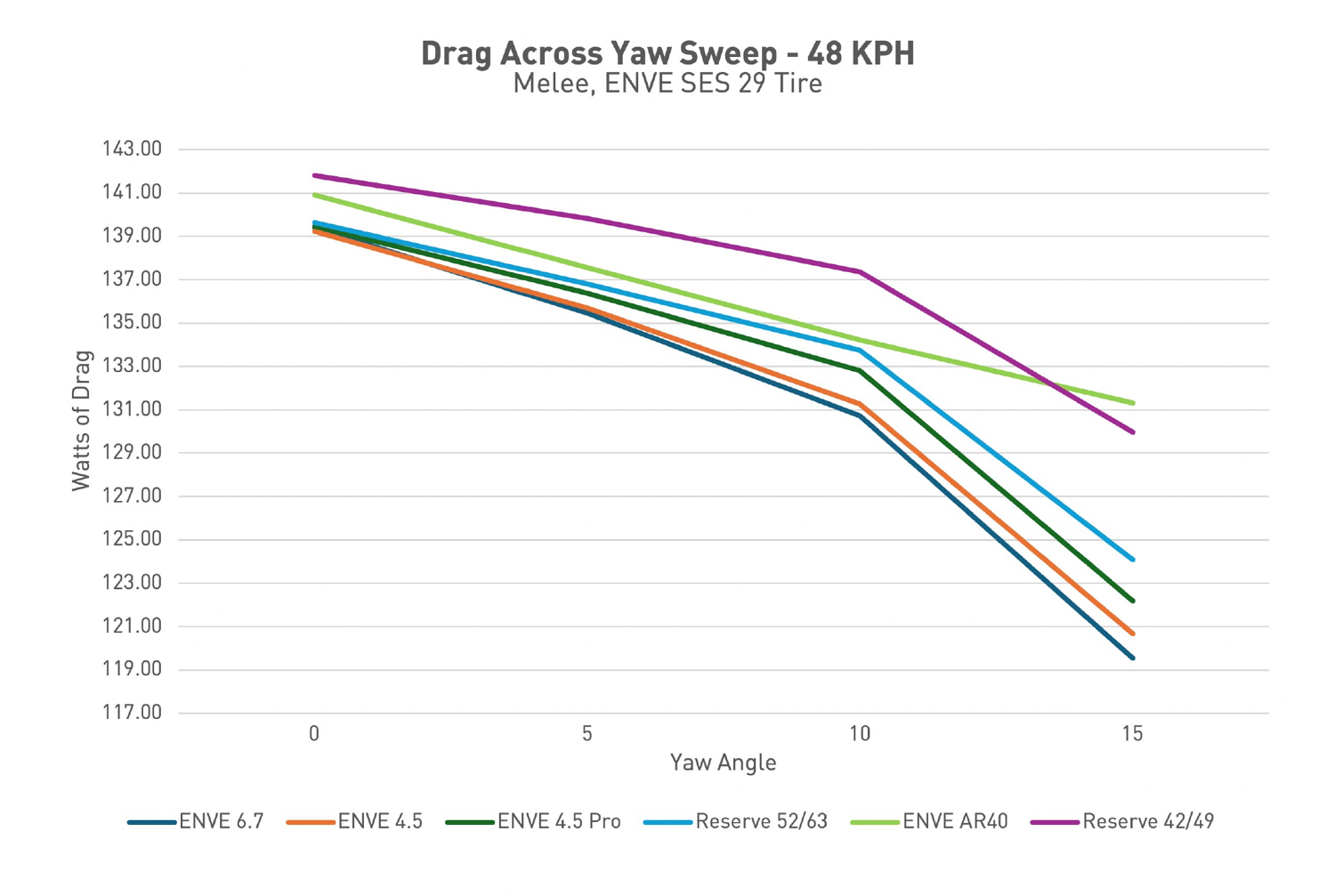
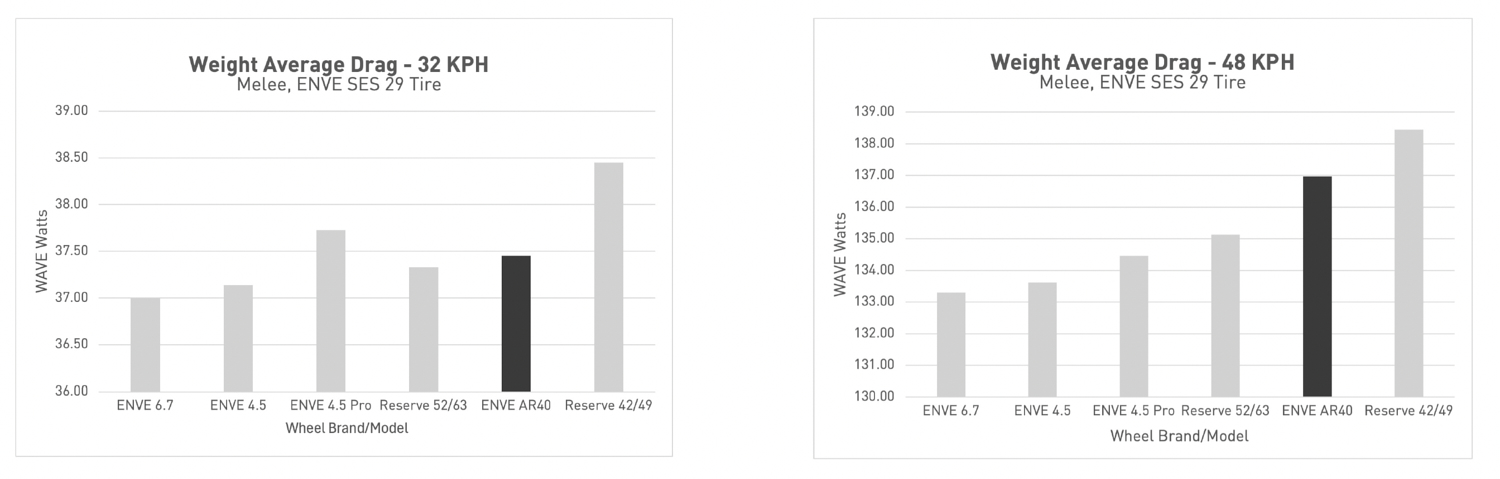
ENVE is starting to do a better job at showing the data again. They have always had it, but I do like to think that, after being asked over and over again, they did the right thing and started to show it. They tested the AR40 at the Mercedes-Benz Formula One Wind Tunnel—the same place they test the SES line. And they tested at both 20 mph/ 32 kph AND 30 mph/ 48 kph, which matters if you’re not a pro putting down 30+ mph for hours.

The rim is optimized for 29 to 30 mm tires. That’s the sweet spot where they claim the aero numbers “punch above its depth and price point.” Looking at the wind tunnel data they provided, the AR40 hangs with the more expensive options across the yaw angle sweep. And the claim is that they beat the similar Reserve wheels they compared.
Gravel Rated

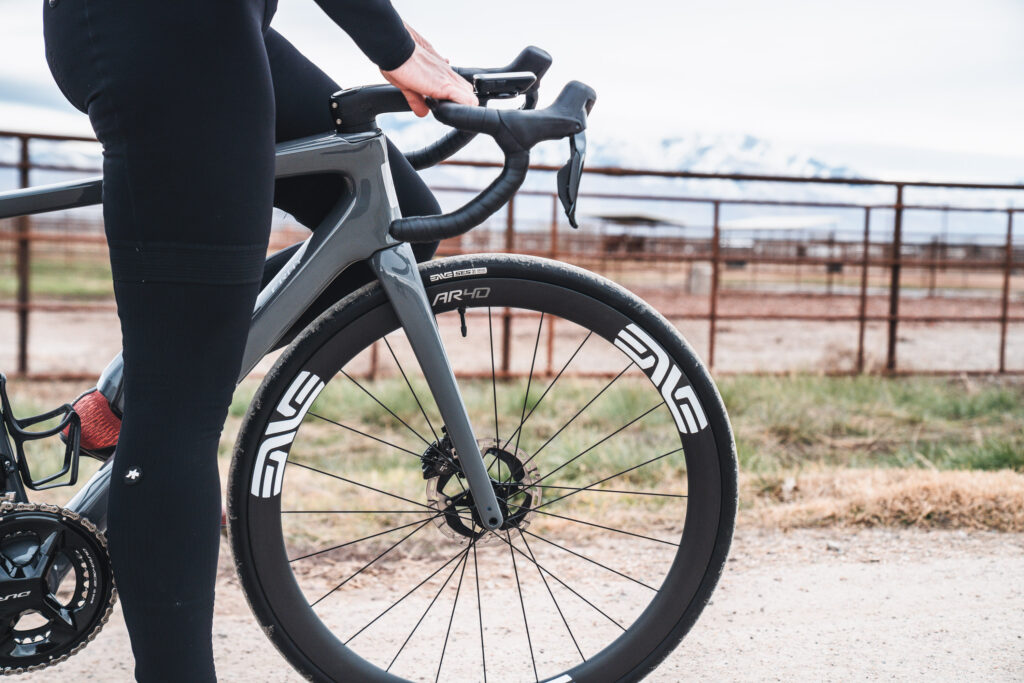
While the AR40 is primarily designed for performance road usage (the aero part, for sure), ENVE has tested and qualified the wheels to their gravel standards. The 25 mm internal width supports tires all the way up to 50 mm. So, if you’re running a modern road bike with clearance for bigger rubber, or you’ve got an all-road/gravel race bike, this wheel works for both. You will want to make sure you are looking at the ENVE Tire chart that you can you can find here. That’s another reason why I can see this as a great OEM upgrade wheel for entry-level gravel bikes.

The Tech

Even though the wheel is half the price of the premium selection, it still comes with the things that ENVE just isn’t willing to give up.

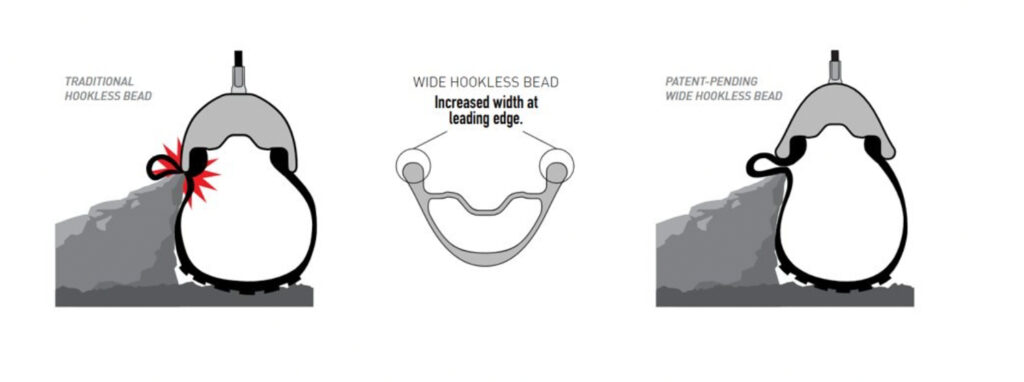
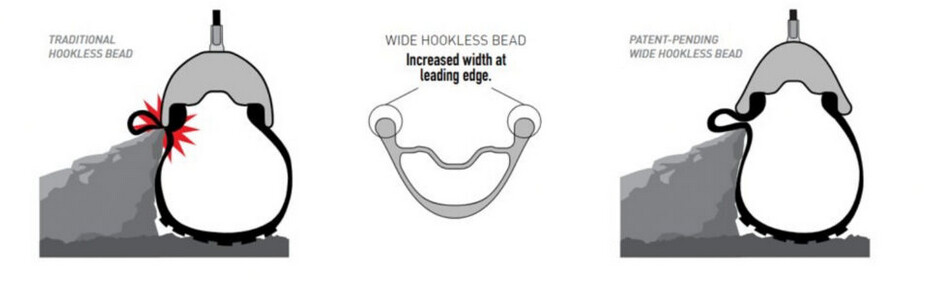
Wide Hookless Bead (Patent Pending): This is ENVE’s pinch-flat protection design. The idea is that when you hit a pothole, the wider leading edge dissipates impact energy better than a traditional hookless bead. This means fewer pinch flats, whether you’re running tubes or tubeless. Just to be clear—as the photo could be a little misleading—this “wider” is not created by the inner rim wall being at a NON 90 degree angle (straight up and down). The wider leading edge is created by an extra layer on the outside of the rim wall with beefed up carbon. (I like to think of it as a place for an object to slide off during impact.)
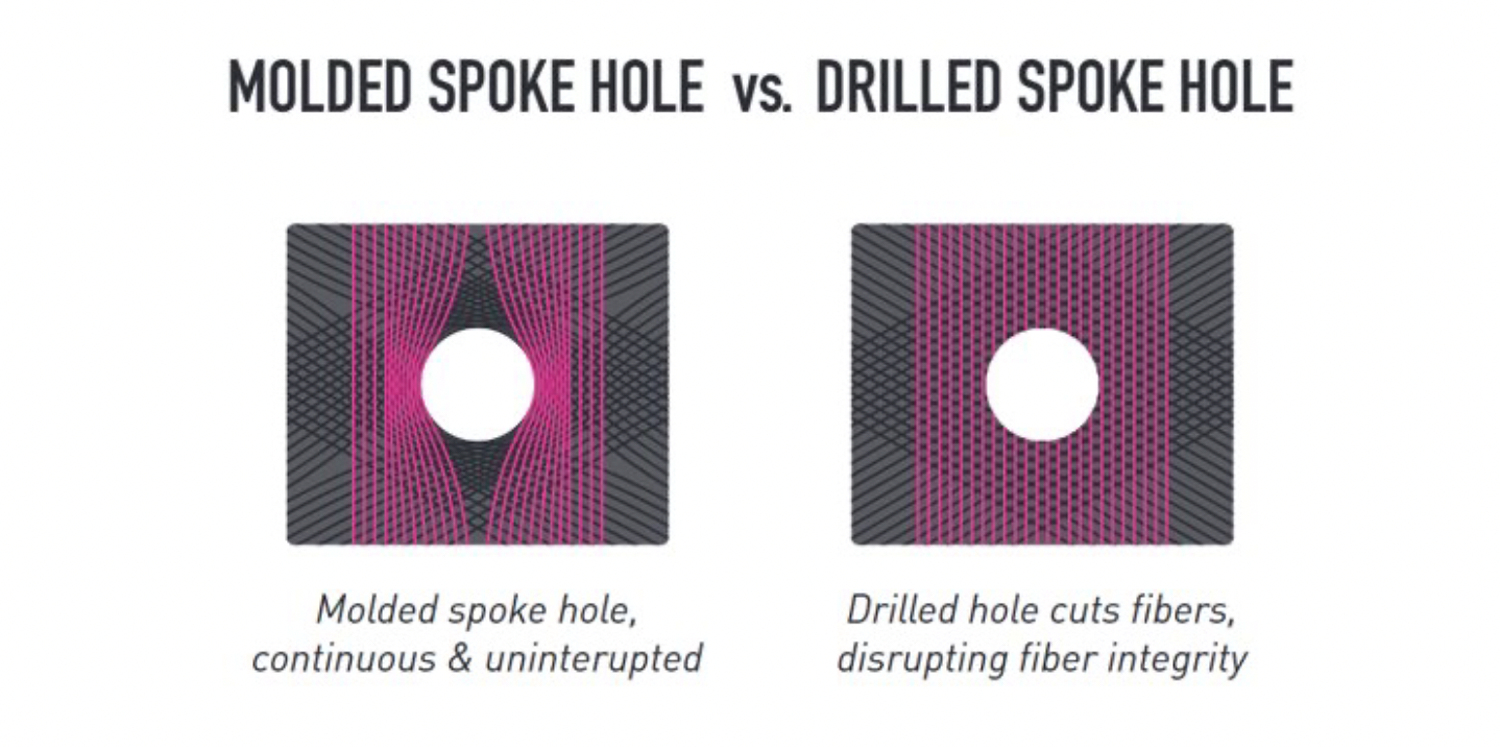
Molded Spoke Holes (Patented): ENVE routes carbon fibers around the spoke holes instead of drilling through them. Result: stronger spoke holes that hold higher tension and reduce the risk of spoke pull-through. In theory, this results in less wheel truing over the life of the wheel.
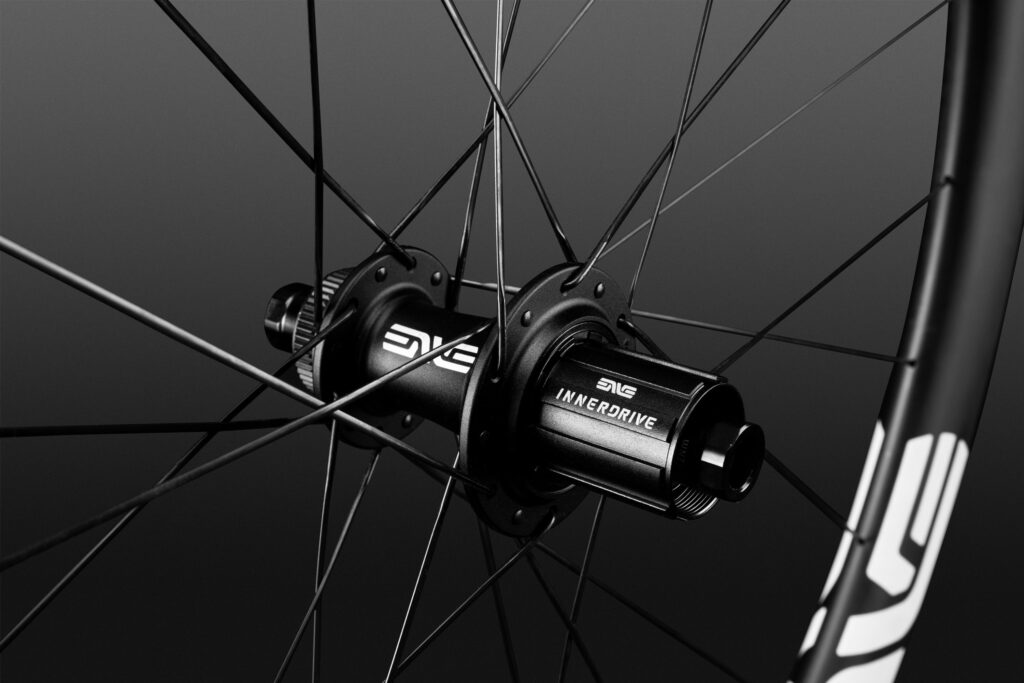
INNERDRIVE Hubs: ENVE’s own design with oversized 42 mm ratchets positioned inboard over the bearings. The Foundation version uses high-performance steel bearings (the Premium hubs use stainless steel) with the same seal strategy. Components are interchangeable if you ever want to upgrade.
TRADE OFFS.

This $1,400 dollar wheel looks the same as, say, the SES 4.5, but what really is the difference?

It’s in the little things that save costs and add a little weight like steal bearings instead of stainless steel; brass nipples instead of alloy; J-Bend spokes instead of Alpina Ultralite Aero R5 with TCX 2/1.5/2. This is the equivalent of SHIMANO 105 instead of Dura-ACE. But it’s still SHIMANO. It’s still ENVE.

HOOKLESS

This is a hookless rim. That means you need tubeless-compatible tires designed for straight-sidewall (TSS) rims. The good news is that’s where all the tire R&D money is going these days. The modern performance tire is tubeless. This will, of course, turn some older dogs away. But it does illustrate where the market is still heading, or at least being directed to head. This will now be at least the third OEM-priced wheelset that is hookless. ZIPP and SYNCROS being the other two brands I consider as offering strong OEM wheel offerings at mass in the marketplace.

This also brings me to my next point on tire size. You will want to take into consideration before you purchase the minimum tire size of 27 mm. So, if you’re the type of rider that still thinks 25 mm is “faster,” then look the other way. And start buying up all those clearance tires. With this wheel, of course, ENVE wants you to use the “Approved/Recommended” tires that you can find on ENVE’s Tire Compatibility Page. And I do find it interesting that they seemed to have gone away from the “72” max pressure level, giving the minimum tire (27 mm) an 80 psi / 5.5 bar limit. (Which will still feel hard as rock.) This goes to show you the level that tire companies are starting to get to with TUBELESS/ HOOKLESS beads. Tires are just built better now.


The Elephant in the Room: Manufacturing

Here’s something ENVE isn’t leading with in the marketing materials, but it’s an important detail. The AR40 is NOT being produced at ENVE’s Ogden, Utah facility. In fact these wheels are the company’s first to be manufactured off sight. This is not because of margin goals—it is more about a lack of manufacturing ability onsite at the moment. It goes without saying that, when you create great products, and you just happen to have that product being used by the best cyclist in the world, sales follow. And, at this time, ENVE really can’t keep up at home. So, while they created this wheel from scratch, it will not be made in Ogden as they have dedicated “all hands on deck” to the current premium wheels that require that extra hands-on touch. I would like to point out that in my conversation with the folks at ENVE, they made it very clear that ENVE owns this wheel and its production overseas from start to finish. And, according to them, this is not a “first move” to take manufacturing overseas.


My thoughts

While I havent had a chance to ride this wheel (yet), I have seen it, and I’m liking what I see. It’s got that ENVE look, touch and feel. The AR40 fills a gap in ENVE’s (and the community’s) line up. This all-around 40 mm-depth aero carbon wheel, with modern width, gravel capability and actual wind tunnel data behind it, comes at a price point that doesn’t require a second mortgage. Whether the aero claims hold up in the real world remains to be seen, but at least they’re showing their work with the testing. And they did it comparing apples to apples on “wider wheels” in the market.

Wheel Options Price
Front Wheel, 12×100 $630
Rear Wheel, HG Freehub, 12×142 $770
Rear Wheel, XDR Freehub, 12×142 $770
Rear Wheel, Microspline, 12×142 $770

All wheels feature a centerlock disc and come ready with tape and valves. There is a 24-spoke count for both the front and rear, with Sapim CX-Ray J-bend spokes.
1 Like

looking forward to rolling these!

Going to display my incomprehension wrt the bead design.


Isn’t the rim as shown 90 degrees ‘wrong’. When “you hit a pothole” you hit the far lip, you don’t ‘slide’ down the edge of it.
“leading edge” - sorry?
I wonder what is meant by “dissipates impact energy”. To where is this energy dissipated? How does this design achieve this any better than a typical 25mm IW). rim design. Beefed up beads might resist impact damage better: is that the same?

Are we defining how someone could hit a pothole now? :slight_smile:

That’s definitely one (very specific) way you could hit a pot hole.

One of many… I think the bigger issue is my “Idea” of a written example.. And the provided graphs is another example.. Let me fix that..

Well next we’ll be suggesting that making up a new ‘Patent Pending’ term in support of a product feature may be more marketing than actual logic or fact. And no way would anyone on ST suggest or fall for that.

That being said, whilst the diagram is necessarily bollox, then what it is showing has a touch of logic to it. If you think about a pinch flat where that tyre is rolling into the end of a pot hole, as @Ajax_Bay describes, then the same ‘roll’ of tyre (and tube) would be pinched out the side (most often both sides). And so I think the diagram is suggesting that their design instead of having a thin razor to shred the tyre has a wider contact that reduces the pressure. That said to my layperson eye it also creates a nice lip that would increase the air resistance (and weight) which are the things that at least some people saw as being advantage to the whole move to hookless.

And to close out my grumpy old man bingo card. Celebrating $1,400 for ‘cheap’ beginner wheels that need $300 of tyres. On a push bike. The world has gone mad I tell you.

1 Like

If you read the article you’ll see that @Ajax_Bay took a good chuck of the other apart of my writing.

Make a hooked rim brake wheel and I’m interested.

Thank you. I can see that the wider bead widths (ie two of them) might achieve the ‘dissipation’ of the ‘slicing’ action a underinflated tube experiences as it hits a sharp transverse edge (far side of pothole) and bottoms out. Super difficult to show the mechanism in a diagram.
Please let us avoid the hookless debate here - there’s a thread for that (in fact several!)

1 Like

Yes, I’ll need a 27" for my Schwinn Paramount /p

I’m sorry, @VegasJen, but it looks like hooked rim brake wheels are going the way of hand-cranked car windows, 8-track tapes, and AM radios

2 Likes

For all the right reasons as well..

2 Likes

We still make hooked rim brake, and with an alloy brake surface so you aren’t in danger of melting your tires. Oh, wait a minute, we have not made 27” since… never. (I mostly ride disc brake, but not exclusively)

I know, right? Hooked rim brakes only worked for something like 100 years. How stupid!

I think you’re probably right but that’s a shame. Plenty of rim brake bikes still out there. I know there are other options but they are getting fewer and farther between. And for it being older technology, the one thing I consistently see here and on other forums is the best bang for buck upgrade is new wheels. So someone like me could buy an older model bike at bargain price and put a decent upgraded wheelset on it for about half, maybe less, the price as a brand new bike, and end up being about as fast. For those of us not chasing a slot at Kona or no realistic delusion of ever being semi-pro, that’s a better way to spend limited resources in what is really a budget stretching sport.

1 Like

These rims are approx 32mm wide where the brake track would be. That’s a centimeter wider than what most rim brakes were designed around. This is where wheel designs are headed, and they’re never going to work with legacy rim brake systems. You would need newly designed rim brakes to go with your newly designed rim brake wheels, and - most likely - a newly designed frame that would accommodate the big tires and rims and brakes.
That isn’t going save anyone any money.

…and, there’s currently a huge surplus of really good (used) rim brake high-performance wheels on the market, at prices that are basically impossible to compete with with new product. And they are compatible with legacy brake systems and frames designed around smaller tire and rim widths.

2 Likes

I hear ya and Boyd Wheels could be your answer for new with warranty. I own three sets and am quite pleased with them. I particularly appreciate the availability and ease of switching freehub bodies since I need HG, XDR, and N3W across my n+1.

I will echo looking at the used market as bargains are galore for days gone by top tier wheels.

If you access to a wheel builder, you can have “custom” wheels built. For example, I picked up a set of DT350 rim brake hubs for a song that I will have built up once I decide on rims and spokes.

As for this new offering from ENVE, it’s a smart business move to get to the market who wants ENVE without the premium price tag. I get it and these folks will happily buy the wheels - good for them. For me, I’ll be curious if this fades the consumer mystic around ENVE being a US company that makes high quality, performance enhancing products in Utah. The article stated this is not intended to be a shift manufacturing location, but I feel like I’ve heard that before from other manufacturers within the bike industry and beyond. I know I’ve heard the verbiage “we own the product” yada yada yada and will carry a degree of pessimism towards ENVE’s future business practices. This raises the question as to whether it matters if ENVE changes business strategies if the quality and performance remains. None of this diminishes this offering, that according to ENVE testing, demonstrates good performance and in today’s market at a price that has become normalized as reasonable / good deal for performance (or at least a performance known entity). Like all things, time will tell.

I get that manufacturers are never going backwards. Too small a market I guess. But what I don’t get is most of these manufacturers made rim brake wheels in the past. It’s not like they really have to “reinvent the wheel”, pun intended. Just produce what they made before.

But like you said, there are rim brake wheels out there. And I do shop for them. I am currently running AR41s on my Time Machine and some Rovals on my Shiv. I really like the Rovals because of how easy they are to set up tubeless and I keep my eye out for another set for backup. They’re out there but a lot of them are around the $1000 mark for a good used set. So if Enve offered a new set with a warranty for $1500, I would probably be more inclined to go that direction than drop a grand on a used set.

this may be an interesting article for you.

They aren’t wrong in the sense that “ More Aero” is something very hard to beat these days. One of the main reason it took Giant so long to come out with their new trinity was because they couldn’t make it faster then the first one. I’m not sure a wheel or bike company really can do much with aerodynamics anymore. It’s all about the whole picture, Aero, Weight, RR, and Durability ( and usually some marketing “Blah blah blah) And on top of that.. Riders seem to want more out a single wheel. They want that wheel to be able to go on and off road at times.

Part of me is a little sad that the clear direction with cycling is moving away from rim breaks but then again every time I want or need to stop fast. Im glad they are.

Interesting that the author never took into account bearings and or hubs. When it came to last section of his disclaimer. To me that’s clearly one of the biggest differences between most budget and non budget wheels. That and will the company be around in 2-5 years to warranty any issues a customer might have.
Thanks for sharing @marcag