By Ari Altun
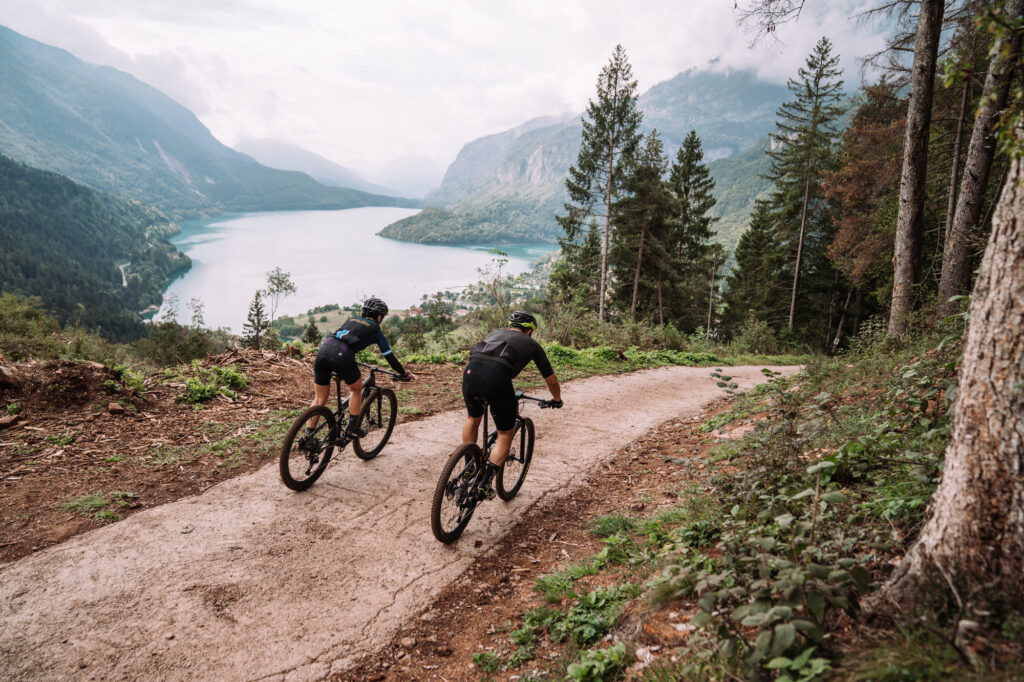
A road triathlete can look at an XTERRA start line and recognize the sport immediately: swim, bike, run. The uncertainty begins when the bike leaves the road.
What Great Britain’s Adele Baker (who now lives and trains in North Macedonia) found in XTERRA was a different kind of difficulty, one built around willingness to be new at something again.
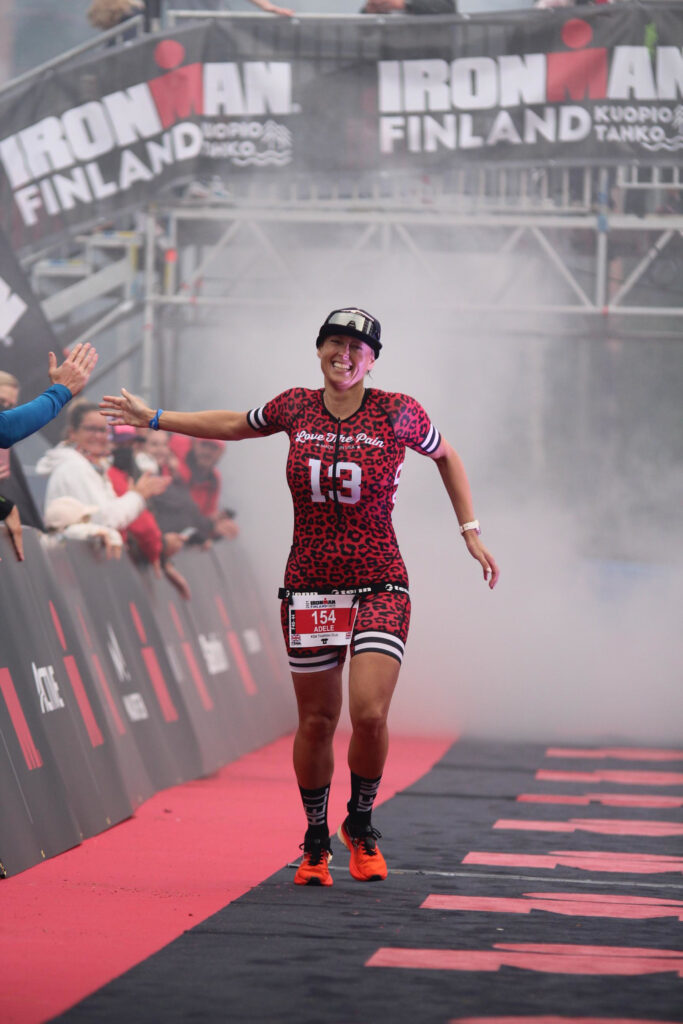 Adele Baker
“I used to find mountain biking really scary, but I did it,” Baker says. “I’ve done nine full IRONMANs. I’ve done about 18 half IRONMANs. I’ve been to Kona. I’ve done the world champs in Nice. I’m good on a flat straight road. I’m not so good when it goes a bit bumpy and gravelly and muddy. I found the challenge of it to be very much outside of my comfort zone, which is frustrating, but it’s also really quite special. I think doing something that makes you uncomfortable is kind of where the magic happens.”
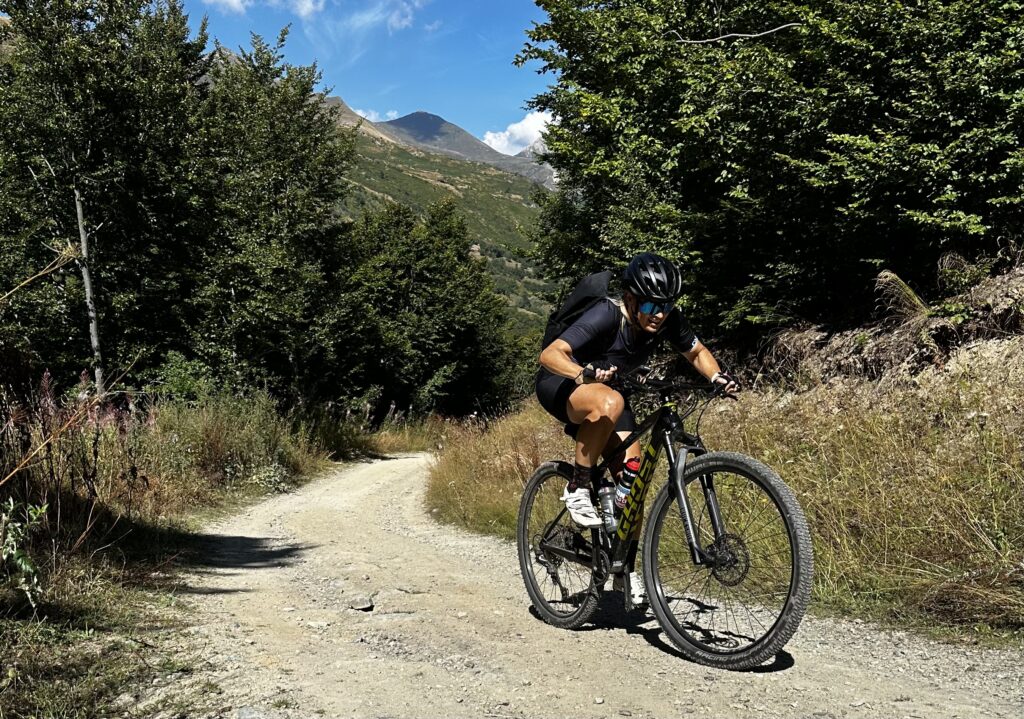 Adele Baker
Tri and Trail
XTERRA began 30 years ago in Maui as off-road triathlon: open-water swimming, mountain biking and trail running. Full Distance racing remains its signature format, but it isn’t the only way in. Super sprint and sprint races offer shorter introductions to the three disciplines. Open races and relays allow athletes to show up without chasing a championship slot. And anyone unsure about beginning on a mountain bike can enter the same world through trail running.
At XTERRA weekends around the world, that can mean a short Discovery Run, a 10K trail race, a Trail Half Marathon or a Trail Marathon. Within the XTERRA Trail Run World Series, half marathon and marathon races give runners a points pathway and the chance to qualify in their age division for the Trail Run World Championship. It’s a way to meet the terrain, the people and the event weekend before deciding whether an off-road triathlon comes next.
The First Step Does Not Have to Be Big
UK’s Kerri-Ann Upham first tried XTERRA in 2018. Four years later, she became an amateur XTERRA World and European Champion.
“You don’t need to be an expert mountain biker to start,” Upham says. “The fitness, endurance, and discipline from road sport already transfer across really well. The technical side is a skill you build over time, just like anything else. When I first started, I pushed my bike through sections I was nervous of, and that’s completely normal.”
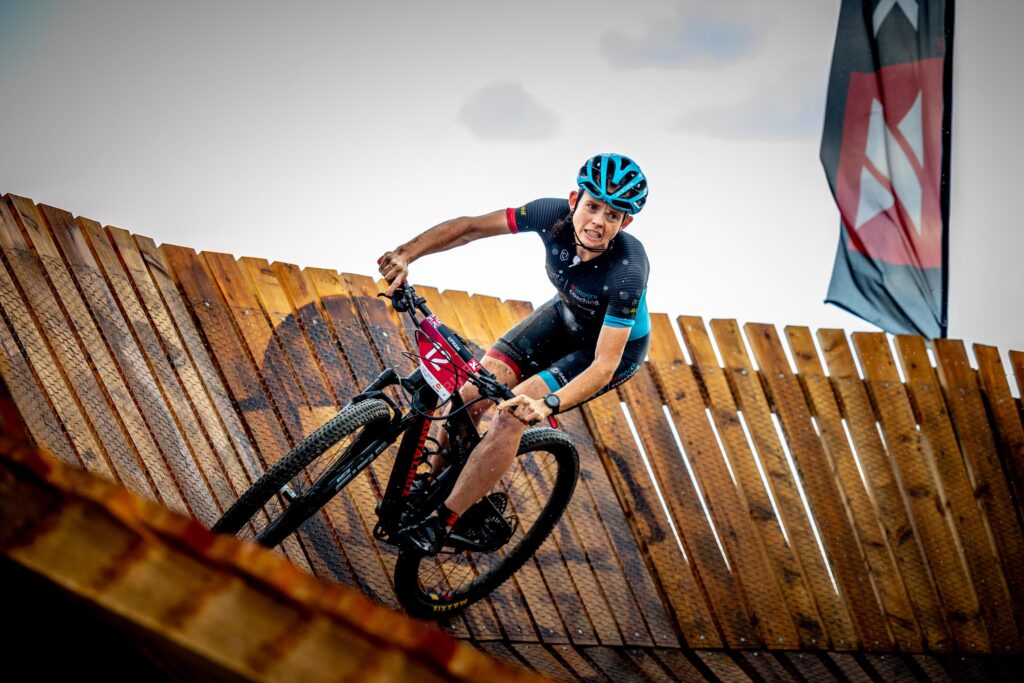 Kerri-Ann Upham
“I think people also overestimate how extreme XTERRA is,” Upham continues. “There are plenty of beginner-friendly events and no shame in slowing down, walking sections, or building confidence gradually. Most crashes happen when people ride beyond their ability too soon, not because the sport itself is reckless.”
Isla Hedley out of Scotland, has become one of the leading young athletes in cross triathlon, winning two World Junior Cross Triathlon titles before taking both the Short Track and Full Distance victories at XTERRA Weston Park in May 2026.
“If you’re a bit nervous about the technical aspects then you can try a course that may be more suited to your ability, and most courses will have a B line on the more technical sections,” says Hedley. “The courses are well suited to either hard tail or full suspension bikes, so you don’t need to worry about having a fancy full suspension bike to compete in XTERRA. Make sure you have ridden the course a couple of times before the race so you know what to expect!”
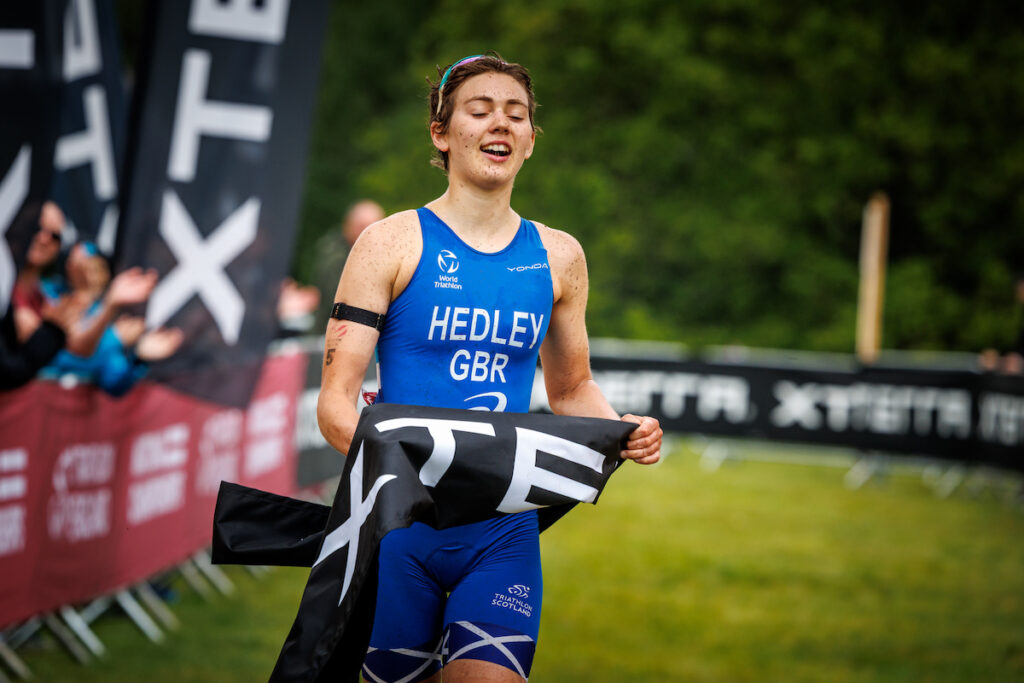 Isla Hedley
The right move is finding a race that matches where you are, learning what the course asks and arriving with enough familiarity to enjoy the day’s festivities .
Get on the Trails Before Race Day
Lucas Wright grew up close enough to Maryland’s Patapsco Valley State Park to ride to the trails from home. Now a student-athlete at Wingate University, he races across XTERRA, draft-legal and USA Triathlon competitions.
“For a road triathlete who wants to try XTERRA, I would say just get out on the trails,” Wright says. “I don’t think you should ever ride trails in a race for the first time. Practice going over roots and rocks, because in XTERRA there are always roots and there are always rocks!”
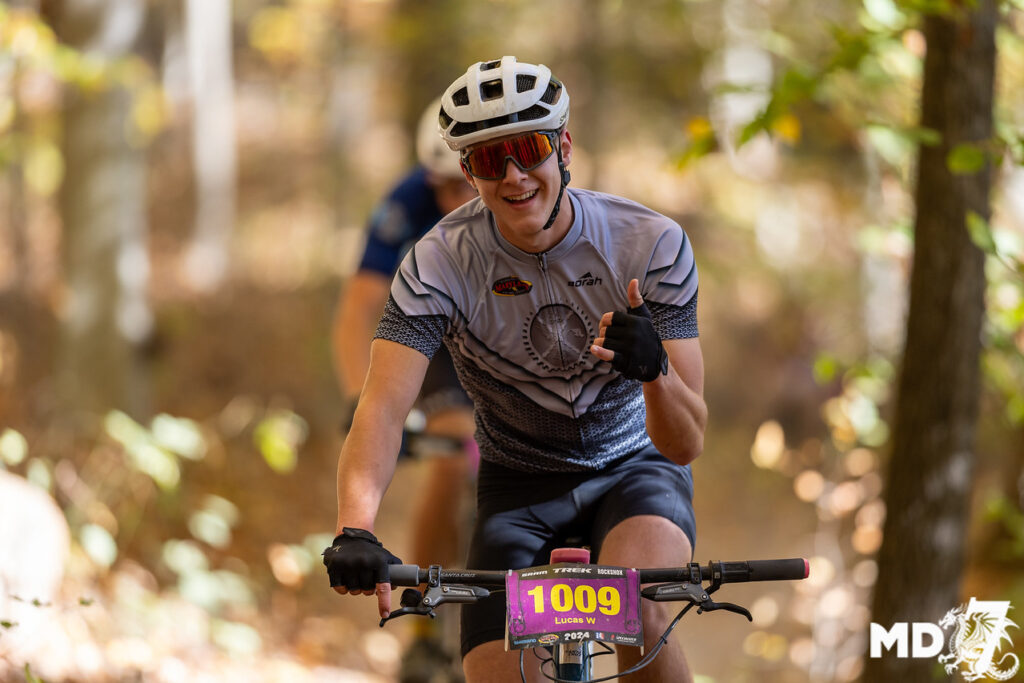 Lucas Wright
“On the road, you are used to a flat, consistent surface,” Wright continues. “On a mountain bike, you have to be aware and ready to adjust if something comes up at the last second, because it is not a consistent surface. My advice is to get out there and try a bike. A lot of shops have demos. Just get out and practice. Anything helps.”
Sullivan Middaugh races XTERRA, and is also part of USA Triathlon’s Project Podium program, with his longer-term ambitions directed toward draft-legal racing and the Los Angeles Olympics.
“Many people may think that getting into an off-road triathlon is super stressful with crashing all the time on the bike or rolling ankles on the run,” Middaugh says. “This may deter people from trying their first off-road triathlon but with proper preparation and after giving it a shot, it can be a very fulfilling and rewarding experience.”
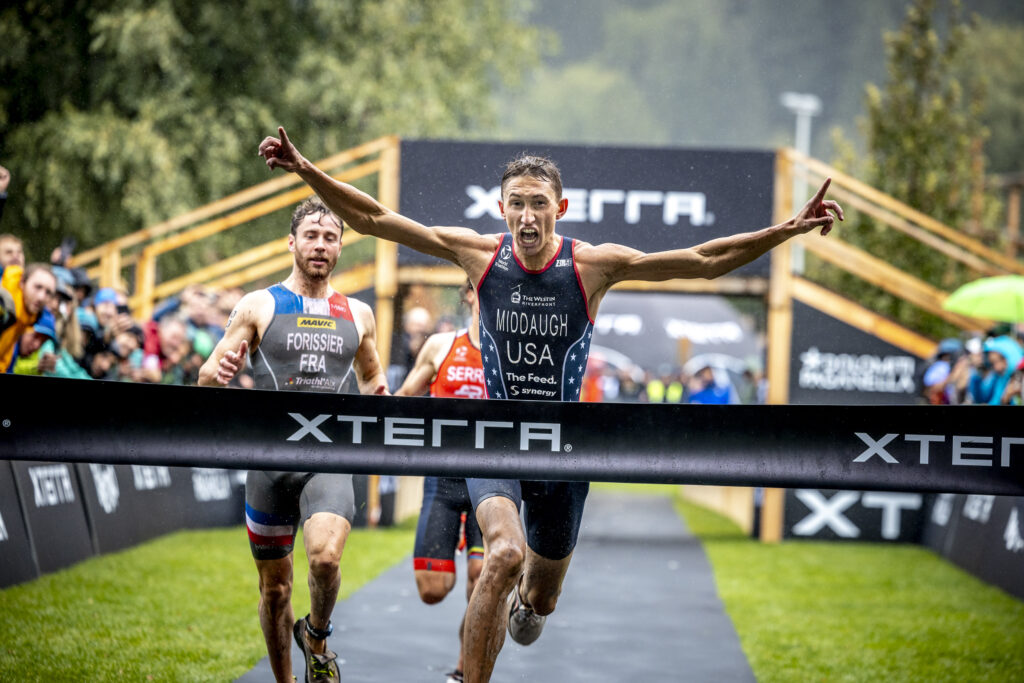 Sullivan Middaugh at the XTERRA World Championship 2024
“I have definitely had some crashes especially in the first couple of years competing in XTERRA,” Middaugh continues. “Almost every time I crashed it was because I was trying to ride with someone else or over rush certain parts of the course. I wish that I rode more within my limits then like I do now knowing that holding a wheel is not going to make or break my race. The race is long and being patient can be important if it avoids a mistake that may cost more time.”
The same patience is visible at the front of the sport. Arthur Forissier, the French cross-triathlon world champion who won the opening two Full Distance races of the 2026 XTERRA World Cup in Australia and Greece, views progression as part of the appeal.
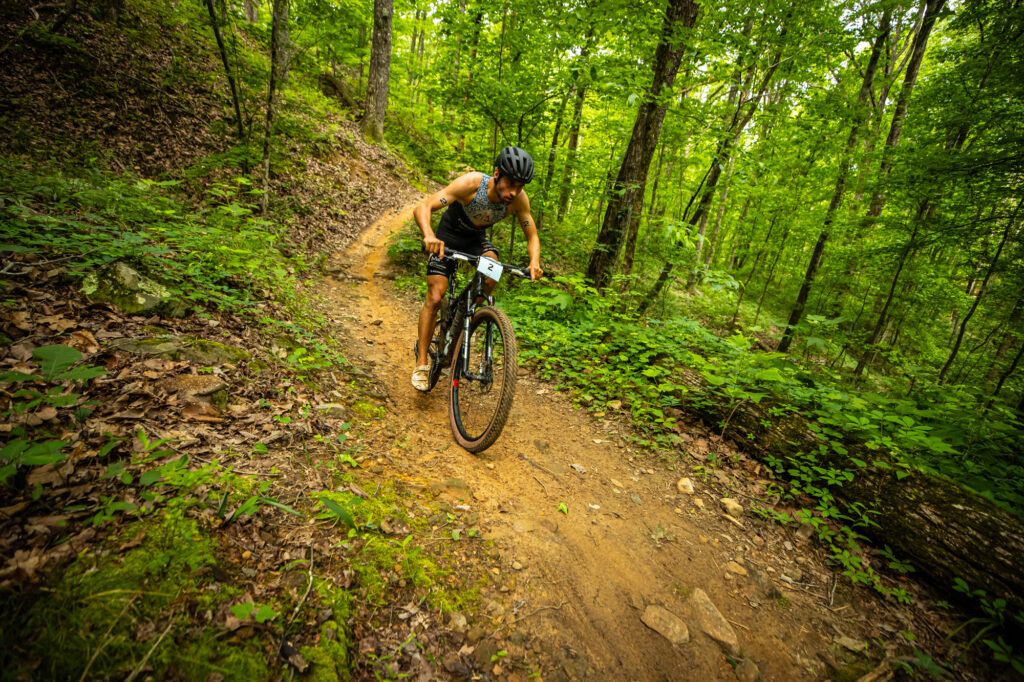 Arthur Forissier
“I think those who are curious or genuinely want to come will do so naturally when they’re ready,” Forissier says. “And I also think it’s better for them to discover for themselves what it’s really like through their own experience. They need to learn on their own how to handle the specific demands of XTERRA — going at their own pace, discovering things little by little, and progressing step by step over time.”
The Numbers No Longer Tell the Whole Story
A.J. Petrillo, from Blue Ridge, Georgia, has returned to XTERRA weekends across many years with his wife, Jaime, and son, Wilder, now part of the experience around him.
“Throw all your paces out the door. Don’t even look at your pace on a trail run,” Petrillo says. “Don’t look at the average speed on a mountain bike. On-road you’re trying to keep a certain pace and power and not spike. But on a mountain bike you’re going to spike.”
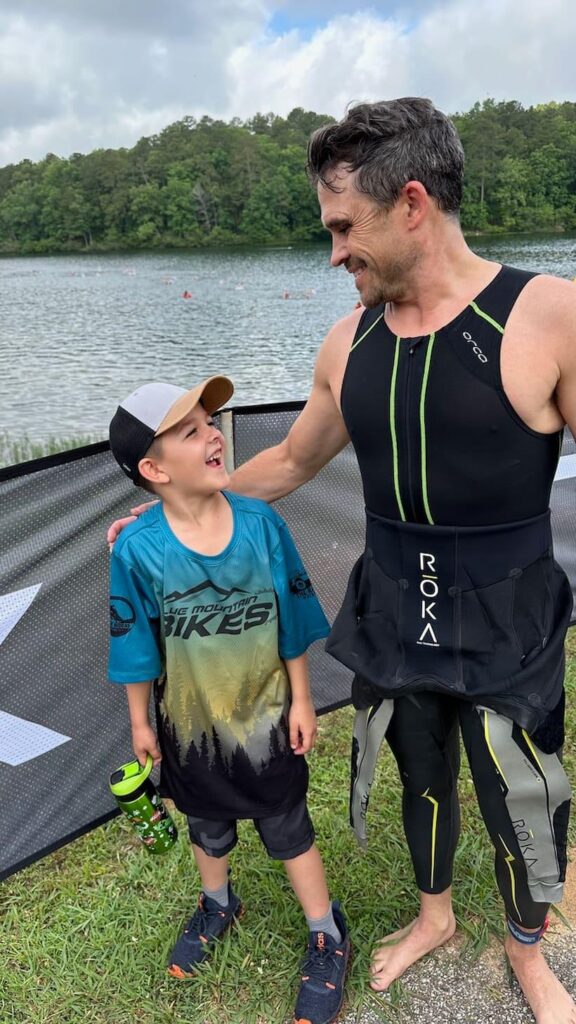 A.J. Petrillo
“So get your body used to it and start doing interval training and get used to raising your heart rate and getting it back down lower and being ready for the unexpected, you know, because anything can happen mechanically too,” Petrillo concludes.
The running side can be the easiest place to feel that difference without committing to all three disciplines.
“Trail running and road running are totally different,” Canadian Barb Heiliger said. “I think I enjoy trail running more because there is more to think about technically. You have to pay attention to where you are going, try not to get lost, try not to trip and fall, and still keep your pace up wherever you can.”
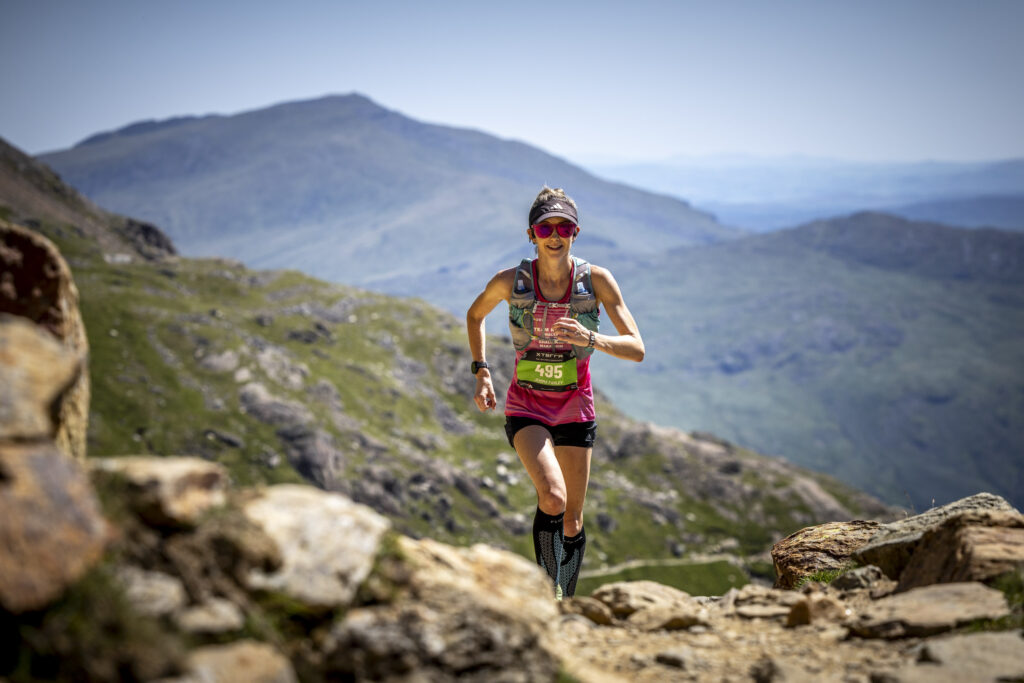 Jemima Farley at the XTERRA Trail Run World Championship 2025
Scotland’s Jemima Farley, who found a new home in Malta where she recently was crowned the back-to-back XTERRA Trail Run World Champion, said something similar when the pace on her watch stopped controlling the experience.
“Trail running is far less stressful,” Farley says. “You don’t have to worry about the pace on your watch, which I can get really tied down with. I do actually love running on the roads, too, but it’s good to have a balance of both. I think they both help each other out. The great thing about trail races is that it’s the experience of it too. Especially on longer trail races, it’s an experience. It’s an adventure.”
Why Choose Off-Road?
Triathletes are not short on choices. Road racing rewards control and sustained speed. Gravel offers mixed surfaces with a different technical threshold. XTERRA places the challenge and community aspect of the event itself at the center of the day.
“What makes off-road racing special is the variety and unpredictability,” Upham says. “You’re constantly responding to terrain, conditions, and the environment around you rather than staring at a power number or pace. It keeps you present and makes racing feel adventurous again.”
Finlay Goodman out of the UK, came to the same conclusion through the quieter side of being outside.
“Why I say I love off-road stuff, is because of the sort of peace of mind it gives me,” Goodman says. “Like the road’s cool, but you’re always being overtaken by cars or something. When you’re in a forest, it’s nice to be on your own, have that sort of peace of mind. I like running where you have to think about your foot placement a lot and where it’s technical.”
Canadian Spencer Summerfield arrived through multisport and age-group duathlon racing.
“I started in multisport racing with Multisport Canada, Subaru Triathlon Series and Triathlon Canada,” Summerfield says. “I’ve been to the Age Group World Championships for duathlon three times in the last 10 years or so. And then decided to do something a little different. I’m really into being outside and being outdoors, and if I can grab a mountain bike over a triathlon bike, I will. If I can run on a trail versus a road, I will. I find it more stimulating and your brain has to be on in a different way.”
The Race Is Only Part of the Weekend
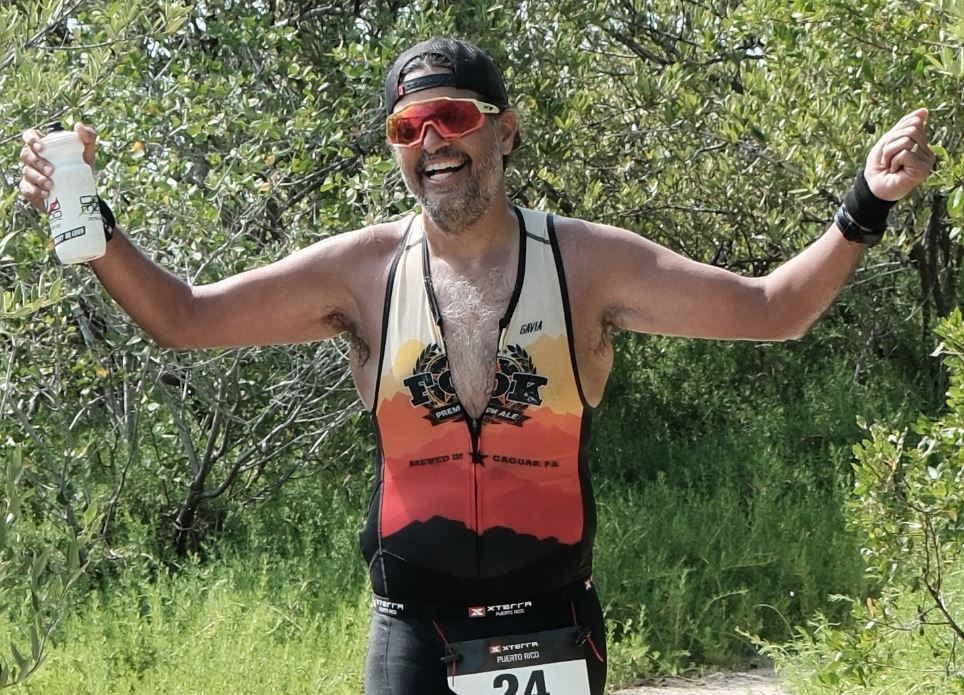 Daniel Leon
Daniel Leon out of Puerto Rico did not talk about watts, lines or race positions when he described the difference.
“Totally different, more laidback,” Leon says. “They know how to enjoy themselves. It is competitive, don’t get me wrong, but you go to road triathlons and you see all these expensive bikes. You go off-road, and you see mountain bikes which are more normal-level type of things, and they know how to enjoy themselves. They want to compete, but it’s a good time. It’s different.”
That may be the part many triathletes recognize. A person can show up through a trail race, a sprint triathlon, a relay, a youth race, a family weekend or a full distance goal. People race hard, but they also stay around. They see familiar faces again. They bring partners and children. They talk about the trail, the conditions, the corner they rode cleanly or the one they will return to another day.
“My biggest advice would be: don’t wait until you feel fully ready,” Upham says. “Start small, expect a learning curve, and enjoy the process of improving. The off-road community is incredibly supportive, and once people try it, they often wonder why they waited so long.”
North America Has an Open Door
The timing is especially relevant in North America. The XTERRA World Championship returns to the United States in October 2026, with Ruidoso, New Mexico hosting the 30th anniversary edition.
The championship race requires qualification, but the week also includes the XTERRA Ruidoso Open Sprint Triathlon. That race gives athletes an opportunity to take on an off-road swim, bike and run during the same week the international XTERRA community gathers in New Mexico.
“I also am looking forward to the XTERRA World Championships this year especially since it will be at altitude and in the US,” Middaugh says.
A first step does not need to be Ruidoso, it can be any event on the 2026 XTERRA calendar. It might even be a local trail race, a mountain bike lesson, a community ride or a sprint distance chosen with a little humility and a lot of curiosity.
The athletes who spoke here did not reach XTERRA through one route. They arrived from IRONMAN, road triathlon, draft-legal racing, duathlon, trail running and local trails close to home.
The pathway is much wider than it looks.