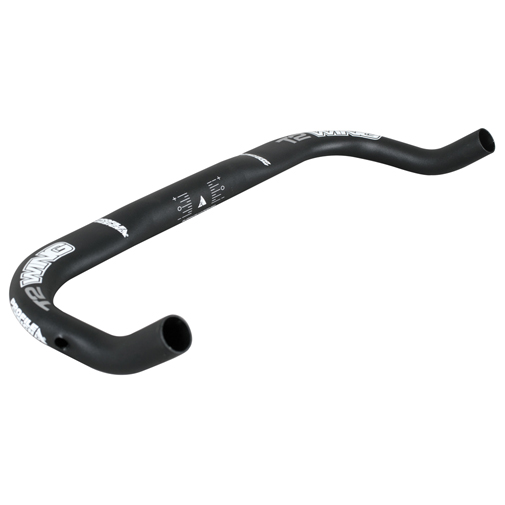
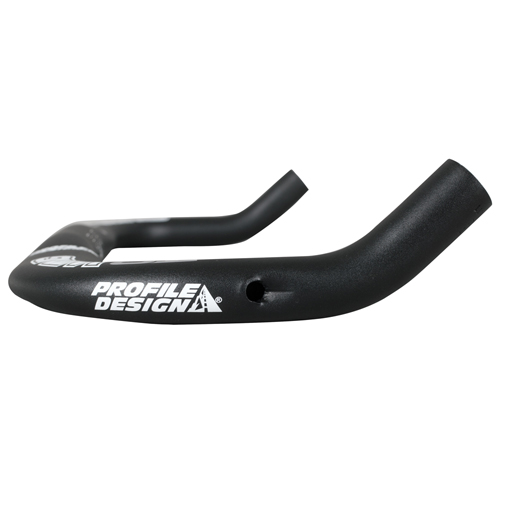
Cockpit is the last remaining item to upgrade on my argon 18 E-112,
Is there any merit in moving away from the stock T2+ Base Bar and Extensions?
Fit is not an issue with the current set up.
Does anyone have any literature on the potential savings from going to a Tri Rig or Zipp Vuka for example?
I’m assuming the watt savings are all from the base bar. Perhaps someone has done a wind tunnel test and knows the benefits from my current profile design set up?
TLDR: Are watt savings from base bar upgrades tangible?
Watt savings from base bar upgrades are absolutely tangible. If your bike has some version of the svet (or aeria), the gains will be less than if you have a T2 wing though. What is your exact basebar?
description:
With the option of buying your base bar and extensions as a kit-of-parts, riders of all levels and budgets are now able to fully customize their triathlon or time trial bike. The Profile Designs T2 Wing Base Bar gives you the same wind-cheating shape as a carbon bar, only in a more economical aluminum version. This 6061 aluminum wing profile was designed to mimic the wing shape of the carbon Viper Wing base bar. It’s a flat bar, meaning that there’s zero drop from the top to the bullhorns. In addition, the bar between the center clamp area and the bullhorns has been flattened (in line with the UCI 3:1 ratio) minimizing the profile of the bar in the wind. In terms of comfort, the T2 features a shape that’s easy to rest your hands on between efforts. Additionally, the reach to the bullhorns is 157mm. This allows you to position your hands on the bullhorns, much as you would on brake hoods, for either climbing or out-of-the-saddle riding. The ends of the horns were designed for plug-style bar-end brake levers. There are also cut-outs in the side, so you’re able to thread cables through the bar and then out the back. Likewise, there are also cut-outs for older clamp-style brake levers where you have to run the cable externally. The Profile Design T2 Wing Base Bar is compatible with a 31. 8mm stem. It’s available in a 40, 42, and 44cm width (measured center-to-center) and in the color Black. Please note that this bar weighs in around 250 to 265 grams depending your selected width.
Key line to me is “This 6061 aluminum wing profile was designed to mimic the wing shape of the carbon Viper Wing base bar.”
Seeing as weight savings are negligible, would a upgrade to something non- uni legal like a prosvet be worth while?
I’m assuming the watt savings are all from the base bar…
There’s a lot more to it than that. Besides the shape/size of the basebar itself, aero gains can be had from improving the flow around base bar/stem intersection (or lack-thereof, in the case of the integrated solutions), the stem (or stem area), the base bar/aerobar riser intersection, and the risers themselves. Different cable routing (mechanical and especially electronic) can contribute to aero improvements, as well.
For some perspective, here’s an aero test of the TriRig Alpha against several bars, including the Zipp Vuka Alumina. The Zipp is close to what you have, although without the upward kink at the end of the basebars so it’s like a little lower drag. And the stem used was not a standard “road” stem, but a TriRig Sigma stem. The TriRig cockpit tested is the first generation of Alpha, not the currently available version (Alpha X) which has shown even less drag in testing.
The delta between the Vuka Alumina and the Alpha shown here is likely quite a bit smaller than the difference between your Aerowing/T2 combo and the current Alpha X cockpit.