Originally published at: An Alternative Way Forward for Kona Slots - Slowtwitch News
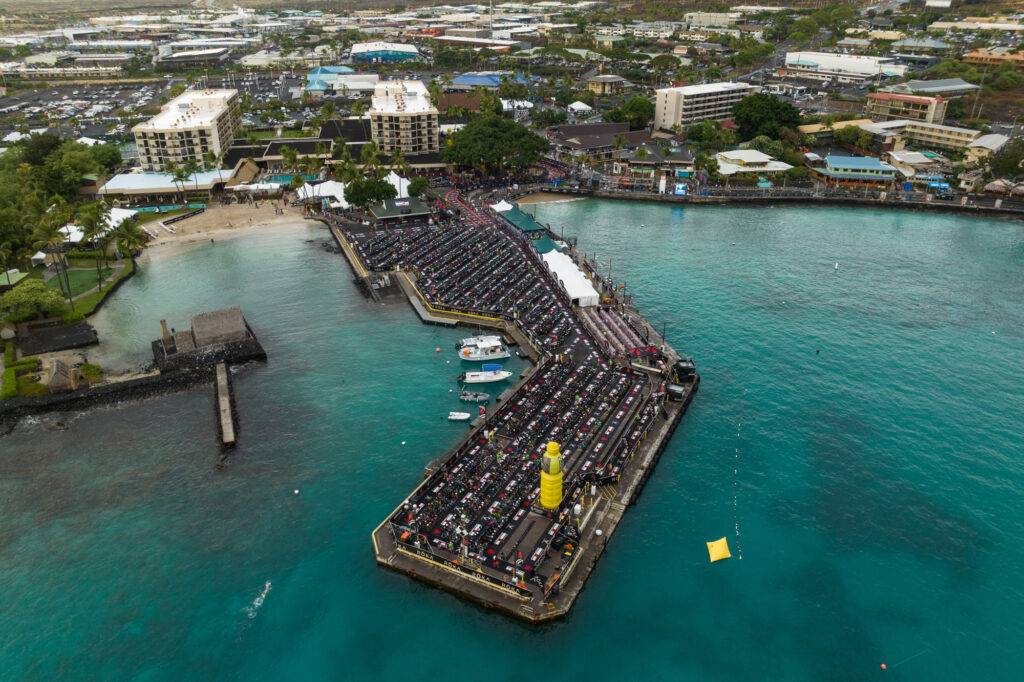
The headlines write themselves – just look at recent IRONMAN race results. After the first batch of fall races, most of the Kona qualifying performance pool slots are headed to men, with several races handing out a paltry single performance pool slot to the entire women’s field. Similarly, older men look like they’re dominating the allocation: at IM California, M55-59 represented 10 of the top 55 in the age graded results, while the entire women’s field only posted 4 athletes in the group. Similarly, at Chattanooga, M45-49 clocked in at 11 of the top 55 age-graded results, while out of all of the women racing, only 5 members. Meanwhile athletes posting top 10 overall times in younger age-groups are being left out of the slot mix.
Are we hallucinating? The new system was supposed to be fair. IRONMAN created this system “to reward the most competitive amateur triathletes.” On the surface, this looks like all it’s doing is rewarding the older men’s groups.
How Did We Get Here?
The issue is one of demand – what we are seeing is changes in demand for Kona slots between genders at the very top end of the sport, and maybe even for men with respect to age. Consider the following:
- Since the split of the world championship races, men have had one race in Kona, whereas women have had two;
- Men represent 75-80% of all current IRONMAN athletes;
- Taken together, this means that men’s opportunities to qualify for Kona specifically are somewhere about 1/6th to 1/7th that of women over the past three cycles.
In other words, men have been waiting for their chance to qualify for Kona and are now lining up to chase those slots. This isn’t a lamentation of ‘oh those poor disadvantaged men’ – we’re doing ok by all accounts. We have many more opportunities in this sport and fewer barriers to overcome versus our female counterparts. But it is worth pointing out incentives matter and the Kona/Nice rotation system created this imbalance. And the numbers show that we, as a sport, have spoken: athletes prefer Kona over everything else, and by some margin.
Coming back to the topic, in a system intended to reward the best athletes irrespective of age and gender, we should not be surprised if those who have been waiting the longest for their time to shine now show up most prominently. I don’t have any data to support this, but you could also argue part of the issue is that the age groups who have shown up most prominently in the performance pool (namely Men 50-65) are also those with the time and disposable income to take advantage of the opportunity.
So why is this an issue? On the surface, the optics don’t look great. IRONMAN is a public company and has customers to keep happy, across all age groups. It doesn’t bode well for them to have it pointed out that 97-98% of performance pool slots are going towards one gender, and most of those slots going towards Men 50+. It doesn’t feel fair – is the refrain, even if the men haven’t enjoyed the same opportunities to race in Kona as the women’s field since the world championship split. Even so: the new system was supposed to be fair, and this doesn’t feel fair is a powerful statement. And of course, athletes who feel like the deck is stacked against them may end up voting with their wallets.
Where Do We Go From Here?
There are a few options:
- IRONMAN could simply wait this one out. If it is due to overwhelming demand in a few age groups, this may resolve itself in a few races, or months. Whether IRONMAN wants to weather the storm is up to them.
- Modify the coefficients – IRONMAN could admit they made an error in how they calculated or approached the coefficients and try to remedy the situation in a face-saving manner before the spring races.
- (and/or) IRONMAN could put in guardrails to ensure that women get a minimum share of slots. Whether this is an explicit quota (say a 70/30) or floor (have minimum number of slots go to women) this would achieve the same thing.
Before we get to how we get out of this mess, it’s worth spelling out what we want to achieve with any Kona qualification system. I propose a few principles to guide the discussion:
First: qualifying for Kona via rolldown should be available to all, and all age groups should have relatively equal access. The best athletes, regardless of age or gender, should have similar opportunities to qualify. I’ll note that in an ideal world this would also include athletes outside the M/F binary. Boston figured it out by giving non-binary athletes a BQ standard to hit, and I’d like to think we’re a progressive enough a sport to be able to figure this out. While there aren’t enough representatives to form age groups, the performance pool is an opportunity to include these athletes.
Second, a small bias to under-populated age groups and for women is fine, and probably desired. This is both natural – you can’t give out fractions of slots to small Age Groups – and as well as a recognition that underserved groups do need encouragement and representation at IRONMAN’s biggest stage.
Third, qualifying for Kona should be an accomplishment of relatively equal weight for all age groups. This is the converse of the first principle – if qualifying is relatively available for all age groups, then it should be a similar accomplishment for an M55-59 as it is for an F30-34. This means also that it should be a similar difficulty.
Following from points 1-3, what this means is that Kona qualification, in aggregate, should roughly follow participation rates, with some bias towards under-populated age groups. Specific events, and perhaps maybe even seasons, may show higher or lower weight to some age groups, but overall, qualification rates should roughly follow participation. The history of the sport is one of proportionality, and this perceived shift is why things may not feel so fair at the moment.
The other thing to note is that for any system that uses coefficients based on performance, unless we measure from the Kona race itself (which is problematic, see below) we’re really measuring some function of participation. If we resolve to take the top 2% of all athletes, across all age groups and all events and geographies, our outcome will largely follow participation rates; the top 2% of athletes in a larger age group will be a larger cohort than the top 2% of athletes in a smaller one. You can come up with the most sophisticated model of human performance ever devised, but at the end of the day, you’re still measuring everyone against their peers.
The Future?
The current system isn’t perfect – it never was going to be right out of the gate, but the principle behind it has potential to be able to achieve what we want out of a qualification system. There were always going to be hiccups with any change, and groups favored in the old system will always feel left out in moving to anything different.
There are certainly problems with how the system was designed. For starters, IRONMAN based their calculations on the top 20% of all Kona finishers within a given age group category, which means that the system builds in rewards for age groups who don’t perform well in Kona (heat, wind), and those age groups who disproportionately include non-qualifiers (XC, Legacy). The first point favours older athletes, while the second favours older men in particular. Plus, when the calculations are due to be redone, any over-represented groups will receive lower coefficients – let in too many of one Age Group and the 20th percentile will weaken.
But, in my opinion, we can’t throw the baby out with the bath water just yet. Remember that this demand exists for a reason – men have been waiting since 2024 for their chance to qualify for Kona, and we’d be remiss if we suddenly put our thumb on the scale against them for no other reason than they’ve been waiting patiently.
And there are also benefits to the new system – namely that it isn’t the participation lottery that characterized the old system. Do well on an age and gender basis and you’re in – no matter who else or how many others show up in your age group. The new coefficient system works better against the old system because you’re not stuck behind another fast finisher in your age group for those in smaller age groups.
My Proposed Course of Action:
- Keep the current system and mostly let it play out for 2025-2026. If this is due to demand, then the performance slot distribution curve should resolve itself over time. If it hasn’t resolved itself by Texas, that’s when you (and IRONMAN) should panic.
- In the meantime, IRONMAN should consider throwing a few slots out to women from the recent fall races who came close to qualifying but were shut out – maybe 5 slots per race – as a goodwill gesture. This would probably involve finding another 50 slots on the pier. With IRONMAN’s stated longer-term goal of roughly 3000 athletes in Kona, this should be doable.
- In August (not in October), re-evaluate the coefficients based on overall participation as a target, again with a small bias towards women. This isn’t that hard – IRONMAN can set KQ coefficients based on what needs to be true to achieve the outcome they want. Or put another way – target a certain number of athletes in each age group on the pier and then work backwards from race data to figure out what coefficient you need to make that outcome happen. And since they know participation levels for their races well in advance, the new set of coefficients could be done well in advance of the next cycle.
- Give women a small boost in slots – somewhere in the range of +5-10% relative to participation (so ~25-30% of total slots based on today’s numbers). Some of this is necessary due to smaller age groups – but it’s also a recognition that we need to do better as a sport on gender balance and find ways to draw more women in, while also keeping the achievement that is a Kona qualification relatively balanced.
- And lastly, we need to give non-binary athletes a way in (and have them included outside of the current Open Division, which is non-qualifying). Following the example of Boston – we could just simply give these athletes the same coefficients as women and call it a day by letting them qualify though the performance pool. This may only be a few slots at the end of the day, but making sure we include a path for all athletes is something that needs doing.