Hello All,
https://pezcyclingnews.com/features/a-case-against-tt-bikes/?
.
Read that this morning. Very meh.
Might as well make a case against a lot of technology in the sport.
He is correct:
They’re faster.
They’re more dangerous (especially the faster you go).
They add cost to teams.
Everyone rides one when it’s appropriate or they can.
The advantage over your rival is less if they’re also on a TT bike.
The UCI won’t band them.
Bike manufacturers sell more bikes because of them.
But then, at the pro level even road bikes are dangerous - ask Richie Porte and a bunch of other riders…
If you want to limit technological advantages you take the Little 500 approach and let everyone ride the same bike. Go Cutters!
If you want to limit technological advantages you take the Little 500 approach and let everyone ride the same bike. Go Cutters!
This is also the Keirin approach, I think…,
Not even through the article but already have a huge problem here: “What’s not clear is this – if everyone saves 60-70 watts, or whatever the watt number is, why bother with a TT bike at all? It seems to me the point of technological innovation is to have an edge, a marginal gain (as Sir David might say) over your rival. If everyone has the same edge, it’s not an edge anymore.”
This author seems to think that every single TT bike & position is exactly the same. Not sure I need to continue the article.
Lol… Why don’t we ban drafting in road cycling? If everyone saves 100W by drafting the peloton then what’s the point?
Not even through the article but already have a huge problem here: “What’s not clear is this – if everyone saves 60-70 watts, or whatever the watt number is, why bother with a TT bike at all? It seems to me the point of technological innovation is to have an edge, a marginal gain (as Sir David might say) over your rival. If everyone has the same edge, it’s not an edge anymore.”
This author seems to think that every single TT bike & position is exactly the same. Not sure I need to continue the article.
Hello G. Belson and All,
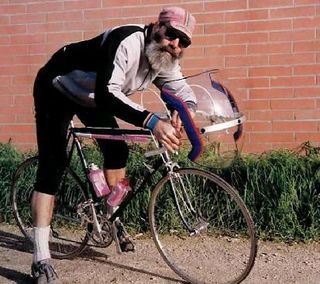
How about a fairing added to your road bike when drafting is not available? … like in in a TT or triathlon?
Cost effective and easy to implement …
When used in combination with a road bike in touring position (with the hands on the handlebar), a partial fairing brings the power required to overcome air resistance at 35 km/h down to 157 watts. This compares to 220 watts for an unfaired road bike in touring position, and to 176 watts for an unfaired road bike in (a much less comfortable) crouched position and wearing tight clothing. A partial fairing on a road bike thus offers a similar advantage to that of an unfaired recumbent (148 watts). With a headwind, the advantage of improved aerodynamics becomes even larger. One disadvantage of fairings is their sensitivity for crosswinds gusts. It takes some practice to get used to them.
https://www.notechmagazine.com/2013/04/ride-your-bike-faster-or-with-less-effort-using-a-partial-fairing.html#:~:text=Riding%20a%20velomobile%20(a%20recumbent,speed%20of%2035%20km%2Fh.
Not even through the article but already have a huge problem here: “What’s not clear is this – if everyone saves 60-70 watts, or whatever the watt number is, why bother with a TT bike at all? It seems to me the point of technological innovation is to have an edge, a marginal gain (as Sir David might say) over your rival. If everyone has the same edge, it’s not an edge anymore.”
This author seems to think that every single TT bike & position is exactly the same. Not sure I need to continue the article.
Riding a TT bike is a different technique in cycling, just like butterfly in swimming or skate skiing in XC skiing. Butterfly was invented as a faster version of breast stroke, skate skiing as a faster version of traditional diagonal stride. So maybe best to view riding on aerobars LeMond style like a different technical approach. Lemond did exactly what the first adopters of the new techniques did to other sports.
I like the faring idea. You could mandate that all teams use the same exact faring and thus keep it all the same. Cheap and easy.
Better yet, get rid of bikes altogether. We could use bike trainers and software and then create this video game like thing where the harder you pedal the faster you go… We can call it Swift or something that sounds cool like that.
I like it! The fairing can also act as a safety device and shield you in case of a frontal collision. You can get rid of the helmet and that way you offset the extra weight of the fairing. The only downside is that it reduces convection cooling so you can only push 200W before you start to overheat.
Hello G. Belson and All,
How about a fairing added to your road bike when drafting is not available? … like in in a TT or triathlon?
Cost effective and easy to implement …
When used in combination with a road bike in touring position (with the hands on the handlebar), a partial fairing brings the power required to overcome air resistance at 35 km/h down to 157 watts. This compares to 220 watts for an unfaired road bike in touring position, and to 176 watts for an unfaired road bike in (a much less comfortable) crouched position and wearing tight clothing. A partial fairing on a road bike thus offers a similar advantage to that of an unfaired recumbent (148 watts). With a headwind, the advantage of improved aerodynamics becomes even larger. One disadvantage of fairings is their sensitivity for crosswinds gusts. It takes some practice to get used to them.
When it comes to triathlon, I think the super tri bike is partially responsible for declining interest in triathlon. The expense and impracticality of tri bikes is going to turn off many potential participants who visit or watch a triathlon. The tri bike turned triathlon into niche sport.
In contrast in 1989 when I did my first triathlon the bike racks were full of regular road bikes. Getting into triathlon was simple: just swim and run a bit and get a simple, practical and versatile road bike. After my first triathlon, I upgraded from the Sears-bought ten-speed I got when in High School: I bought a steel frame Giant, at a tri shop. If there were any aero bars at the triathlon or the tri shop (I’d guess there must have been), I didn’t notice and was not introduced to them till a year or two later.
I’m still using the Giant frame as a fixed gear bike.
But triathlon is not the only hobby during the last 30 years that has become more and more about buying gear.
Think by this logic they should go the whole hog and revert to 1893.
No gears. No freewheel. No SPDs.
Solid tyres. Brazed steel only. 1 bike. Leather block on iron wheel rims with push rod actuated brakes. Fix it yourself when it breaks.
That would he fair sport wouldn’t it ?
It would reduce team costs too.
🤔
Oh… and we can all live in caves and die of the pox at 24 whilst we’re at it.
Give me 60-70 watts and I’ll ride a road bike all the time.
Meh. Hardly more than click bait.
Wait wait wait, I kept reading and found something I like!
“Brakes ruin aerodynamics so when you design a TT frame, forget about brakes and focus on speed and aerodynamics. When you finish the frame design, tack on something somewhere that looks like brakes to pass the UCI definition of a road bike. Don’t worry if brakes don’t work, you don’t need brakes in a time trial.”
#RimBrakes4LYFE
But on a more serious note, while his argument is ignorant at best, I do wonder if we triathletes would be better off is UCI did away with TT bikes in pro racing, that way bike manufacturers would not longer be held to silly UCI rules with frame making. The TT bike wouldn’t go away, triathlon still exists. Does give me some pause…
But on a more serious note, while his argument is ignorant at best, I do wonder if we triathletes would be better off is UCI did away with TT bikes in pro racing, that way bike manufacturers would not longer be held to silly UCI rules with frame making. The TT bike wouldn’t go away, triathlon still exists. Does give me some pause…
I think banning the TT bike would just bring back the full aero road bike like the Venge. Let’s face it the aero genie is out of the bottle and nothing short of a full on ban on innovation is going to change people’s desire to get a technological edge.
Let’s think of the practicality of it. Aero is faster. If TT bikes are banned. All time trails will be raced with virtual aerobars / or inward titled hoods with long extensions.
Racers will attempt to gain every advantage they can. they won’t get out of position through a corner (would you lose 1second to race safer?). UCI would have to put hard rules on position, etc. Then… I am still sure someone will find a “unsafe” way to skirt the rules.
I think it’d be more effective way to keep bike races safer is:
Will be much safer!
It’s difficult to make racing safer, when all the racers have safety as the last thing on their mind. Good luck!
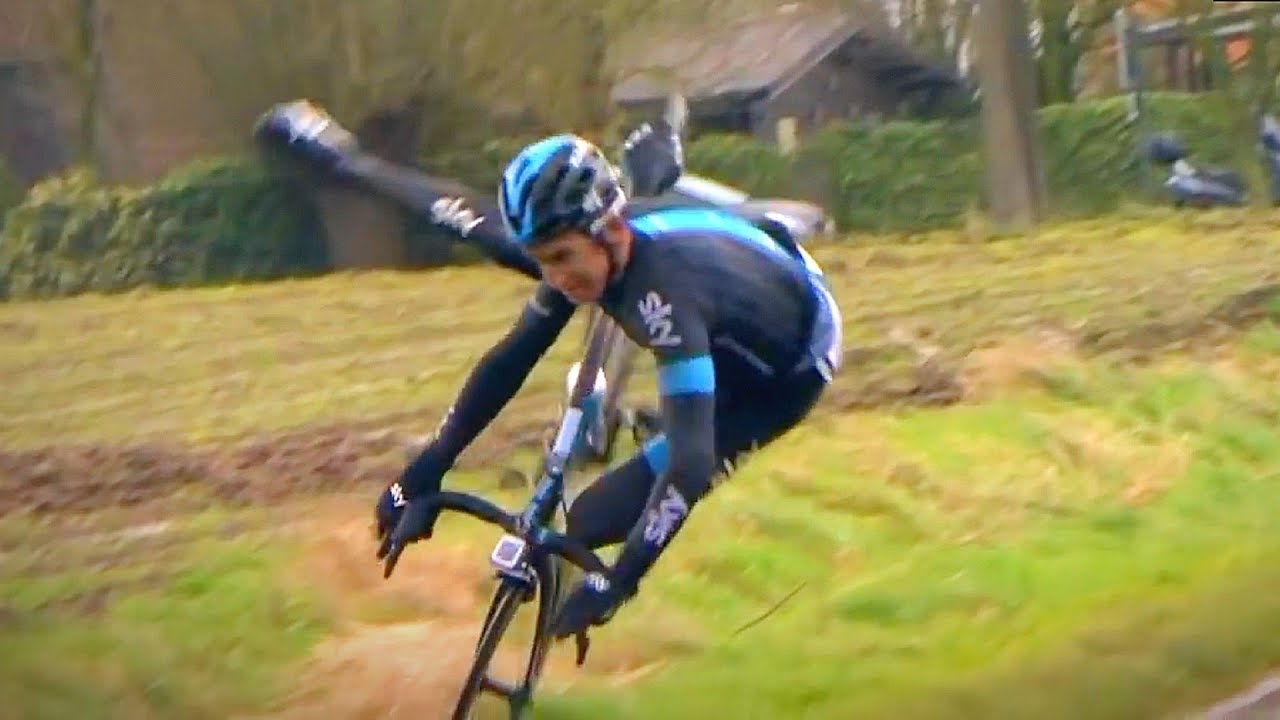
P.S. we should also ban Geraint Thomas, because he didn’t get the memo that road bikes aren’t affected by gusts of winds
But on a more serious note, while his argument is ignorant at best, I do wonder if we triathletes would be better off is UCI did away with TT bikes in pro racing, that way bike manufacturers would not longer be held to silly UCI rules with frame making. The TT bike wouldn’t go away, triathlon still exists. Does give me some pause…
I think banning the TT bike would just bring back the full aero road bike like the Venge. Let’s face it the aero genie is out of the bottle and nothing short of a full on ban on innovation is going to change people’s desire to get a technological edge.
