Zipp Questions

Almost a year after buying my P2C I’m ready to buy a set of race wheels! I am planning on getting a set of Zipp 606 clinchers.

According to the 2007 Zipp catalog the rims for 2007 are stronger than last year (“Our ITC carbon lay-up technology is the envy of the cycling industry and we have further upped the ante by increasing damage tolerance of the rims by nearly 50% over the previous design for 2007.”) Would this apply to the tubular wheels only?

I will have to order the wheels, so how will I be able to distinguish the 2007 from older wheels?

Also, according to their website they consider the 404 OK for training, getting 3 stars, but not the 606, getting zero stars. Is the 808 rear not at all suitable for training? I don’t plan on training all the time with them, but I believe in training on what you plan to on race on.

Zipp sells only 21mm tires (tubular and clinchers) and it seems that it’s the recommended size to use (“21mm width is the optimal blend of aerodynamics, rolling resistance and durability”). I wasn’t planning on using Zipp tires, but I’m curious about the 21 mm vs. 23 mm. Any comments from anyone with more experience?

Thanks and Happy New Year!

I have also owned my P2C for about a year and am also looking at race wheels…so while I don’t have more experience, I do have trouble figuring out why Zipps command a 100%+ premium over HED Jets for example…

I’m baffled as to why people have the urge to train on their carbon racing wheels. Race wheels do not require breaking-in like shoes, or saddles do. As long as you test the wheels to make sure everything’s Ok before a race, you’ll be fine.

You can tell the difference between the 07’s and the 06’s by-price, and price alone. The 07’s are considerably more dough than the 06’s.

As for tires, there is no reason to go for Zipp’s if you can buy tire-specific brands like Vittoria, or Continental. Get a pair of tires that have been tried, and tested by decades of riders.

first there is no correct answer to any of your questions (well maybe the first two), but…

According to the 2007 Zipp catalog the rims for 2007 are stronger than last year (“Our ITC carbon lay-up technology is the envy of the cycling industry and we have further upped the ante by increasing damage tolerance of the rims by nearly 50% over the previous design for 2007.”) Would this apply to the tubular wheels only?

No idea, but I’d imagine that it would apply to all their rims tubular and clincher, although the clinchers are usually pretty bombproof for a race wheel so I don’t think you have all that much to worry about either way. Zipps are fragile compared to most training wheels but when’s the last time you found a 60+mm deep training wheel that weighed under 1500grams… It is nice to see that there is continueing evolution in the Zipp line up for 07’

I will have to order the wheels, so how will I be able to distinguish the 2007 from older wheels?

No real idea, maybe decals?? If there is a big change and you can score the 2006 models for a better deal, I’d be all over that! My 2003ish 404s are still serving me well

Also, according to their website they consider the 404 OK for training, getting 3 stars, but not the 606, getting zero stars. Is the 808 rear not at all suitable for training? I don’t plan on training all the time with them, but I believe in training on what you plan to on race on.
**
I’m guessing the zero star rating on the 606 is more due to it’s depth than anything else. And while 404’s are okay to train with and you should train (occasionally) on what you plan on racing with, realize that the lifespan of a Zipp wheel, or any uber expensive and light racing wheel, is a good bit shorter than your heavy bombproof aluminum hooped wheels. Train on them a bit but just enough to get used to them, don’t go crazy. And on the 606, sure you could train on them and they’d be no worse for wear than the 404 but all that extra sidewall might be a handful in really windy conditions (hence the zero stars). I take my 909 set out for a shade down run or two before the first race of the year but once you get the feel for how they handle, you really don’t need to ride them all that often.

Zipp sells only 21mm tires (tubular and clinchers) and it seems that it’s the recommended size to use (“21mm width is the optimal blend of aerodynamics, rolling resistance and durability”). Any comments from anyone with more experience?
**
Based on their testing this is correct, based on others it’s definitely in the ballpark. Most tubulars are in the 21-22mm size range anyways so this is seldom a problem. I’ve run 19mm tires quite a few times but honestly feel they are a bit too harsh for me and would much rather stick with the 21+ sizing.

As to why the Zipps are twice the money of a HED, it’s for a lot of reasons. All the reasons do make sense but the real question is are all the reasons reasons that you would pay double the money. If you can afford Zipps they are sweet, engineered to near perfectionist standards wheels. If you can only afford HEDs (since we’re comparing Zipps and HEDs), it’s not like you’ll be missing out on much as in actual performance terms and what you feel terms they will be very very close. It’s the same thing with cars, a Subaru WRX will smoke many BMWs for way less $$$ but when it comes down to the nitty gritty, the BMW is a lot more refined. Okay, bad metaphor but maybe you get what I mean.

I’ll try to answer some of the questions bob had but mostly Tai is right on.

The increased impact strength is just for the tubular rims, the clincher rims are already nealry bullet proof and are quite popular with the 29" mtn bike which more than proves their durability. The 2007 tubular rims see about a dozen layup and material refinements which increase the strength with no weight penalty over the 2006 version.

The zero stars for the 606 for training was a catalog mistake, it should have been 2 stars. We only recommend training on your aero wheels if you are training with power. Since most people train by speed or on group rides, training with your aero wheels just makes you ride less hard and burn fewer calories than training on std wheels, so we discourage training on any aero wheels unless you are training exclusively by power.

All of our rims are designed around a 21mm tire. When working in the wind tunnel or on the computer you have to choose a tire width to design around and we pick 21 as it is a nice blend of aerodynamics and low rolling resistance, plus it is a widely available size. We were the first company to really do this as previously all aero wheels were designed around 18 or 19mm tires, which I feel are just too narrow, two flat prone, and must be run at too high a pressure to prevent pinch flats that they ride harshly. You will see that most aero wheels see as much as a 20% decrease in efficiency when used with a 21 over a 19mm tire, whereas all of our stuff was designed around a 21mm tire to begin with and in most cases the Zipp with 21mm tire is faster than any other wheel with a 19mm tire. In testing done by Tour Magazine in Germany 4 of the top 5 wheels are Zipps including the top 3.

As for the pricing debate, this raged on here a few weeks ago and I think is largely the result of people comparing apples to oranges. The Hed Jet is simply an aluminum wheel with a carbon fairing bonded to the aluminum rim to add an aero component to the wheel. This is a very inexpensive way of making an aero wheel and has been used by numerous manufacturers to build an aero wheel at a very low cost. The Jet is simply a price point aero wheel and if you are going to make a comparision, you need to compare it to the FlashPoint wheels from Zipp, which at the same price point offer a better hub, DT spokes, and a fully structural carbon rim with welded aluminum hoop utilizing two of the patents also used in Zipp wheels. I think that when you put the Jet up against the FP wheels, the FP wheels are the clear choice, but that can be debated. A more fair comparison would be between the Zipps and Stingers, although the Stinger uses the same hub as the Jet, which is not quite as nice as the hubset used in FlashPoint. The Zipp wheels use a hub which is made in the USA and to a level of precision higher even than Chris King, and actually costs slightly more than the King hubs due to the ABEC5/grade10 swiss bearings, these bearings alone cost more than a good hubset made in Asia and are higher grade than most ceramic bearing upgrades that people are offering. Combined with the Sapim CS-ray spoke, the world’s most expensive and most fatigue resistant spoke, and the lightest handmade rims available and you end up with a very expensive wheelset. Every component is manufactured entirely in the USA from US materials except for the spokes from Belguim and Bearings from Switzerland, we use absolutely no Chinese labor or components, in fact two of the carbon fiber grades we use are considered ‘defense critical’ and only available in the US. This does keep cost high, but allows us to innovate continually and revise and improve much faster than using overseas manufacturing. For example, we made more than 10 laminate revisions this year as we found new materials, or new layup concepts, we can continually improve and innovate as our engineers are located 20 feet from the production floor, compared to working in Asia where you innovate only every 3-5 years. In the last 5 years we have seen 4 rim shape revisions to the 404, the development of the 808, 5 generations of 303, the creation of dimpled composite technology and with it the tooling manufacturing technology necessary to manufacture this, the first use of ceramic bearings in the bicycle industry in 2001, we were the first company to push for the development and then adopt butted/bladed spokes, and numerous others resulting in more than a dozen patents issued and pending. The hubs are another example, we made over 20 improvements to the hub this year including the bicycle industry’s first use of wire EDM for manufacturing of the drive components making the highest precision hardened components ever to be used on a bicycle in components that are rated at 60-62 Rockwell C with precision greater than 0.000002"…3 years ago this was technology so expensive is was only being used for surgical implants and missile guidance hardware manufacturing…but the result is that the rear is now only 176 grams and the front 80 grams and roll with the lowest rolling friction of any hub ever made, and in their stock form beat out every currently available ceramic hub upgrade.

So in defending our pricepoint I think that you have to realize that we are doing something completely different from anybody else. We are creating, designing, and manufacturing our own product from scratch in our own facility, with an eye on absolute refinement, highest possible precision and greatest efficiency…and not focusing on hitting some specific pricepoint where we say we want to make the fastest possible wheel for X dollars…that is what FlashPoint is for, with Zipp we go as hard as possible to create and develop technologies to be the best available without a primary consideration on cost, so when you buy Zipp you know that what you are paying for is the absolute height of technology available at the time you spend your money and nothing less.

cheers
josh
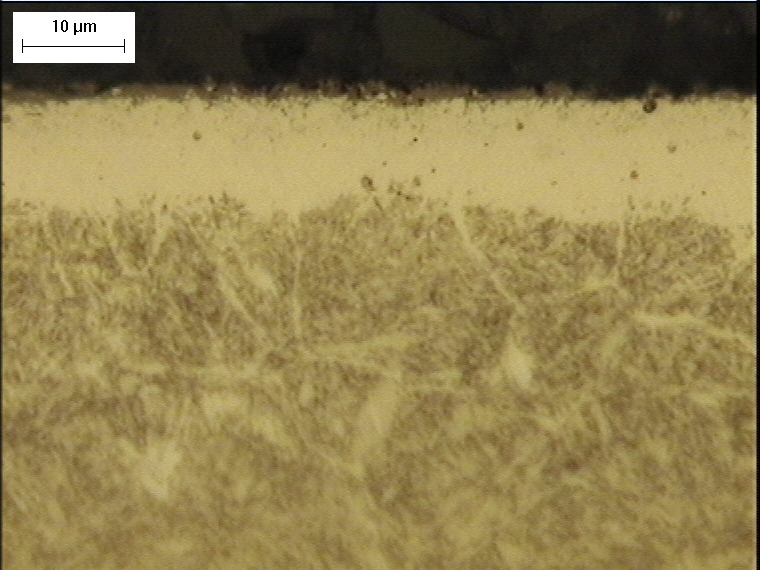
**highest precision hardened components ever to be used on a bicycle in components that are rated at 60-62 Rockwell C with precision greater **


zipp quote


well i just wonder if i see those constant stream of words from wich planet you are you coming

made by ada already in 1992 as also electron scanned well see our website
http://www.prorider.org/images/micro1.jpg
.

Josh, can you release the Crr figures for the new tubbies?

I second the request for crr data or information regarding the tires. Does not seems to be any data, or even ST conjecture on the subject , available.

The Crr data we have is all for unglued tires, so probably isn’t meaningful, but i can say that the new tire tests out to be 3-5% better than the old tire, and the new manufacturer has proven that they are much more capable in making the tires very round. Seeing as the old tire tested as one of the best tubulars available in the biketechreview.com testing with a Crr of 0.00268 with glue, our testing without glue gives us a theoretical 0.00255-0.00263 Crr

The new tire is also available in a 290 tpi open tubular version, which is very, very nice and has put numbers down equal to the tubular with a latex tube.

As for whatever it is that Cees is talking about above, I’m not sure what some random grain structure micrograph is meant to show as it tells us nothing about what the part is or to what precision it was manufactured. While it ceratainly is very possible that ADA was doing something similar in 1992, but they definitely were not doing it in mass production, it is far different to make 1 of something than to productionize it…not to mention that the advanced 5 axis controllers for wire EDM that can maintain the 20 millionth of an inch tolerance have only been available for a few years and even now are only available at rediculous cost (we run spinal implants in ours at night to help pay for the machine…), and the alloy we are using to make ratchets and pawls in the pre-hard condition of 60-62 RC, then machining to finished specs, are then ion plasma nitrided to 72+ RC on the surface was only declassified from military use in 2003, so whatever ADA was doing then is surely different than what we are doing now.

I just got mine in the mail yesterday. So we shall see… I will try an unglued test first. I actually don’t put a lot on unglued tests though. The way the different base tapes slip on the rim is likely to overwhelm differences in how the casings flex. In previous tests, the Crr numbers came out 3-5 watts higher with unglued tires. I rejected one tire based on an unglued test, and then subsequently discovered that it performed very well when glued.

– jens

p.s. looking around my garage, I’m starting to wonder how much of Josh’s salary I pay. What with the 404s, the Z4s, the 808s, the clincher disk, the Vuka bars, the tire… :wink:

If your racing these wheels you could consider going for a combo set like 808 rear/404 front & tubulars might be a better choice. SOme of the fix flat products out there are pretty good these days.

Josh,

I’m not denying the smoothness of your hubs, but when ever I carry out a roll down test on my 404’s they always perform the worst of all my wheels. This has nothing to do with hub performance but simply down to imbalance in the rim weight, (the extra weight around the valve hole).

Do you have any data or personal feelings on how this imbalance affects the wheel on the road??

Jon

isn’t he already considering the 606 option?

Sorry, Didn’t realize it had a name (606) guess that makes sense.

“Seeing as the old tire tested as one of the best tubulars available in the biketechreview.com testing with a Crr of 0.00268 with glue, our testing without glue gives us a theoretical 0.00255-0.00263 Crr”

Thanks for the info, it will be interesting to see how it tests, I’m putting in my guess of .00261 Crr.

well as a cnc programmer i can to 100.000 with those specs since its made with a temp controlled machine ,yes even a 5 axes machine hence was even as cad /cam engineer in state gouverment paper in 1988 and military well i do not not about USA since in do not live there but ,since we produced for F16 must be so but USA laws are not here (strange that then they order that stuff in europe ,i guess they could not do it back then in USA otherweise i have no explanation for that) and well if you see the roughnees of the pic you also can see its precision (at least i have the know -how to look at it and interped right) and for you information we never gone mass produce its not in my intererest in do not want to be a slave of my work and for your info hrc was 68 -69 hrc and hardness surface is patent we developed with philips space lab , and extremly high is not always better but with special contructed metals we can go up to 80 HRC and for you info we made tousends but josh i really appriciate what you all are doing ,but do not say we are the best in evry windtunnel measurement you are beaten what i get to see and if you would please publisch CDA (or CXA what some tunnels call CDA) and in SI system as you know orderded by NASA only system to use (since they lost a sateliet,just because of a conversion problem they had place a dot a wrong spot and a sensor was line produced)
.

“The Crr data we have is all for unglued tires, so probably isn’t meaningful, but i can say that the new tire tests out to be 3-5% better than the old tire, and the new manufacturer has proven that they are much more capable in making the tires very round. Seeing as the old tire tested as one of the best tubulars available in the biketechreview.com testing with a Crr of 0.00268 with glue, our testing without glue gives us a theoretical 0.00255-0.00263 Crr”

The Zipp tubular test that Josh refers to is the average of two tires which had been glued and raced for ~ 15 monthes prior to the first Crr tests on rollers. One was mounted on a Zipp disc and the other on a HED3 with ~ 700/500 miles on each. These tires are worn in and are mounted in “old/dry/hard” glue. Sunday I mounted a new (2006) Zipp tubular on a Mavic Reflex rim’d wheel (2 coats of dry Conti glue on the rim and one fresh coat of glue on the tire in an attempt to speed up the curing process - probably not the best way to do it - the fresh coat as the second coat on the rim would probably work out better ??) and tested on Monday one day after gluing. Based on 2 runs of 2 minutes each the Crr was 0.00299. I plan to retest periodically for the next few monthes. I’m currently running a separate test on a VF Carbon tubular - the Crr has dropped ~ 0.0002 in 90 days (reglue at 30 days to replace valve extender - 80 miles on tire). No plans at this time to test the '07 Zipp tubular although I should be receiving 2 Zipp clinchers in the mail today.

AFM

While it definitely can be a challenge understanding cees posts, I think he actually confirmed a couple of things:

  1. 5 axis milling was available in the U.S. circa '88. However, probably NOT in the bike industry (we thought we were on the “cutting” edge linking our CAD directly to the milling machine, wire EDM, stereolithograpy, etc. at the time).
  2. Josh mentioned they are the only ones who have done what they have done in a mass production environment. MUCH different than doing hand built (as cees confirmed). This is also pretty admirable.

Now, if we could get Zipp to start shortening their design/test cycles by using a virtual testing environment where they could change ply angles, etc. at the drop of a hat, then I’d really be impressed. (how is that for a hint Josh? :slight_smile:

I have also owned my P2C for about a year and am also looking at race wheels…so while I don’t have more experience, I do have trouble figuring out why Zipps command a 100%+ premium over HED Jets for example…

Well I can’t compare the Zipps to Jets but I own a set of HED3s and will happily pay the 100%+ premium for Zipps. The HED3 are shit! They are not really round, they wobble (the front wheel is a nightmare) and the ride is NOT smooth. When I mentioned this to my lbs he told me all HED3s are like my set and complaining this to HED would make no sense. I will never ever buy anything from HED again.

Frank

i have to say that I’ve long been one of the skeptics about the price of Zipps vs. other wheels.

Thanks for sharing some of this information…its becoming more and more clear to me how much engineering and attention to detail go into your products. The pricing now makes more sense to me.

But I’m still trying to answer the question whether my abilities warrant the extra $$.