Are you saying you don’t think you have sealant in the current Schwalbe tyres?
FWIW I ran GP5000S TR with Latex tube for a race on Sunday and seemed plenty fast enough.
Are you saying you don’t think you have sealant in the current Schwalbe tyres?
FWIW I ran GP5000S TR with Latex tube for a race on Sunday and seemed plenty fast enough.
Yea our points are clear. We are just here to educate people on the tech. I think your thought process and your direction works just fine. More importantly its what YOU want to do and its safe.. So RACE HARD and have fun 
The whole thing is baffling to me and I resisted responding to this because I’m fully aware I’m just keeping the debate going.
First the claim is that like 2 PSI over the limit that the tires will explode and that anyone who’s not a bike nerd will crash fore sure using hookless. (Thanks Josh!)
ST tests this theory and inflates them way over…. and none come off the rim.
Then the claim is that it’s because it wasn’t with the right tires.
ST tests it with “infamous” tires …. and none of them come off the rim.
Then the claim was that it’s because they were not being ridden.
ST rides them on rollers over inflated - and none of them come off the rim
Now they didn’t come off the rim because they didn’t have sealant in them?
I’m not trying to be a hookless advocate here. I don’t really care - I have wheels that are hookless and some that are not. I ride my hookless wheels and have had no problems. But I think it’s safe to say that the claim that a slight over inflation of a hookless rim is going to kill someone is at the very least overblown - pardon the pun.
On top of that, how many hookless wheels are out on the road right now? And as far as I can tell there isn’t a flood of people reporting their tires exploding. It seems to me it wouldn’t take more than a few for a massive recall to be underway.
If the debate is just that they offer no value and have issues with lower PSI limits - sure. I get it and I don’t disagree (especially as a 200+lb person). But I think it’s safe to say that the max PSI limit has a much larger margin of error than people seemed to fear
I doubt I could burp one of my tubeless CX tires on a Kickr Rollr (which is what this test was performed on, not “rollers”) if I tried, and I could absolutely do so outside without trying all that hard, and I’m pretty sure I could do so on a “real” set of rollers. With a lot more effort, and probably a really catastrophic impact on my training room.
I know I’ve been forbidden from commenting on the methodology behind these tests - so Eric may well pull this comment or ban me for doing so - but I think you’d be hard pressed to pick a device or method that is less likely to provide the type of conditions that would normally be associated with tubeless failure than the one chosen for this test. I get why - falling off a moving bike/traditional rollers just flat-out sucks - but it is what it is.
That being said, yes; one can absolutely conclude from the work done in this testing that these tires on these rims at these pressures are unlikely to fail when used on a fixed front wheel, large diameter roller. That definitely ain’t nothing, it just shouldn’t inspire any kind of false confidence. Ditto the initial overpressure testing, which is actually fairly useful as it points towards a reasonable safe margin for pressures in excess of etrto guidelines when used to bead tires on initial install (which hasn’t actually been my personal experience, so it’s nice to see that these products are better in that regard than others that I have used).
None of this does much to speak to what degree any of this is actually applicable towards systems usage in actual conditions of operation. To his credit, Eric isn’t claiming that it does.
I think what I’m hearing you say…
You couldnt help yourself anymore and needed to join in the fun
You’re worried about your CX tires coming off.
You think that having 4 rollers is better then 2
You’re still mad that you where unwilling to offer up free advice on the testing protocol and you’re blaming me..
Oh and we did “Something” that you feel is worth while.. 
”I know I’ve been forbidden from commenting on the methodology behind these tests”
And yes when you are unwilling to help when asked.. You have ZERO say in the end result.
The
Projection is a helluva drug.
So is being an asshole..
I hate it when mummy and daddy argue in front of us.
#keepitfun
Who’s the mom?
I still don’t get the point of the faux roller test.
That’s ok ..
If I may. The point I believe trying to be made is that if someone is testing hookless (you), you should look to do it in a way that doesn’t just copy what the brands do.
I get you’re not doing that OVERALL, you’re not copying everything protocol wise. But using sealant is an unquestionable thing that everyone does IRL out on the road, so testing should follow suit as opposed to saying “the brands who already test this don’t use it, so I won’t.”. To assume it will have no effect is not the proper thing to do in a testing situation.
For instance now when I see your results, I think: well, there’s only a finite amount of space inside the tire. Pumped up to your super high pressures none came off, but what if the tire volume also had 50 ml of sealant in there? Wouldn’t that artificially increase the pressure bc the volume of space the air can occupy is smaller, since the sealant is taking up some of the available space?
I do not think adding sealant will make your tires start flying off. I just think it’s an OBVIOUS improvement to the testing protocol and removes a major asterisk in the results.
Personally I think the brands dont use it in testing bc of the mess/cost/effort involved to use it, and the idea they want to test it without for those reasons stated is a clever diversion to the real reason.
First of all one puts the sealant into the tire “before” pumping them up, so it would be the same pressure either way. Secondly aren’t we all thinking that the sealant will make it harder for a blow off, and if none blow off without it, doesn’t that test become redundant?
Correct…
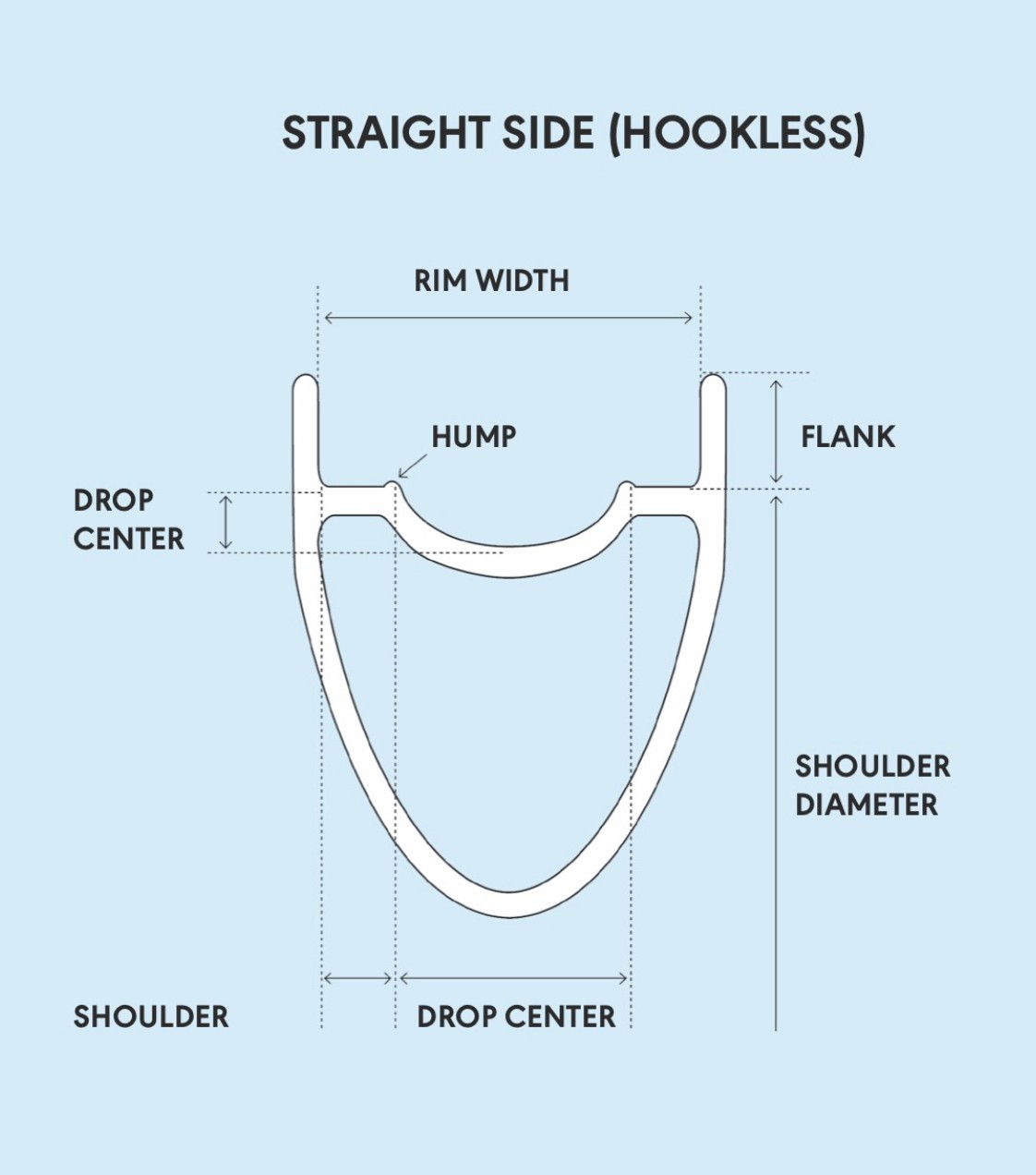
Since you seem adamant about not using sealant, could you at least specify the bead seating diameter of the wheels, and if any (and how much) rim tape is used.
If you don’t have calipers large enough, the shoulder diameter can be accurately measured using 100 pound test fishing line around the inner seating circumference, and then dividing that by 3.14159
Firstly, I’ve personally spent noi time, money or sweat to investigate this, kudos to @E_DUB for at least trying.
The sealant thing was related to if the sealant is still liquid, does it act as a lubricant between the sidewall and the tyre? Perhaps it does for 10mins, 10 days or 10 weeks? Clearly a potential issue in the latter, not in the former and maybe for the middle.
I admit, I have been slightly reassured by the tests here, but still not to the point I’d choose to buy any hookless wheels at this point.
I have given you all the information about the wheels we used in the article. if you need more.. click on the links.
Whats your assessment of the thread getting 682 clicks in 9 days? Is that the numbers you are hoping for on ST ? seems like we have 15 different users that have not checked out of the hookless debate. ( even marc has given up)
Okay. Ill 100% fall on my sword there, that explanation made sense and answers that question I had. I’m an idiot on that one.
Id still venture, the fact that testers (you, and brands) are purposefully testing the system in a configuration that does not match what’s used in real world…is categorically incorrect. It just is. It’s an asterisk. It always will be. Why not just use it??