Racing with a snorkel

Like most my races. My first thought when I see something out of place I go “that guy is either very fast or a doofus.” (Like the guys I see doing the events in speedos, fat bikes, costumes, etc)

Then I don’t think about them. If I see them pass me I say, man looks like that guy is fast so he can do whatever he wants.

I just couldn’t care less at a race about somebody with a snorkel or any number of other things. I’m so wrapped up and dealing with my own race crap I can’t imagine worrying about somebody else.

Snorkels add more dead space (the volume of a breath that doesn’t participate in gas exchange). This causes you to breathe in a higher percentage of carbon dioxide than ambient air would have. THAT is what primarily increases the work of breathing when using a snorkel. Unless your doc is a pulmonologist, I doubt they’d consider this.

https://www.ncbi.nlm.nih.gov/pubmed/12740732

I’ve swam 100 of thousands of yards in the pool with a snorkel. I couldn’t sprint faster with one but for the Ironman pace swim I bet I may be faster with one. Never tried it in open water or a race so can’t comment there.

I just saw a youtube ad for the power breather and it comes with different end caps for different situations. There have been many races where people have been using a snorkel, never heard anyone say anything bad about them. There was one lady who used one and was just recovering from a serious illness, we congratulated her for getting out and having the courage to get back into training and racing.

Hello
like Monty and Tim, I’m surprised by your doc request.
The main reason is that from most studies, swimming is requesting much less air than biking and running, at same muscle effort level. Because arm muscles are lighter than legs muscles ? Because lack of access to air push anaerobic ?
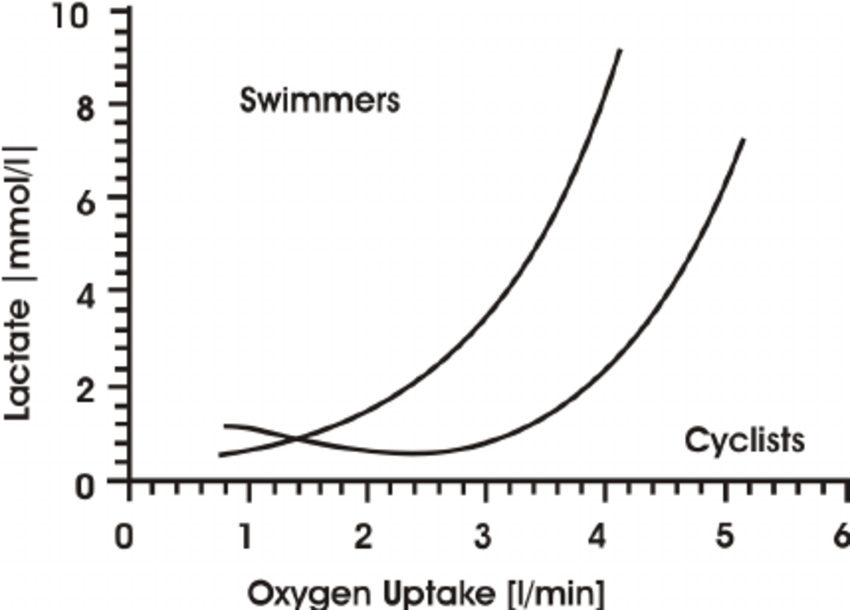
Apparantly, from research studies, elite swimmers only use 3 liters oxygen per minute at 4mmol/L lactate (1 hour max effort), vs 4,5 liters for bikers.
At 52 years old, with my average lungs and heart and blood, I can’t support 4.5 liters for an hour (neither 5mn), but 3 liters is OK.
And with my small swimming muscles (if I do not overuse my legs), 1.5 liter is probably enough.

**Consequence is that swimming is putting less pressure on lungs and cardio system than biking and running. **

**Personally I noticed that on both breathing and BPM. **

On the other side :
yes, in tri, I probably swim at a lactate level higher than bike and run, as it is a shorter part.
maybe snorkel giving constant access to air is better for you. Necessary ?

Either you want to follow your doc, and tri “pre DSQ”, or you can test normal breathing (maybe limiting leg use) and see another doc with swimming experience ?

Hope you will find solution to overcome the issue. Good luck !

I find this hard to believe. My HR is just as high at end of the swim in an Oly Dist race as it is at end of the run, e.g. about 90-95% of max HR. And, if swimmers were truly using only 2/3 the O2 of BR guys, then how come they burn so many frigging calories??? AFAIK, calorie burn is directly proportional to O2 usage. Phelps allegedly ate 12,000 cal/day, which is no doubt an exaggeration, but OTOH I bet MP and other top swimmers do eat 7000-8000/day when in heavy training. I am suspicious of the validity of the flume-based measurements for swimming b/c it would be almost impossible to swim all out with all those wires and tubes attached to you. I suspect the guys/girls in the studies can go much harder with “no strings attached”, so to speak. :slight_smile:

Hello

I was surprised when I found the study and its results, but it explained what I experiment personally.

Lactate vs VO2  pour top-level-swimmers-and-cyclists.png

In the pool I am slower with a snorkel.

I assume this is due to added hydrodynamic resistance.

If you’re competing with me in a race please use a snorkel.

Someone spent 30 days in the ICU which left them with 70% lung function and your first thought is about beating them at a race. Nice

I suspect it’s because you’re horizontal so it’s easier for your heart to pump blood throughout the body. Cycling/ running your heart has to work harder to get blood out of your feet. No scientific basis for this, just a thought i had.

Hello

can’t find the study again, but this one give similar results, see figure 1 :

https://www.researchgate.net/...AFTER_FRANCAUX_MODEL

Bikers : measured on ergometer cycle (not in this study, figures from another study referenced)
Swimmers : similar results from ergometer cycle test and real swimming tests (both done, from this study and another). For real swimming, only blood test done, no oxygen masks.

Swimmers tested are Olympic team level, apparently.

4mmol/L (approx Lactate threshold) is reached :

  • between 3 and 3.5 O2 L/mn for swimmers
  • 4.5 L/mn for bikers.

Very significant difference !

Several possible explanations :

  1. mass muscle involved in swimming is lower (if not overusing legs) leading to less pressure on cardio-vascular system

  2. swimmers tested have a more “sprinter profile”.
    I found another study comparing runners : marathoners vs sprinters, and marathoners typical lactate curves are similar to bikers (no surprise here) while sprinter typical lactate curve move up much earlier (no surprise again, less aerobic capacity).
    However, 800m or 1500m swimming is not “sprinting”, more like pursuit or a short TT. So this cannot explain the difference.

  3. up to you…

Snorkels add more dead space (the volume of a breath that doesn’t participate in gas exchange). This causes you to breathe in a higher percentage of carbon dioxide than ambient air would have. THAT is what primarily increases the work of breathing when using a snorkel. Unless your doc is a pulmonologist, I doubt they’d consider this.

https://www.ncbi.nlm.nih.gov/pubmed/12740732

You could exhale through your nose while using a snorkel for swimming. Or, you can use the powerbreather snorkel, which vents your exhale out the mouthpiece instead of pushing it back up the snorkel.

Correct, the Powerbreather snorkels bring O2 in the top vents and you exhale CO2 out the bottom, so it’s always fresh air. You can also get different resistance like medium and power to help simulate hypoxic training which of course is subject to debate with many coaches. I’ve found swimming with the Powerbreather to translate to my other sports.
https://www.powerbreatherusa.com/pages/compare-chart

or…due to less o2 coming in via breathing, they go anaerobic sooner and as a result lactate builds up more quickly.

i am having this problem currently…still breathing in same amount of air as before(cycling) but not able to push as much o2 through the system as before due to degradation of heart function(hopefully still recovering). i go into o2 debt sooner now than i did before heart surgery

try cycling to peak performance while breathing at a swimming rate and see when you hit 4mmol

You missed my point. Sorry I was subtle.

People who criticize others who use snorkels in competition should consider how restrictive they are.

I believe using a snorkel is a disadvantage, hence it’s silly to criticize others for using a snorkel.

We have this discussion periodically when someone is aghast that USAT allows snorkels.

Yes, I though about this also.

But from the graph they can go up to 4L/mn O2.

So, this might happen (not sure however) for high volume of air intake, at higher power output.

But at lower level (below 4mmol/L for exemple) that can’t be the case. If they can push a maximum of 4L/mn O2 in their blood I don’t see any breathing limitation reason why their lactate level goes up at 2L/mn O2 comparatively to bikers.

The swimmers lactate goes up quickly at lower volume of O2 intake, for me this push to an explanation around “smaller muscles” involved around the arms, key to propulsion.

So globally much less pressure on cardio system at same effort level, even for pros.

However, this doesn’t prevent to push anaerobic at the end of a swim part, and move up the heart to panic level.
Despite my short swim experience, and clearly underdeveloped swimming muscles (lactate threshold 30 bpm lower in swimming than biking or running) I can easily push my heart rate very high by going anaerobic and pushing a lot on the legs… kind of heart panic reaction :slight_smile:

Snorkels add more dead space (the volume of a breath that doesn’t participate in gas exchange). This causes you to breathe in a higher percentage of carbon dioxide than ambient air would have. THAT is what primarily increases the work of breathing when using a snorkel. Unless your doc is a pulmonologist, I doubt they’d consider this.

https://www.ncbi.nlm.nih.gov/pubmed/12740732

You could exhale through your nose while using a snorkel for swimming. Or, you can use the powerbreather snorkel, which vents your exhale out the mouthpiece instead of pushing it back up the snorkel.

You could exhale through your nose, but you’re not going to at any significant level of exertion.

Yes, I thought about this also.
But from the graph they can go up to 4L/mn O2.
So, this might happen (not sure however) for high volume of air intake, at higher power output.
But at lower level (below 4mmol/L for exemple) that can’t be the case. If they can push a maximum of 4L/mn O2 in their blood I don’t see any breathing limitation reason why their lactate level goes up at 2L/mn O2 comparatively to bikers.
**The swimmers lactate goes up quickly at lower volume of O2 intake, for me this push to an explanation around “smaller muscles” involved around the arms, key to propulsion. **
So globally much less pressure on cardio system at same effort level, even for pros.
However, this doesn’t prevent to push anaerobic at the end of a swim part, and move up the heart to panic level.
Despite my short swim experience, and clearly underdeveloped swimming muscles (lactate threshold 30 bpm lower in swimming than biking or running) I can easily push my heart rate very high by going anaerobic and pushing a lot on the legs… kind of heart panic reaction :slight_smile:

Certainly I would agree that the arms are the key to propulsion but by the same token, most swimmers are kicking their legs as much as their lungs and O2 will allow them to. I was thinking about this when swimming today, e.g., sure I go faster when I kick harder but my O2 can only last so long at a high level of effort in kicking. However, guys like Phelps and Lochte have huge lungs and engines and hence they can provide O2 for both their arms and legs to work hard. I’ve heard from former “almost-great” swimmers that the ability to sustain that extra speed from the kick is often the diff between a Phelps/Lochte and a guy who is 3-4 sec slower over 200 m. In sum, the need for O2 is so great in swimming that I just can not really believe these studies that say top swimmers have lower VO2 max than runners, etc. Somehow I think the scientists are either missing something and the data is off, and/or the swimmers are not able to perform normally in the swim flume during these tests, due to all the hoses going in and out of the water, which would have to make it very hard to swim normally. Sometimes science takes a long time to catch up to a full picture of reality. :slight_smile:

I understand your points.

I saw an underwater video recently posted here about 4x100m olympics, and the kick rates were impressive. No doubt a lot of power produced there. Probably the same at 200m. I have no data or experience to discuss aerobic/anaerobic constraints at these speeds/distances.

The study mentionned might not be valid / useful to analyse what happen exactly at sprint/anaerobic speed, as on the higher part of the curve, probably blood lactate is moving too fast to give a good idea of what happen there.

I was mostly discussing the curve “in the middle” around 1hour effort (4mmol/L), and “bottom side” for easier aerobic effort. This is why I was mentioning “lower volume of O2 intake”.

First reason is that I understand it is difficult to analyse what happen exactly at sprint/anaerobic speed from blood lactate curve, i.e from this study.

The other reason is that my initial expectation was to understand how to pace my swim work, for IM/HIM training (not 100m) realizing heart / breath sensations from bike / run references was not going to help me much.

On this part of the curve, the study look quite realistic. Probably for long distances (1500m to 10.000m) kicking is less used even by pro swimmers ?
Maybe during the incremental swim test the swimmers underused kicking at lower speeds ?
Wich I do mostly, as most triathletes apparently ( If I remember well Gerry Rodriguez said in a T26 video I saw months ago that for “not really good swimmers”, kicking was to be used “a minima”).
Again, apparently, for the swim exercises, they were just taking a bit of blood (probably earlobe), no equipment restricting their moves.

For aerobic pacing (more than 5mn efforts, and more specifically 20mn to 2h efforts), these curves are useful to me, as they give me some good hint to adapt my “Lactate vs O2 consumption/HR” curves for swim workout (vs bike/run references).

I know this is probably going to stir the pot but lets try it any way.In August of 18 I came do with a case of legionnaires . It turned into double pneumonia before I knew I was in the hospital with 20% lung capacity and a tube. I spent total of 30 days in ICU and a week in rehab then a week of in house rehab before being told I could get back to it lightly. fast forward to the week before Christmas finally I cot to see a lung doctor and got some good news and some bad news.good news is I can train like normal minus swimming. Bad news is I now suffer from Adult respiratory destress syndrome. In short lungs are scared and lung capacity is down to 70-75% which means that for now if i want to compete in tris I have to use a snorkel (doc orders).I know that events that are sanctioned by USAtri I can swim with the snorkel . So how would you ladies and gents feel if someone showed at the start line with a Snorkel ?

I guess the only issue here is the use of the word “Compete” since even with RD and USAT exception, you likely wouldn’t be eligible for awards. Other than the awards issue, If the RD OKs it, have at it and enjoy the race.

Ignoring all of the other feedback, if a doctor requires you to use one, and you’re comfortable using it, it really doesn’t matter what anyone else thinks! For ITU and Ironman / Ironman 70.3, you can’t use one . If it’s a USAT sanctioned race, you can use one and still be eligible for awards - no restrictions .

I understand your points.
I saw an underwater video recently posted here about 4x100m olympics, and the kick rates were impressive. No doubt a lot of power produced there. Probably the same at 200m. I have no data or experience to discuss aerobic/anaerobic constraints at these speeds/distances.
The study mentionned might not be valid / useful to analyse what happen exactly at sprint/anaerobic speed, as on the higher part of the curve, probably blood lactate is moving too fast to give a good idea of what happen there.
I was mostly discussing the curve “in the middle” around 1hour effort (4mmol/L), and “bottom side” for easier aerobic effort. This is why I was mentioning “lower volume of O2 intake”.
First reason is that I understand it is difficult to analyse what happen exactly at sprint/anaerobic speed from blood lactate curve, i.e from this study.
The other reason is that my initial expectation was to understand how to pace my swim work, for IM/HIM training (not 100m) realizing heart / breath sensations from bike / run references was not going to help me much.
On this part of the curve, the study look quite realistic. Probably for long distances (1500m to 10.000m) kicking is less used even by pro swimmers ?
Maybe during the incremental swim test the swimmers underused kicking at lower speeds ?
Wich I do mostly, as most triathletes apparently ( If I remember well Gerry Rodriguez said in a T26 video I saw months ago that for “not really good swimmers”, kicking was to be used “a minima”).
Again, apparently, for the swim exercises, they were just taking a bit of blood (probably earlobe), no equipment restricting their moves.
For aerobic pacing (more than 5mn efforts, and more specifically 20mn to 2h efforts), these curves are useful to me, as they give me some good hint to adapt my “Lactate vs O2 consumption/HR” curves for swim workout (vs bike/run references).

If they were only taking blood from the swimmers’ earlobes, how did they measure O2 uptake??? The set-ups I’ve seen for measuring O2 uptake involve a flume (e.g., something kinda, sorta like the Endless Pool where you swim against a current) with the swimmer wearing a mask to record O2 in and out.