I’m not saying it does, not saying it doesn’t. But keep in mind- your events marketing company is sorta having more and more “swim deaths” pop up. So you can say they bear no responbility, and we’ll have another swim death by the end of summer, and another death by the end of the year, etc. The comment was too many people are dying in the sport. A pb requirement is not going to solve medically induced “drownings”. There is probaly no 1 solution fits all here. It’s multifaceted, thus why you need to understand why people are dying and then figure out a plan of action from that.
And for the most part, medical induced episode in an open water is probaly going to be more fatal than not simply because the environment your in. How many people die in pools a year from a heart attack and yet are seen within 20s by the LG and provided immediate care. An open water environment is going to be no where close to that professional life saving setting, so your dealing with a very complicated problem.
They are compulsory in many OW swim races and tangling is never a problem. In fact, it stops idiots swimming over the top of you.
For sure. Worth noting people drop dead of heart attacks on golf courses as well. Education efforts would be the best course of action, acknowledge that if you have an undiagnosed cardiac issue, being in an open body of water entails certain risks.
I don’t know about pace, I never know what my pace would be anyway in OW as conditions are different every time. But when mine is getting blown into me by the wind I have a trick, I put a bottle of water inside to weigh it down, then put the strap at the front of me and then backwards through my legs.
Are the tow style inflatable buoys intended as a swim aid? Even if the tether is super tight it would seem to be a drag increased.
Are the pull buoys used in swim run supersized version of the between the thighs pull buoys used in the pool? I thought they were developed to improve swim speed or at least cancel out the drag caused by swimming with running shoes on. Or are they strapped to your back?
I cannot see the tow buoys with a tether being practical in the triathlon swim if it gets the least bit crowded. Oceanside 70.3 started 5 at a time at 5 second intervals and the marina got crowded fast.
Anyways, I’m coming around to the floaty shorts idea over a swimrun type pull buoy. Simple and effective for non wetsuit swims where overheating is a concern
Lord help us.
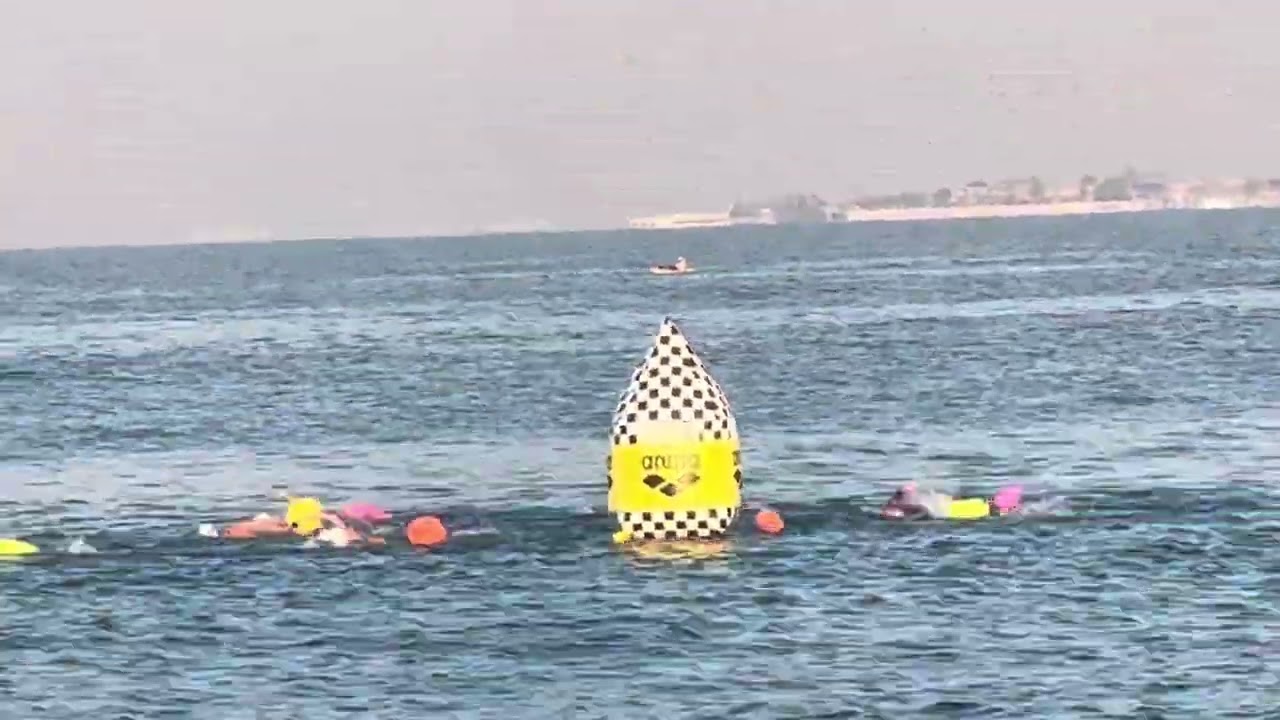
I think the bigger issue is, at some point the sport can’t continue to have swim deaths and just point the finger at the individual only. At some point if you continue to have swim deaths, you as a sport have to make changes. I don’t know if we are at that point. All I can say is that this “influencer” swim death has popped up all over my social media feeds from sources that would have never spoken on random dad of 3 who died from a smiliar medical issue (if that was the case). And again medical swim deaths add complications, and a medical screening doesn’t mean your never going to have swim deaths again. But we’ve already started medical screenings in 1 category of our sport, it’s not illogical to think maybe that can be instituted for any athlete who joins a federation (or if it’s only a race); we can argue over the details of who would oversee it.
If they allowed pull buoys in IM, I might even have a chance to qualify again 
Are the Resting Rafts still a thing in the USA Ironman events?
I put this in the wetsuit cut off thread. There are roughly 250 deaths per 100,000 humans between 19 and 69 years of age globally. Ironman triathlons are not increaing this number on an annual basis at least from racing. Sure the triathlon cohort is likely already more healthy, but triathlon framework is not the problem in deaths happening globally or even inside triathlon. We’re all human and we are going to die of something and statistically triathlon is not the high risk thing that will put us in a box under ground
I do not think so because I think they changed the rule where you can stop and get help with swim staff and not be DQ’d, you just can’t be assisted forward. So IE- the support staff have become the “resting” areas for swimmers in trouble.
No, tow floats are very much not intended as swim aids. They are only for visibility and for carrying small amounts of stuff with you, like car keys or nutrition. Obviously they do provide some amount of added buoyancy in an emergency, but in my opinion, it is reckless to rely on that and do swims with a tow float which you wouldn’t feel safe doing without one. I don’t doubt that people do that, though, just like too many beginner triathletes rely on their wetsuit to compensate for their insufficient swimming skills.
That is one reason why I’m skeptical whether mandatory tow floats would really increase safety or whether it would rather encourage even more people to enter triathlons without first learning to swim properly. There are also people who question whether filling a swim race course with a mass of tow floats might not distract rescuers more than it would help them identify swimmers in distress. Due to a lack of expertise with the matter, I can’t say whether the latter concerns are justified or not.
The Outdoor Swimming Society has an article which, in my opinion, summarizes the arguments for and against tow floats rather well. One rather morbid sentence would seem to be particularly relevant to what happened at Ironman Texas:
And – to put it horribly plainly – anything that was so cataclysmic that a swimmer sank instantly with no prior signs of distress visible to a safety crew would mean a tow float is marking a body not altering the course of a fatality .
Personally, I’m neither per se for or against legalizing or even mandating tow floats in races. But I do think that it is not as obvious whether doing so would actually provide additional safety as it might seem on the first look.
As far as I know, Italy and France require a medical certificate from every participant in triathlons. I don’t know how extensive that certificate is, so I can’t say whether it does any good or ist just obstructive bureaucracy. Greece even requires a medical certificate for swimming in public pools, though in that case I have a slight suspicion that one of that rule’s true purposes is to keep tourists out of normal public swimming pools.
This is WT’s medical screening rules for junior/U23/elites/para elite.
Essentially 3 step process:
-
Answer the Medical Questionnaire: this questionnaire is strictly confidential and must given to the responsible team doctor before the medical examination.
-
Physical Examination: by the doctor following the IOC recommendations published in the “Lausanne Recommendations” about the Sudden Cardiovascular Death in Sport Consensus.
-
Cardiac auscultation:
-
Rate/rhythm
-
Murmur: systolic/diastolic
-
Systolic click
-
-
Blood Pressure
-
Radial and Femoral Pulses
-
Marfan stigmata
-
-
A 12 lead rest electrocardiogram (ECG). Doctor to look for anomalies in rhythm, conduction or repolarisation.
I only spoke of the medicals which France and Italy require from amateur athletes too. I have no idea how far they match what is required for an elite PPE.
I was just adding context when we were talking about medical screenings. So we have a process for 1 category of triathlon (essentially draft legal minus AG DL and/or elite side of the sport), it’s not too far fetched to say…just do something similiar for the other category (AG).
As a AGer, I actually had to get a stress test done and submit a doctor’s note clearing me in order to compete at IM Israel back in 2022. I guess it’s way easier, cheaper, and more commonplace to get testing like this done in Israel. However, as an American, it’s a much bigger PITA due the nature of our health system and individual insurance plan requirements. When I first found out about the need for the test, I was super annoyed about it. But, after getting it done, I actually felt a lot more comfortable having actual knowledge that my heart was healthy. I wish it were practical to make something like this a requirement for IM events. But, in the US, sadly it’s just not.
I mean we are going to have all kinds of reasons why this won’t become mandatory across the sport, no question there. But when we are seeing more and more medical induced swim deaths, and then not really doing much to address said issue- then yeah…….
At a certain point, our personal safety is our own responsibility. At the risk of “victim blaming”, in this instance in TX, the fatality was so ill to the point that her training partners were trying to convince her to not participate…that, and unfortunately her death to a large extent is on her not on IM to change the rules so careless people will make it through their events unscathed.
I agree and disagree. Everything is life is basically built on personal responsibility, but then it kinda has to also look at it like. Do we want to keep having swim deaths and just saying “well it’s their fault” as the response/solution?