I reckon its mostly because people are scared of change as well as the media feeding them the doom and gloom articles 24/7. Same thing has happened over history, just look at people being against/scared of knitting machines, trains, airplanes, etc. What’s also feeding into this today, that wasn’t as much of a factor before, is a media landscape that profits off of creating clickbait and outrage, as do politicians.
That being said, there is some truth to data centers creating price spikes for electricity, land and skilled workers’ wages, which makes it harder for you and me to hire people to fix our stuff. There should be ways to fix this, though. For example, Texas allows data centers so perhaps they can tax the data centers to offset/profit from them.
I’m on board with not giving tax breaks to them as they have almost no one working in them. And I get making them pay fair price for the water and power they use.
But the villagers are coming with pitchforks and torches on every single one of them. What am I missing?
Sure, I like the sentiment and also agree with this with so many things that we could reduce/get rid of to support real issues. For example, the pet industry, therapy, movies, etc. Many of the resources for these things could be re-oriented towards science, math, etc. Both AI and people should be working on those things instead of wasting time/labor/money on frivolous pursuits.
Note, I only list these areas to get rid of because I don’t value them. Other people lists may vary.
This could be true. And if it is then I think the states that allow the data centers need to tax them more and/or make them pay for what they use. If the communities that host the data centers actually get revenue from them then it’ll sort itself out. Those that want the tax revenue will say yes, and those that don’t can reject them. Then natural competition can also happen where places that have an abundance of electricity and water, like lots of Canada, can make it their thing to host them and benefit from them. Problem solved.
How do you measure the ROI? My point is that what you think are a waste for AI, such as therapy for people, entertainment, etc. could be applied to a great many things, both for AI, as well as other things…
And I’m not arguing against you, I also think AI, and many other things that use our energy, labor, etc. can be rationally used in other more productive areas. The devil is in who decides on this? In China it’s well-known that Xi Jin Ping doesn’t like consumerism and wants society to be working towards bigger goals and not waste time on pets, consumerism, etc. There’s trade-offs in that though…
This is the best solution, let the market sort it out. If people value something they’ll spend money on it. We’re still at the beginning of all of this, the uses that will win out are still to be seen.
The reports I saw mentioned that noise levels at adjacent properties was like 80 decibels, 24/7. I can’t imagine how that would be tolerable for the animals or neighbours.
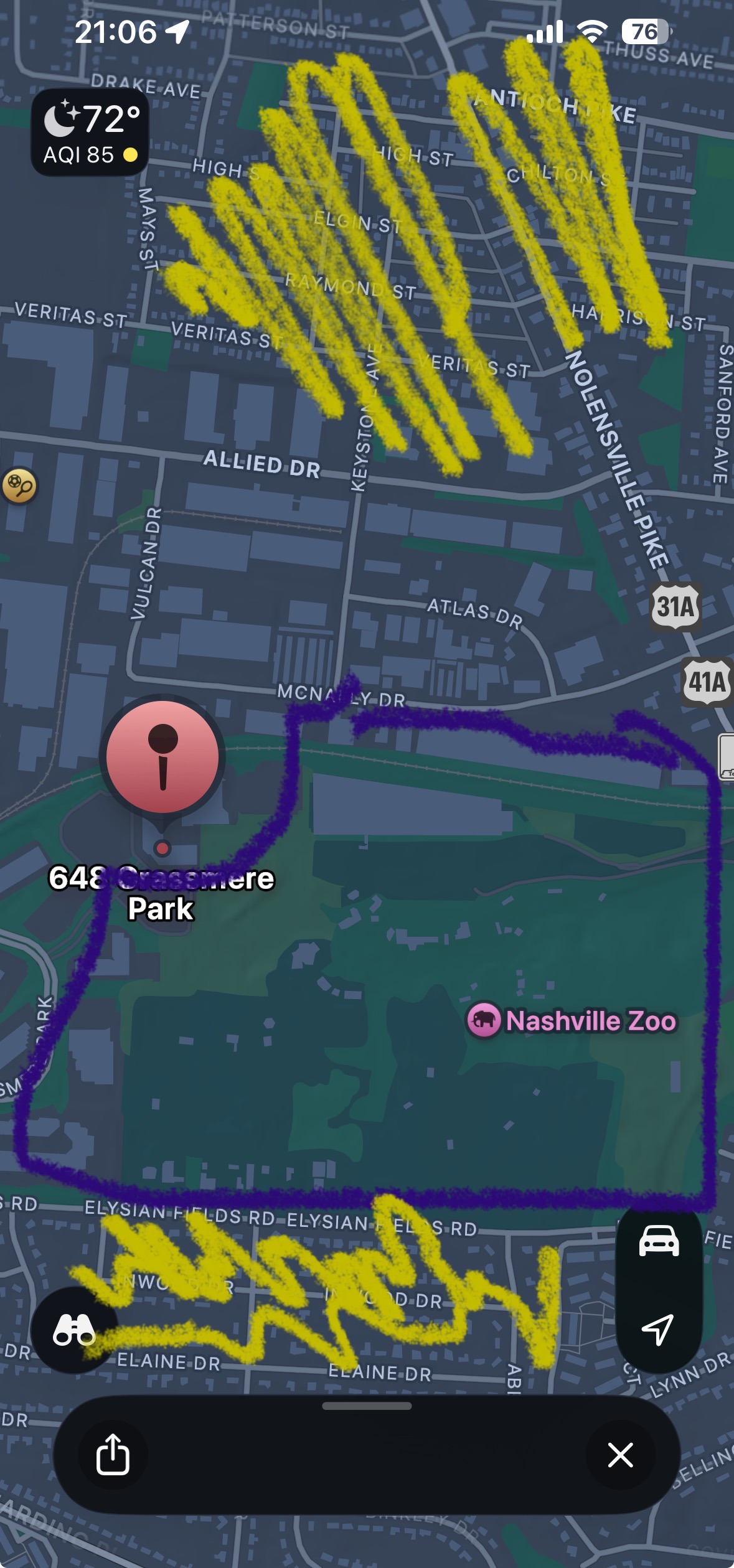
The red dot is where they want to build it. The blue line outlines the zoo property and the yellow squiggly are where people live. I go to that area every Tuesday for my piano lesson and it’s just freaking ridiculous that that is where they want to put it.
OK cool. But there are problems. After AI ventures go under whats to be done with abandoned datacenters and tonnes of e-waste? Once you lose farmland you never get it back.
Maybe we treat them like commercial facilities in south Korea where companies are legally obligated to restore properties to their original condition upon moving out.
Actually yes, fair analogies. The printing press, knitting machine, steam-powered trains, etc. all triggered technological paradigm shifts that were not initially welcomed (and in many instances fought against) by society.
I feel like AI is the equivalent of all of those technologies, plus the Internet, all coming online at the same time.
The printing press put a small number of people out of work. But if you didn’t work in the printing business, it probably didn’t effect you. Same could be said about almost every other tech you mentioned.
If you work with a computer, this is going to directly impact you, and whether or not your job can now be done cheaper by someone else or automated away altogether. The reach of AI impacts will be far more broad.
The (moveable type) printing press allowed for the masses to more easily share knowledge. This allowed for sharing news, documentation of technological advancement across every other discipline, social and political commentary, etc. It fundamentally changed how we communicated at the time.
Mechanized looms: they fundamentally changed the entire textile industry and trade, not just how loom workers did their jobs.
Standardized rail size (and the steam engine) enabled long-haul transport. It, too, was a paradigm shift.
I’m not sure if AI is a paradigm shift. Right now, it’s a hammer being used for whatever CEOs think they want hammered…
AI/data centers vs NIMBY is just the latest battle (but locating a data center next to a zoo seems criminal, to be sure).
When the steam engine was built it still took a long time to build rail networks.
When the printing press was built, it’s not like the next year everybody had a full library of books in their homes.
The scale and speed of AI implementation is in an entirely different league compared to previous advancements.
The term NIMBY is a perjorative meant to cast anti development types as unreasonable or selfish. I don’t think the communities pushing back against these data centers fit that description whatsoever. There are legitimate and serious concerns to having one of these things spring up in your neighborhood.