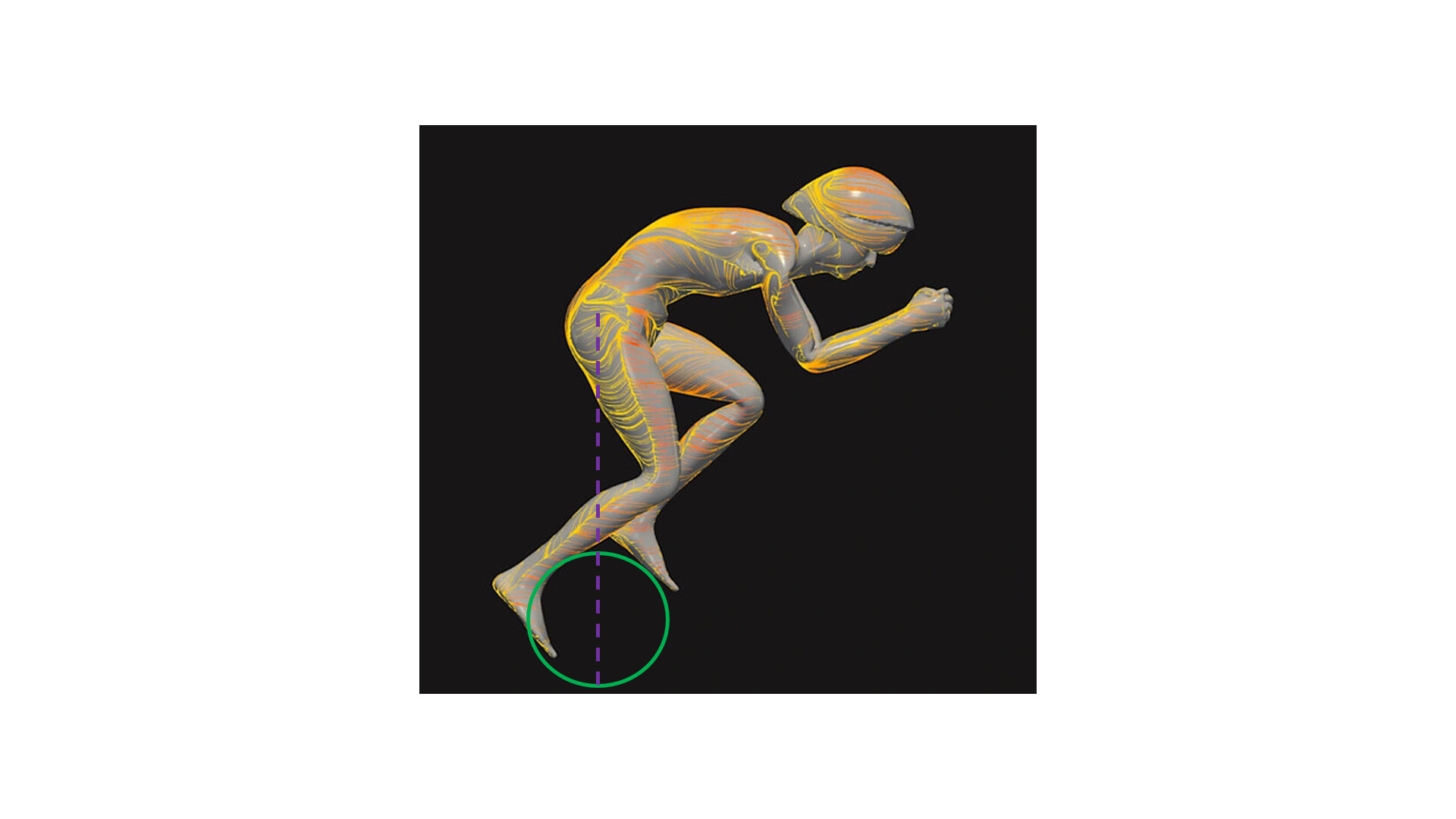
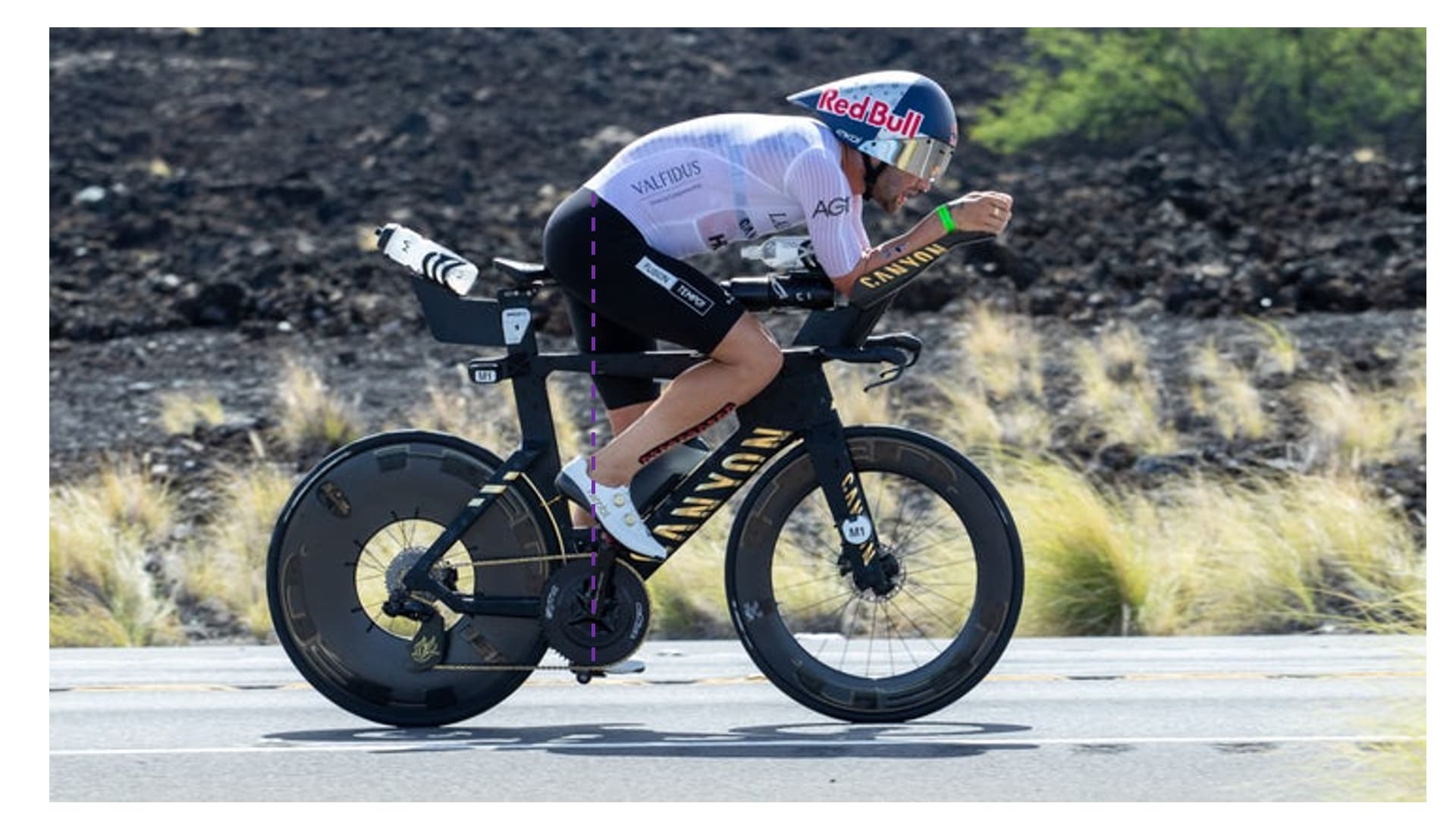
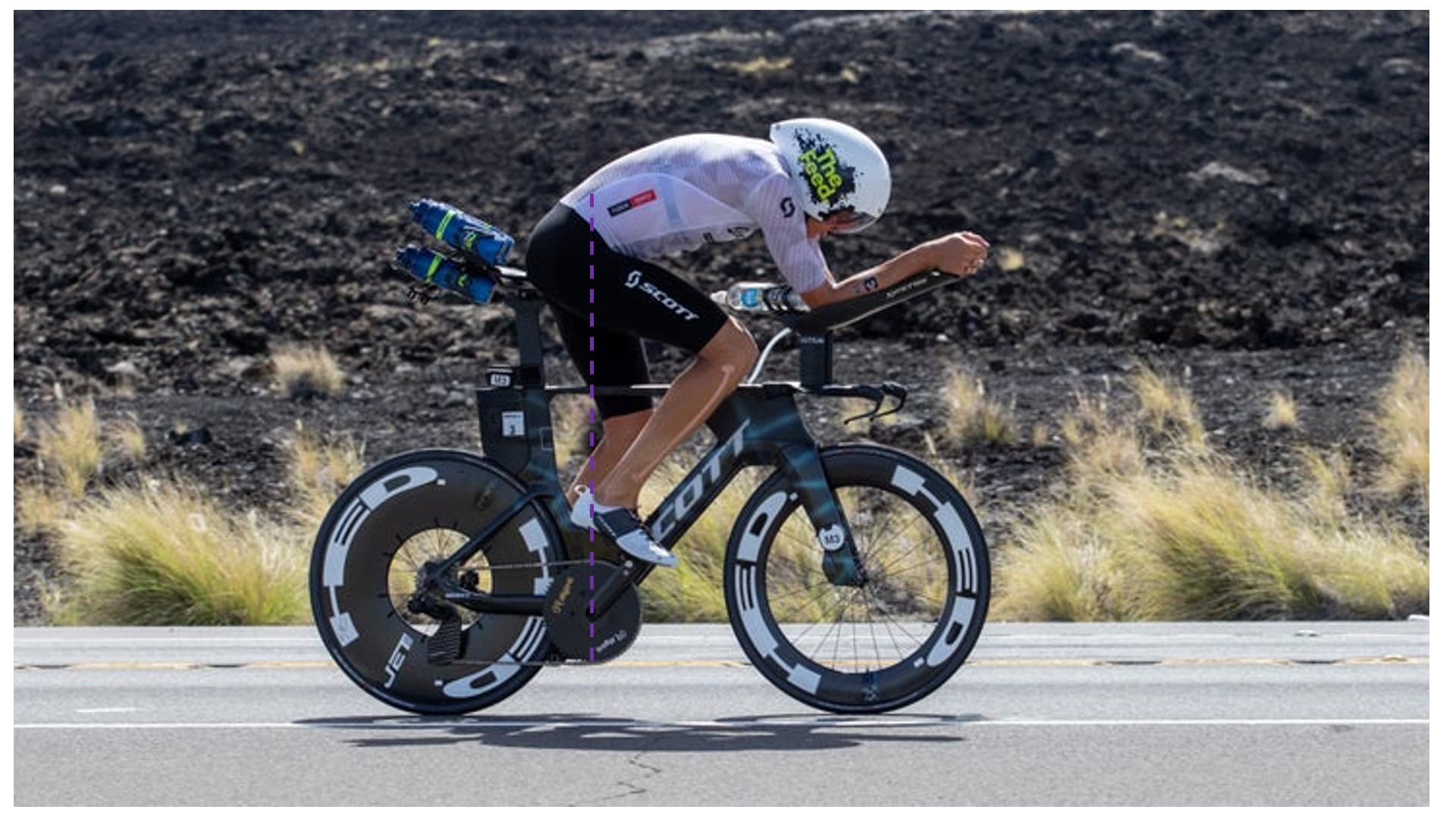
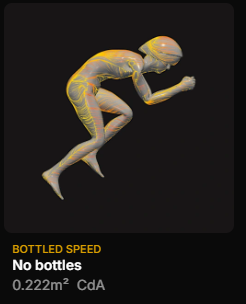
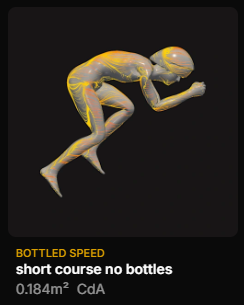
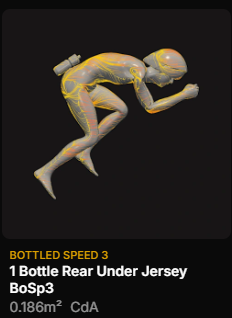
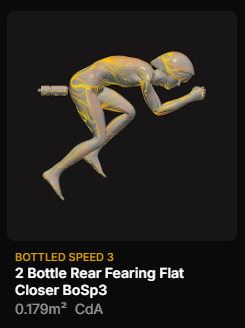
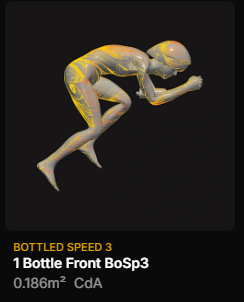
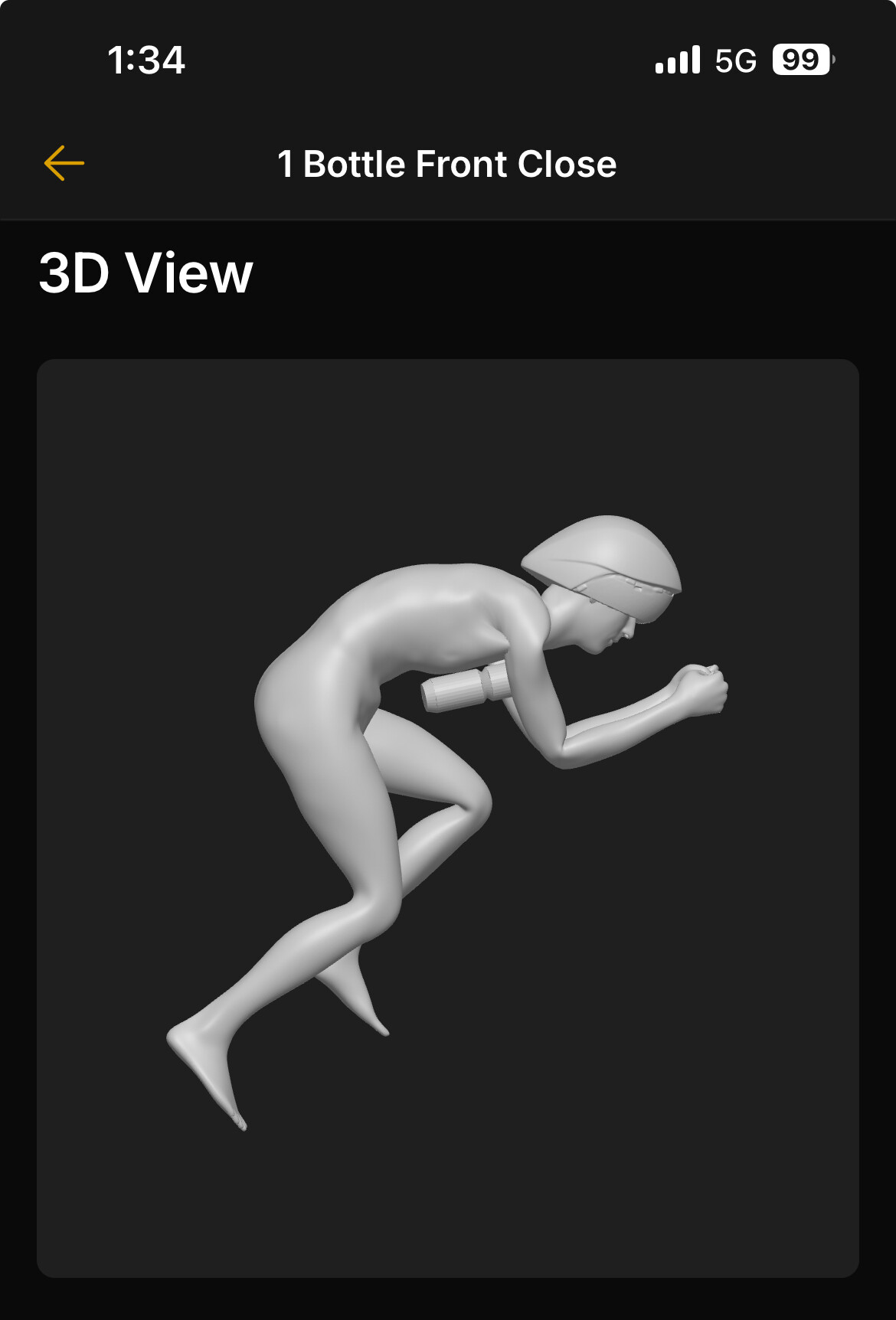
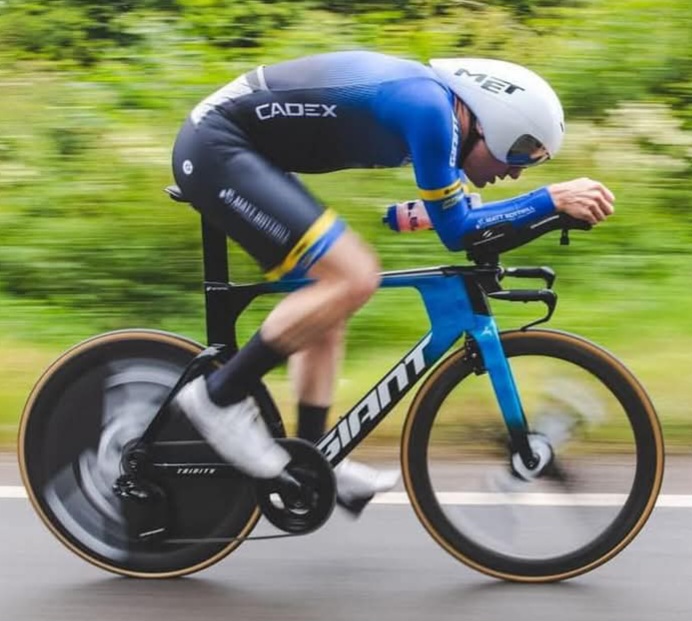
I’ve seen CFD designed parts not test as well as CFD would suggest, then I’ve also seen them test better. There was a time period where there were A LOT of CFD 3D printed parts coming through the tunnel when I was testing. It was hit and miss for sure.
If CFD showed something 20w faster I’d probably look at that and say ok there are probably savings there.
The model is „rigged“ so I can easily adjust the position. I might run that later.
This touched also on a very important point from @desert_dude, I wanted to highlight: YMMV. This simulation has results for this person, in this position. It can be used as an one data point to inform your decision making, and depending on how close your situation is to what was simulated the results will more or less be good indicators.
I try not to think in „can this be trusted: Yes/No“ terms but in „Cost/Benefit“ to gain an additional insight at a certain confidence level:
Our goal is to win races. To do so, you have to decide how to spend your time and your money most effectively. Do spend your money on a training camp or a wind tunnel test? Do you do a structured interval session or an aero test? Within testing: Do you run more repeats to increase your confidence or do you test more things?
Quantity and quality VS time and money.
You can turn to statistics and tools/concepts like Bayesian inference and Variance Bias trade offs to help you make these decisions.
The key takeaway out of all of this is that tiny differences are much harder to measure, so the cost to validate them are higher, yet tiny differences are also less valuable, so pursuing tiny differences is bad from cost benefit trade off. Big differences are much easier to make prove AND more valuable, but to find them you have to search broader and in places you haven’t looked/ didn’t want to look.
50% of my work with the US Olympic Committee is working on performance innovation strategy. I dubbed my framework „Pareto Gains“ as a counter movement to marginal gains and is built around exactly this insight.
I built my CFD tool chain accordingly, with the focus to rapidly and cost effectively explore a vast space. CFD also doesn’t require athlete buy in, doesn’t pose injury risk and allows to test positions an athlete can not yet hold, so it allows you to explore broader, reserving the wind tunnel and field testing as validation tools.
Bringing it all the way back to your question: Yes, the bigger the gain, the more confidence you can have in the results, accounting for the specific weaknesses of this CFD approach (more on this in a later post, I feel my posts are already too long). Depending on your performance engineering/innovation budget I would spend roughly 2/3 on exploration-CFD and 1/3 on tunnel testing and do very few tunnel set ups but with 3-5 repeats to push the accuracy of the validation tool as high as possible. If tunnel testing is out of the budget, you can do final validation on the track/ wind-still outdoors. If that isn’t available, making decisions based on CFD alone is better than any alternative which would be guessing, or copying others.
Actually this set of posts with long-form fact- and experience-based information is the best part of Slowtwitch. It is quite timely as I am going to try some aero-optimization next month and this discussion is clarifying how I want to approach this with the limited testing time I will have. So thank you to all the experienced hands commenting.
This whole post is really interesting and I think this gets to the heart of it. You can reach an athletic/commercial combination where the cost of doing aero testing (in terms of non-specific training energy) outweighs the “cost” of a personalized CFD model (in dollars).
I have to imagine for most posters here Chung testing is the economical method, since it usually also doubles as training. Are you allowed to share the approximate cost of an athlete’s CFD modeling and experimenting?
Cost is less than $10, per run after the initial 3D model is created. The other things with CFD is that this is only going to get cheaper as faster chips are released while the cost of velodrome and tunnel testing is going to roughly stay the same. I was out of the CFD field for 3ish years and I was shocked how much things improved, driven by faster compute and more advanced models. A similar simulation used to cost $100+ and was taking hours while now its done in minutes.
Whats most economical depends on how you estimate the cost of your time. My first business in college actually was making aero testing software for velodrome/outdoor testing, so I have done a lot of that. As a college student, DIY is clearly the best option, plus you learn something and it can be fun if you enjoy experimenting.
At the same time specialization and division of labor can be powerful too. As I progressed through my career, I have become more comfortable to pay other experts for their expertise and focus more on where I can provide the most value. In this case leaning on experts like Desert Dude or Matt Steinmetz and going to a tunnel might be better ROI, even if the cost is higher.
Cool analysis and fascinating commentary. Very educational thread.
Can we really reach this conclusion, given that there is no seat present in the model? I would expect that a solid horizontal saddle present connecting the butt to the bottle will have a major impact, at least as much as moving a floating bottle fore/aft a few cm. i.e. is it the “connectedness” of the close bottle that’s helpful (a far bottle would also be connected with a seat, making it kind of a very long close bottle), or is it the fact that the tail end of the bottle is closer to the body (in which case a seat doesn’t help)?
Did you try two horizontal bottles, but in one on top of the other (vs besides each other)? Does this make a difference? - after all, we cut a bigger hole through the wind vertically than we do horizontally. Any thoughts on the Magnus Ditlev 3 bottle setup?
Any effect of using a fairing on the bottle? Sorry - a shaped flat kit like the xlab aero pouch 300.
When a world champion recently wind tunnel tested two stacked bottles on the rear of their V8 saddle, they were 7w faster than with one 45deg bottle closer to their body mounted using the built in mount on their seat post.
Separately, Magnus definitely wind tunnel tests all of his set ups, including the three bottle set up on his V8 saddle.
Interesting to see such a close correlation. In the Escape collective Performance process interview with Zavier Disley (Aerocoach) he was talking about validation between the CFD and Wind Tunnel. and expecting to see a consistent variation, but similat relative effects. He also said one of the biggest issue with CFD was modelling the fabric effects, and how difficult that was…
One of the limitations of my model is that I don’t use a transition model that accounts for surface texture. Or so all my simulations are representative of an athlete with a smooth skinsuit, no aero socks, etc.
Those models exist and there are some preliminary papers that show they are promising and I am currently experimenting with it, but haven’t built up enough data to feel confident enough to use it in my day to day.
If Xavier already has a validated fabric texture model, he is certainly ahead of me there. I’ll check out the podcast. I follow him on social media, and enjoy his posts.
Throughout this thread we have collectively identified the following theses:
Placing bottles strategically can reduce drag.
The effect might depend on the posture and shape of the athlete (more on that later)
Desert Dude pointed out that bottle position affects posture as well: For example when a higher BTA bottle blocked the optimal head position.
How the bottle gets into that position might matter. E.g. the shape of the bottle holder, or even the saddle will have an affect.
I’d add there are additional considerations out side of aero that matter as well: Bottle retention, ease of reach, etc. Some people might even want to drink from these bottles
For even something as simple as bottle position we now have identified a boat load of independent variables , so how are we ever to perfectly understand the aerodynamics of bottle effects? For sure having a cost effective tool to test a lot is useful, but even with automated CFD its simply too many combinations.
This is were my line of work differs from academic research (and where I feel sometimes the conflict between the two disciplines comes from). My primary aim is not to perfectly understand cycling aerodynamics, my goal is to make my athletes as fast as possible, with a given time and budget. I aim to develop technologies.
The definition of technology is “A practical application of a scientific insight” and I feel this gives me a very good recipe of what I need to do: Find a scientific insight (either from myself, or the literature), and figure out how to apply it in a way that it makes athletes faster. There’s bike fitting and there are plenty of experts more experienced than me in this field. What I do right I would call “posture innovation”, so trying to figure out new things to do that can provide a competitive advantage.
So bringing it all the way back to your question/insight: Does the way the bottles get held in that specific position matter and are there interactions with saddle design? I think its a good question to ask and something that might unlock additional gains.
I set it up with zero saddle set back. However, since there is no saddle in my model I have to estimate the saddle position from the pelvis location, my model would definitely sit on the front of the saddle. The ultimate position was based on an overlay of one of the top riders, I forgot who I used.
I ran the same bottle positions with a significantly more aggressive position to show how variable aero recommendations can be for each specific position and athlete. Here are the results:
Baseline position:
This position is on the other end of the extreme in terms of aero positions: Pad stack is 9cm lower, the head is dropped in front of the body. This position is much closer to what one would see in a pure time trialist. The CdA difference is substantial. With the much flatter torso we would expect less lift and less induced drag, so we would also expect less value from the behind the seat bottles, so lets see if our theory is confirmed:
While on the more upright position, a bottle in the jersey pocket was a six count improvement, with a flatter back putting a bottle in this location is actually 2 counts slower.
The bottles in the rear carrier are still a five count improvement, as they keep thee air from streaming down the glutes.
What really surprised me are the effects of the BTA bottle. I changed nothing about the hand position, other than the elbows now being substantially lower, and in this position, the BTA bottle was actually slower than no bottle at all.
Comparing the images, it looks like I positioned the bottle a bit higher than in the last run. My guess is that with the higher position the bottle was right in front of the crotch area, which is very high drag, while with the lower position the bottle is now too low. If I find time I can run som flow viz to see if that is whats happening. With the lower head position, I could not fit two stacked bottles.
So what’s the take away from this? Blindly copying someone else’s set up can backfire. Many pros have more aggressive positions than amateurs and what works for them might not work for you. If you really want to know though, you need to test for yourself. Having a good theory why something works can help you narrow down what to test.
Rather than two stacked bottles, what about a single BTA mounted higher and further back? I’ve seen a few people in Triathlon and TT doing something like that, Matt Bottrill for example.